
"She was either mad, or the sanest person in this room."
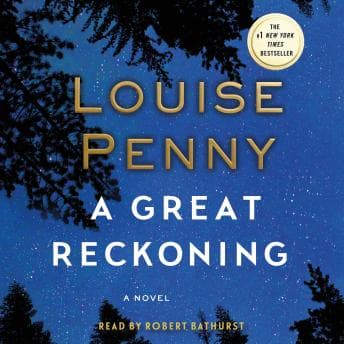
That line hit me somewhere around hour three, and I had to pause the audiobook because - look, I spend my days surrounded by books that people have forgotten, in a library that smells like dust and possibility. And Louise Penny gets it. She understands that the strangest things often hide in plain sight, that the people we dismiss as eccentric might be the only ones paying attention.
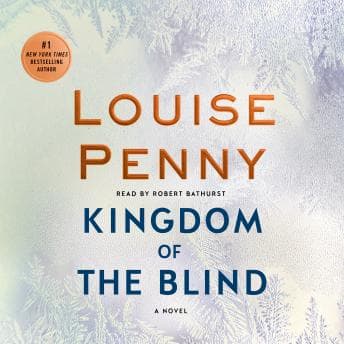
I've been circling the Gamache series for years. My podcast listeners keep recommending it, and I kept putting it off because cozy mystery isn't really my wheelhouse. I'm the person who argues that The Haunting of Hill House invented modern horror. I like my fiction with teeth. That same commitment to psychological dread over cheap scares is what makes It work so well on audio. But here's the thing about Kingdom of the Blind - it has teeth. They're just hidden under a wool blanket in a Québec farmhouse.
Dread That Builds Like Snow
Penny does something here that horror writers would kill for: she creates genuine unease without a single jump scare. There's an opioid crisis threading through this narrative, thousands of potential deaths hanging over every scene like a storm cloud. Gamache is suspended, powerless, watching a catastrophe unfold in slow motion. And meanwhile, he's sorting through a dead woman's bizarre will in an abandoned farmhouse with two strangers.
The juxtaposition shouldn't work. It absolutely works.
Robert Bathurst's narration captures this dual energy perfectly. He won the Audie for Best Male Narrator for this, and yeah, I get it now. There's this world-weary quality to his Gamache - the man has seen too much, knows too much, and still chooses compassion over cynicism. Bathurst doesn't play that as weakness. He plays it as the hardest kind of strength.
(Shirley was unimpressed when I tried to explain this to her at 1 AM. She just wanted her midnight snack. Cats have no appreciation for character work.)
Why Bathurst Earned That Audie
Here's what separates good audiobook narration from great: the minor characters. Anyone can do a gravelly detective voice. But Bathurst gives Myrna Landers - the bookseller, my new favorite person - this warmth that made me actually miss her when she wasn't in scenes. The young builder Benedict gets this earnest, slightly confused energy that never tips into caricature.
Now, are the accents perfect? No. Some Québécois inflections wander a bit, and I noticed a few moments where a character's voice shifted slightly between chapters. But honestly? I've listened to horror audiobooks where the narrator couldn't maintain a single consistent voice for the protagonist. Bathurst's occasional wobbles are minor compared to how fully he inhabits this world.
The pacing is deliberate. If you're coming from fast-paced thrillers where someone dies every chapter, you might find yourself checking the timestamp. I listened during my evening shelving shifts at the library, and the slower sections felt right for that context - contemplative, almost meditative. But when the tension ramps up in the final third, Bathurst shifts gears beautifully. His Gamache becomes more urgent, more desperate, and you feel the weight of those missing opioids pressing down.
The Blind Spots We Choose
The title isn't subtle, and neither is Penny's theme. Everyone in this book is missing something obvious. Gamache can't see what's right in front of him. The executors can't understand why they were chosen. The dead woman's family can't accept that she might have been sane.
It's the kind of mystery that rewards attention. I caught myself rewinding sections, not because I'd missed plot points, but because Penny layers in details that only make sense later. The audiobook format actually helped here - I couldn't skim ahead, couldn't peek at the ending. I had to trust the story.
And look, I'm a horror person. I like my fiction dark and my endings ambiguous. Kingdom of the Blind is neither of those things, exactly. But it understands something fundamental about dread: the scariest monsters are the ones we create through our own choices. Gamache made a decision six months ago. Now he's living with the consequences. That's horror, even if it comes wrapped in descriptions of bistro dinners and small-town gossip. A Time for Mercy does something similar - wrapping genuine moral terror inside a courtroom procedural.
Who Gets a Seat at the Bistro
If you want your mysteries with genuine emotional weight and a narrator who treats every character like a real person, this is your book. Skip it if you need constant action or can't handle a slow burn - those first few hours require patience. My podcast listeners who've been recommending this for years? You were right. I'm sorry I doubted you.
Probably won't relisten immediately - twelve hours is a commitment, and I've got a backlog of horror audiobooks demanding my attention. But I'm absolutely going back to the beginning of this series now. Penny's built something special in Three Pines, and Bathurst is the perfect guide through it.
Now if you'll excuse me, I need to go argue with someone on Twitter about whether this counts as cozy mystery or literary thriller. (It's both. Fight me.)