
"The jungle is a harsh mother, but she is just."
Okay, that's not an exact quote, but it's the feeling I had about ten minutes into this thing. I was stuck in I-35 traffic—Austin gridlock is its own kind of jungle, let me tell you—listening to Tarzan figure out the laws of nature. It hit me that this isn't just an adventure book. It's a training manual.
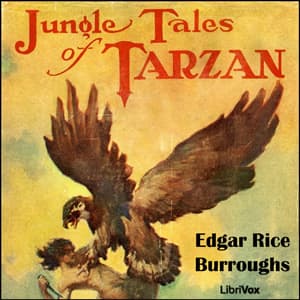
I picked this up because I needed a break from the modern techno-thrillers where the hero saves the world with a laptop. I wanted something raw. Jungle Tales of Tarzan fits the bill. It's technically the sixth book Burroughs wrote, but chronologically, it slots right into the middle of the first novel. Think of it as the "lost episodes" of Tarzan's teenage years. His Basic Training.
The Voice in the Wilderness
I'll be honest, I hadn't heard of Ralph Snelson before. I usually stick to the heavy hitters like Ray Porter or Scott Brick. So I went in skeptical. Snelson also narrates Pellucidar, another Burroughs adventure I've been meaning to check out. (Ranger, my German Shepherd, was also skeptical, mostly because I wasn't throwing his ball.)
But Snelson works. He really works.
He doesn't have that over-polished, studio-perfect voice that sounds like a movie trailer. He sounds like a guy sitting next to a campfire telling you a story about a man-ape he used to know. It's grounded. There's a texture to his voice that fits the pulp fiction vibe of the early 1900s. He handles the introspection well, too—because surprisingly, there's a lot of thinking in this book. Tarzan isn't just punching lions; he's trying to figure out God, love, and why he doesn't have a tail. Snelson navigates that shift from violence to philosophy without making it sound cheesy.
I listened at my usual 1.25x speed, and Snelson's pacing held up. He doesn't drag.
Basic Training for the Jungle Lord
Here's the intel on the structure: It's 12 short stories. For a guy like me running a business, this format is gold. I can finish a whole "tale" on a drive to a client site, handle the meeting, and start a fresh one on the way back. No need to remember a complex plot thread from three hours ago.
What surprised me—and this is the discovery part—is how much this feels like watching a soldier develop his tradecraft. We see Tarzan learning to use a rope. We see him figuring out the concept of a "nightmare" (he thinks his soul left his body). We see his first crush. It's not just swinging on vines. It's survival psychology. Burroughs explores similar themes in Tarzan the Untamed, though that one's got a darker edge to it.
One story, "The God of Tarzan," actually had me pausing the audio. Tarzan is trying to understand the concept of a creator. It's surprisingly deep for a book where a guy also fights a gorilla. It reminded me of some long nights on guard duty in Afghanistan, looking at the stars and wondering what the hell it's all about. Burroughs gets a bad rap for just being pulp, but the guy understood the human condition in isolation.
The 1919 Reality Check
Look, we have to address the elephant in the room. Or the Tantor, I guess. This was written in 1919.
The worldview is... dated. There are colonial attitudes here that wouldn't fly today. If you're sensitive to that, you might want to eject early. But if you take it as a historical document—a snapshot of how adventure stories were told a century ago—it's fascinating.
Also, the violence. It's primal. Animals die. Tarzan kills. It's not gratuitous, exactly, but it's nature red in tooth and claw. Linda (my wife) would hate it. She wants the Disney version. This isn't that. This is the version where bones break.
Who's This For?
If you want classic pulp adventure with surprising philosophical depth, and you can stomach century-old attitudes, this one's worth the credit. Skip it if you need modern sensibilities or prefer your Tarzan sanitized. Perfect for commuters—those 12 standalone tales are built for interrupted listening.
Mission Debrief
Is it Shakespeare? No. Is it high literature? Negative.
But it's a solid, entertaining look at the making of an icon. Snelson does a bang-up job keeping it engaging. It's perfect for when you want to turn off the news, forget about cyber threats, and just listen to a guy figure out how to survive in a world that wants to eat him.
Ranger perked up during the ape vocalizations, so he approves.