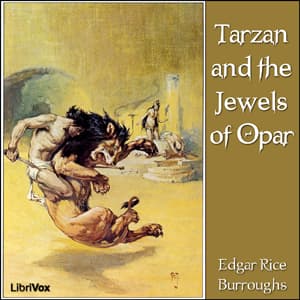

"The abyss of Opar swallowed him whole, and for a moment, I genuinely forgot I was supposed to be debugging my procedural dungeon generator."
Okay, that's not an actual quote from the book, but it might as well be. I was three hours into this LibriVox recording, hunched over my laptop at 2 AM pretending to work on my thesis, when I realized I'd written exactly zero lines of code and had instead been completely absorbed in Tarzan's quest for the lost jewels. Dr. Patel would be disappointed. I am not.
Burroughs Understood Dungeon Crawls Before D&D Existed
Look, I grew up running homebrew campaigns in the back of a Georgia library, and let me tell you—Opar is basically a megadungeon. Ancient civilization? Check. Mysterious treasure vault? Check. Weird cult with their own internal politics? Absolutely check. The La of Opar storyline hits different when you've spent years designing trap-filled temples for your party to stumble through.
Burroughs was doing procedural generation before we had a name for it. Wolf Hunters has that same quality—a world that feels lived-in even when the protagonist isn't center stage. Every time Tarzan returns to Opar, there's this sense that the city has its own internal logic, its own history that exists whether or not our protagonist is there to witness it. That's worldbuilding, my friends. Not Sanderson-level magic systems, sure, but for 1916? The progression is satisfying.
The dual-threat structure here is actually clever—Tarzan off chasing treasure while Jane faces danger at home. It's pulp adventure, absolutely, but it's competent pulp adventure. The pacing clips along nicely for a 6-hour-50-minute runtime. I'd expected more padding given the era, but Burroughs keeps things moving.
Ralph Snelson: Your Grandfather Reading You Pulp Fiction
Here's where things get... interesting. Ralph Snelson has this lilting Utah accent and grandfatherly delivery that is genuinely charming. Like, I could absolutely see myself as a kid, sprawled on shag carpet, listening to this man tell me about ape-men and lost cities. There's warmth there. Effort, too—he really tries to give different characters distinct voices.
But—and this is a significant but—some of those accent attempts are, uh, hilariously awful. I'm talking "your friend who thinks he can do a British accent after watching one episode of Doctor Who" levels. The mispronunciations are constant enough that if you're the type who notices that stuff, it'll drive you up a wall.
Here's my take: this is a LibriVox recording. It's free. Snelson is a volunteer doing his best with a wordy, century-old novel, and honestly? He does a brilliant job given those constraints. The charm outweighs the technical issues for me. I had a similar experience with Ship of Brides—imperfect narration that somehow added to the charm rather than detracting from it. But if you're picky about narration—if you need Steven Pacey-level precision—maybe grab a different version.
The Pulp Problem (And Why I Don't Care)
I should probably address the elephant in the jungle: this is 1916 adventure fiction. It's got all the... let's call them "period attitudes" you'd expect. The depictions of African characters haven't aged well. At all. If you're going into classic Tarzan expecting modern sensibilities, you're going to have a bad time.
I'm not here to defend that stuff. I'm here to tell you whether this audiobook is worth your commute time, and the answer is: if you can contextualize the era and you're in the mood for pulpy adventure with some genuinely fun dungeon-crawl energy, yeah. It works.
Who's Rolling Initiative Here?
This one's for the nostalgic crowd—people who read these as kids, or whose parents did. It's for pulp completionists, Burroughs fans, and honestly? Anyone who wants something low-stakes for a long drive. Multiple reviewers mentioned listening while driving, and that tracks. This is cruise-control listening.
Skip if: you need polished narration, you're sensitive to dated racial depictions, or you want complex character development. Tarzan is Tarzan. He punches things and swings on vines. That's the deal.
Campaign Notes: Steal Opar for Your Table
Listen, I'm not going to pretend this is high literature. It's not. But as someone who's spent way too many hours designing ancient temples full of treasure and danger for my players to loot, I have a soft spot for Opar. The worldbuilding is there, even if it's sketched rather than detailed. The adventure is there, even if it's predictable.
Snelson's narration is imperfect but earnest. The story is dated but fun. And it's free, which means I can spend my actual audiobook credits on the next Stormlight Archive release.
Now if you'll excuse me, I have a thesis to not write.