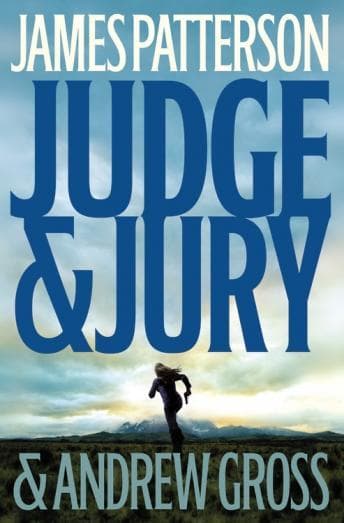

I was shelving a cart of new acquisitions at the library last Tuesday - the branch was empty, that weird post-lunch lull where the fluorescent lights seem louder than anything else - and I had Judge & Jury playing through my earbuds. Joe Mantegna hit a scene where Dominic Cavello, "The Electrician," is being described through testimony, and I actually stopped mid-shelf with a copy of Where the Wild Things Are in my hand, just standing there like a weirdo in the children's section. That's the kind of audiobook this turned out to be.
Let me be upfront: this is not horror. This is not my usual lane. But I've been on a Patterson kick lately because my podcast listeners keep asking me to cover thriller audiobooks that cross into genuinely dark territory, and someone specifically recommended this one because of Mantegna. And honestly? They were right to.
Joe Mantegna Brought the Wise-Guy Energy I Didn't Know I Needed
Here's the thing about Mantegna - and I say this as someone who's listened to probably 400 audiobooks at this point - the man understands that narrating isn't reading. It's performing. His wise-guy accent for the mobster characters feels earned, not cartoonish. There's this gravelly, street-level authenticity to Cavello's dialogue that sits in sharp contrast to the clean, almost earnest sincerity he gives Nick Pellisante, the FBI agent. You hear the class divide. You hear the moral divide. He doesn't telegraph it with obvious vocal tricks - it's in the pacing, the breath, the way Cavello's lines land like someone who's used to being obeyed versus Pellisante's controlled urgency of a man who's been chasing the same ghost for years.
The narrator commits. That's rare.
And the production team clearly understood what they had in Mantegna, because there are sound effects and music cues threaded through this thing. Not obnoxious, movie-trailer-style bombast - more like subtle atmospheric touches that make the courtroom scenes feel claustrophobic and the action sequences feel kinetic. It genuinely plays more like a produced audio drama than a standard single-narrator audiobook at times.
Andie DeGrasse Is the Unlikely Protagonist Patterson Needed
So the setup: Andie is a single mom and aspiring actress who tries to get dismissed from jury duty by telling the judge her legal expertise comes from wrapping herself around a stripper's pole on The Sopranos. She fails. She becomes juror #11 in what's basically the trial of the decade against this mob boss.
I liked Andie more than I expected to. Patterson (and Gross - let's not forget the co-author credit) gives her this weird, scrappy energy that feels different from the typical "ordinary person thrust into extraordinary circumstances" template. She's not passive. When Cavello makes his move - and I won't spoil what it is, but it's the kind of devastating pivot that reframes the entire book from legal thriller to something much more personal and much more dangerous - Andie doesn't crumble. She pivots too.
The relationship between Andie and Pellisante builds in a way that feels organic to the pressure they're under. It's not a romance shoehorned into a thriller. It's two people bonded by the specific trauma of being on the wrong end of a very powerful, very ruthless man.
Where the Cracks Show (Because They Do)
At seven hours, this moves fast. Almost too fast. Patterson's trademark short chapters and clipped prose translate well to audio - Mantegna barely has time to breathe between scenes - but there are moments where I wanted the book to sit with its own darkness a little longer. Cavello is terrifying in concept, but the book races past some of the quieter dread in favor of the next plot beat. As someone who lives for atmospheric tension, that frustrated me.
And look, this is Patterson-formula thriller writing. The prose isn't going to haunt you. The structure is efficient to the point of being mechanical. But comparing this to some of Patterson's more phoned-in work? This felt like he actually cared. The stakes feel real. The villain feels dangerous in a way that some of his other antagonists just... don't. That specific flavor of cold, competent menace is something I Am Pilgrim does even more elaborately — and if Cavello's efficiency unsettled you, Pilgrim's antagonist will sit in your chest for days.
Shirley Jackson walked so other authors could run - but Patterson isn't trying to run that race. He's running his own, and here, he runs it well.
Who Gets Called for This Jury
If you want a fast, propulsive listen that rewards attention - this is a strong commute book, a road trip book, the kind of thing that makes a three-hour drive feel like forty minutes. If you're a Mantegna fan from Criminal Minds or his Spenser narrations, this is him at full intensity. If you need literary depth or slow-burn psychological horror, this isn't your stop.
If you scare easily, this won't test you the way my usual recommendations do. But Cavello's cold efficiency? The way the book strips away the safety net of the justice system? That's its own kind of dread.
My podcast listeners are going to love this - not as a horror pick, but as proof that a great narrator can elevate a genre thriller into something you genuinely can't pause. Confessions on the 7:45 is another one I'd put in that same category — not horror, not literary, but the kind of thriller where the domestic stakes make the dread feel uncomfortably close to home. Shirley (my cat) was unimpressed. But she's unimpressed by everything that isn't a can opener.