
What happens when the thing that's killing you slowly suddenly becomes the thing killing you fast?
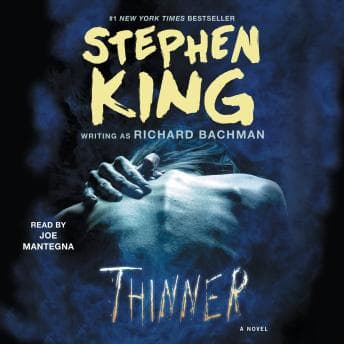
I've watched patients waste away. I've charted weight loss in people who would give anything to gain it back. So when Billy Halleck starts dropping pounds like they're nothing—and I mean nothing, no effort, just melting—my brain went straight to the oncology floor. Except this isn't cancer. This is a curse. And honestly? The way King writes it, the curse almost feels more merciful.
The Medical Horror That Actually Works
Look, I spend a lot of time yelling at my dashboard when medical thrillers get things wrong. But here's the thing about Thinner—it's not trying to be medically accurate. It's supernatural horror, and King (writing as Bachman) leans into that. The weight loss isn't realistic because it's not supposed to be. What IS realistic? The terror. The desperation. The way Billy goes from annoyed to confused to absolutely unhinged as the pounds keep coming off.
I listened to this on my drives home from night shift, and there's something deeply unsettling about hearing a man describe his own body betraying him while you're driving through pre-dawn Phoenix. The exhaustion probably helped with the creep factor. Or hurt it. Hard to tell at 4 AM.
What got me was the justice angle—or lack of it. Billy kills a woman with his car, uses his connections to walk, and then gets cursed for it. As someone who's seen the aftermath of vehicular trauma in the ER... yeah. I wasn't exactly rooting for Billy to survive. The old Romani man who curses him? I kind of wanted to buy him a coffee. Is that wrong? Probably. Do I care? Not really.
Joe Mantegna Behind the Wheel
So Mantegna. He was in the movie adaptation, which is either a selling point or a warning depending on your feelings about 80s horror films. His voice is distinctive—gravelly, New York-adjacent, the kind of voice that makes you think of mob bosses and late-night diners. It works for the crime family elements. It works for Billy's slow descent into desperation.
Where it gets shaky? The women. The dialects. There's supposed to be some French-Canadian accent happening at points, and... no. Just no. And apparently he mispronounces "Bangor," which is literally Stephen King's hometown. How do you not check that? I mean, honestly.
But here's the real problem, and I need to warn you: the music. They added these musical accents throughout the audiobook, and based on what I've heard from other listeners, it's divisive at best and rage-inducing at worst. I found it distracting during the tense moments—like, I'm trying to focus on Billy literally wasting away and suddenly there's this dramatic sting that pulls me right out. The production quality is clean otherwise, but those musical additions feel like someone in a studio said "you know what this horror novel needs? More pizzazz."
No. It did not need pizzazz.
Perfect Post-Shift Horror
The pacing is uneven—I'll give you that. There are stretches where things drag, and then suddenly you're in the middle of something deeply disturbing and you can't look away. Classic King, really. He takes his time building the dread, and then he hits you with something that makes you grip your steering wheel a little tighter. Just After Sunset: Stories has that same slow-burn dread in a few of its tales, though the collection as a whole is more hit-or-miss.
Carlos asked why I looked so unsettled when I got home one morning. I blamed the traffic. It was not the traffic.
This is horror that works because it takes something we all think about—our bodies, our weight, our control over ourselves—and twists it into something nightmarish. End Game plays with similar body horror themes, though it goes in a completely different direction with the medical side of things. For anyone who's ever struggled with weight in either direction, there's something viscerally uncomfortable about watching someone get exactly what they thought they wanted and having it destroy them.
Who This Curse Is For (And Who Should Walk Away)
If you're a King fan, this is solid Bachman-era work. Leaner than his later stuff (pun intended, sorry not sorry). Supernatural revenge with a side of moral ambiguity? You'll dig it. Appreciate Mantegna's voice from Criminal Minds or the movie? You'll probably enjoy his take here.
But if background music in audiobooks makes you want to throw your phone out the window? Sample first. Or read the book instead. The story deserves better than to be interrupted by someone's idea of atmospheric scoring.
Clocking Out
For me, it was a solid post-shift listen. Creepy enough to keep me awake on the drive, disturbing enough to process while I made breakfast, and short enough at 10 hours that I finished it in about two weeks of commutes. Night shift approved—with the caveat that you might want to keep your finger near the volume button.