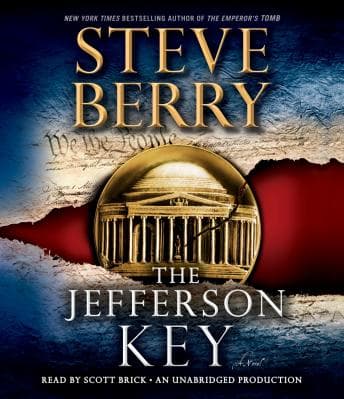

Let me cut to the chase: I started this one during a late-night drive back from a client meeting in Houston. Three hours of Texas highway, coffee going cold in the cupholder, and Cotton Malone trying to stop a presidential assassination in Manhattan. Not a bad way to stay awake.
Steve Berry's done his homework here. I've read enough half-baked thrillers where authors think "classified" means they can make stuff up. Berry actually digs into the historical record - Thomas Jefferson's cipher systems, Andrew Jackson's complicated relationship with privateers, and a constitutional clause in Article 1, Section 8 that, honestly, I had to look up when I got home. It's real. The man knows his source material.
When Pirates Had Government Contracts
The Commonwealth - Berry's secret society of privateers - is where this book shines. These aren't Johnny Depp pirates. They're essentially military contractors from the Revolutionary War era who never got their pink slip. The concept that families could inherit letters of marque and keep operating as quasi-legal raiders for centuries? It's the kind of conspiracy theory that's just plausible enough to work.
Scott Brick narrates, and he adds genuine texture to the historical elements. When the story dips into Jefferson's legacy or explains how American privateering actually functioned during wartime, Brick delivers it with the weight it deserves. He's not just reading exposition - he's making you understand why this matters. The man's been narrating thrillers for years, and it shows.
The Bourne Sacrifice is another one where Brick carries heavier material than the script probably deserved - same instinct for knowing when to dial up the urgency and when to let a scene breathe.The Rough Patches
Here's where it lost me: the opening is weak. I've seen this scenario play out in real life - you don't start an operation with your weakest assets forward. Berry throws you into an assassination attempt that should be heart-pounding, but it feels... complicated. Too many moving pieces before you care about any of them.
The pacing runs uneven throughout. Some sections clip along at a good operational tempo - Malone and Cassiopeia Vitt working the problem, breaking ciphers, connecting dots. Then you hit stretches where the plot gets tangled in its own conspiracy threads. I found myself rewinding a few times, not because Brick mumbled (he didn't), but because the storyline demanded more attention than I could give it while watching for deer on 290.
For a Cotton Malone book - this is number seven in the series - it's better than some of Berry's recent output, but that's damning with faint praise. The earlier books had tighter plots. This one occasionally feels like Berry's trying to prove how much research he did rather than just telling the story.
I hit the same frustration with Alexandria Link - Berry's research on the Library of Alexandria is genuinely impressive, but the plot keeps stopping to admire itself in the mirror.Who This Is For (And Who Should Bail)
Skip this if: you haven't read earlier Cotton Malone books (you'll be lost on character dynamics), you need fast pacing throughout, or you get annoyed when thrillers pause for history lessons.
Grab this if: you appreciate authors who do their research, you're already invested in the Malone series, or you want something substantive for a long drive. I finished the last hour parked in my own driveway because I needed to hear how the constitutional angle played out.
Mission Assessment
Solid but not spectacular. Berry's research is impressive, Brick's narration is reliable, but the story structure needed tighter editing. I've recommended worse books to my team. Ranger fell asleep during the slower sections, which tells you something - he usually perks up when gunfire starts. Worth a credit if you're a series fan or a history buff. Everyone else, wait for a sale.
Thirteen hours is a commitment. At 1.25x speed, it's manageable. Just don't start it on a short commute expecting resolution.