
Okay, let's be real for a second. I spent the last three nights ignoring a stack of undergrad papers on cognitive dissonance to listen to this. My therapist says I use thrillers to regain a sense of control when my own life feels chaotic. She's probably right. (Don't tell her I admitted that.)
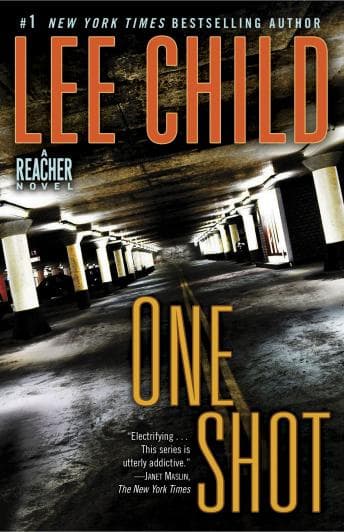
I was making a vindaloo—way too spicy, just how I like it—when I started One Shot. And honestly? This is the specific book that proves why Jack Reacher is a fascinating psychological anomaly. He has no home, no job, no baggage. He is the anti-human. And we love him for it.
When the Voice Matches the Knuckles
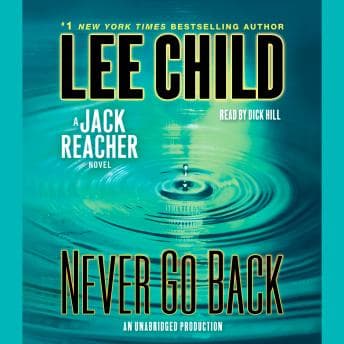
We need to talk about Dick Hill. If you look up "gravel" in the dictionary, it should just play a clip of this man's voice.
I've read the physical books, but hearing Hill do Reacher is a totally different neural pathway. He sounds tired. Cynical. Like he's seen everything and is unimpressed by all of it. It's perfect.
Some reviews I read mentioned hearing him swallow or pause sometimes. Yeah, I heard it. Did it bother me? No. Actually, it made it feel... intimate? Like an old detective telling you a war story over a cheap beer in a dive bar. It added texture.
That said—and this is me putting my critical hat on—his female voices are a little bit... 1980s caricature. The defense lawyer, Helen Rodin, sometimes sounded a bit breathless. It didn't ruin it for me, but it's a classic narrator trap.
The Psychology of the Drifter
Here's why this specific story works so well. The premise—a sniper shoots five people, seemingly at random—is terrifying because it feels chaotic. The human brain hates chaos. We crave patterns.
Reacher enters the scene not as a hero, but as a pattern-recognition machine. Lee Child writes him with this ruthless, almost autistic-coded efficiency that is incredibly satisfying to follow. While the cops are looking at the "who," Reacher is obsessed with the "why."
(Side note: The movie with Tom Cruise was based on this book. And look, I like Cruise, but psychologically? He is not Reacher. Reacher is a force of nature, not an action star. Dick Hill gets that. Cruise didn't.)
The pacing here is tight. There's a scene involving a coin toss and a street fight that is so visceral I actually stopped cutting vegetables to stare at the wall while listening. The violence is brutal, sure, but it's not gratuitous. It's physics.
Who This Is (and Isn't) For
If you want deep emotional growth or complex interpersonal relationships, go read a memoir. This isn't that. This is competence porn. It's watching someone be the absolute best at something terrible. Skip it if you need your protagonists to have feelings about their feelings. But if you want a protagonist who solves problems with logic and occasional violence? Welcome home.
Diagnosis: Therapeutic Violence
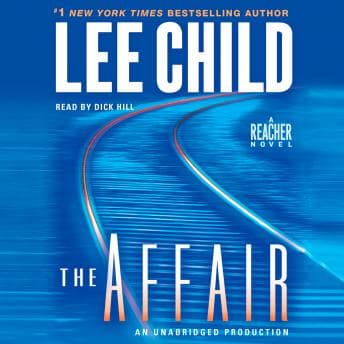
I finished this at 2 AM, feeling weirdly soothed. The bad guys were punished, the logic held up, and Reacher got on a bus. Sometimes, that's all the closure you need. That same stripped-down satisfaction is exactly what I got from Affair: A Jack Reacher Novel—same narrator, same ruthless efficiency, same 2 AM finish.
My mother would say Reacher needs a wife and a steady job. I say he just needs to keep walking.