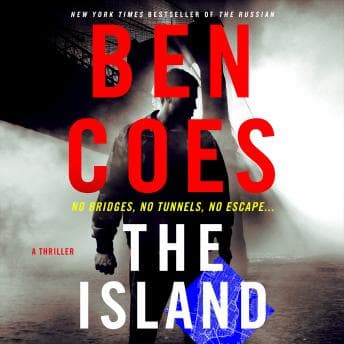

Everyone kept telling me the Dewey Andreas series was like Die Hard meets Jack Ryan, and honestly? I rolled my eyes. I've heard that pitch before. Usually it means "generic action hero does generic action things." But I was wrong. Three AM, dead quiet on the unit—the kind of quiet that makes you nervous—and I'm charting while Ari Fliakos describes terrorists systematically blowing up every bridge and tunnel connecting Manhattan to the mainland. My heart rate was doing things that would've set off my own telemetry monitors.
Here's the thing about action thrillers and medical accuracy: I've learned to lower my expectations. But Ben Coes? The man worked in the White House. He knows how systems actually work—government systems, military response protocols, the chain of command when everything goes sideways. End Game has that same grounded approach to high-stakes political maneuvering. When the President gets trapped in the U.N. building and the response unfolds, it felt... plausible. Not Hollywood plausible. Actually plausible. (My bar is low, I know, but you try listening to a thriller where someone gets "shocked back to life" with a defibrillator on a flatline and tell me you don't appreciate accuracy.)
When Detail Becomes a Double-Edged Scalpel
Here's where I have to be honest. Some reviewers complained about excessive detail making the pacing drag, and I get it. There are moments where Coes describes tactical movements with the precision of a surgical procedure—which, professionally speaking, I appreciate, but also... sometimes you just want the action to move. The chapters can feel disjointed, jumping between multiple storylines. During one particularly chaotic section, I had to rewind because I'd lost track of which terrorist cell was doing what.
But here's my counterpoint: I listen to audiobooks at 3 AM when I'm trying not to think about the trauma bay. I need something that demands my attention. The detail kept me focused. The jumping perspectives kept me guessing. Would I feel differently listening during a relaxed Sunday morning? Probably. Context matters.
Fliakos Matches Dewey's Cold Competence
There's apparently some debate about whether Ari Fliakos or Peter Hermann is the better narrator for this series. I haven't listened to Hermann's versions, so I can't compare directly. What I can tell you is that Fliakos matches Dewey Andreas's energy—and Dewey is basically a human weapon who's been sent "off the grid" because the CIA is worried he's being targeted. Fliakos doesn't try to make him warm and fuzzy. He leans into the cold competence, the barely-contained violence. When Dewey sneaks onto Manhattan to fight what should be an impossible battle, Fliakos makes you believe this man could actually do it.
The action sequences hit hard. The opening scene comes in with what I can only describe as a resounding bang—sets the tone immediately. The Mystery of Mary takes the opposite approach with a slower build, but both know how to establish their rhythm from page one. No gentle introduction. Just boom, we're in it.
Fair Warning: This Book Has a Mouth on It
Carlos asked why I was muttering "Jesus Christ" during breakfast prep after my shift. Had to explain that the F-bomb count in this audiobook is somewhere around 50. Which—look, I work in a trauma center. I've heard worse from patients, families, and definitely from surgeons. But if you're listening around kids or in a shared space, headphones are non-negotiable. The violence is also intense. Not gratuitous, but not sanitized either. People die badly. If you're squeamish, this isn't your book.
Who Gets the Green Light (And Who Should Pass)
Perfect for that post-shift decompression when you need something that'll occupy your whole brain. If you like your thrillers with real tactical detail and don't mind working a little to follow multiple storylines, this delivers. Fans of the Dewey Andreas series seem to consider this one of the better entries—some are calling it their favorite.
Skip it if you want a breezy, easy listen. Skip it if strong language bothers you. Skip it if you need chapters that flow smoothly into each other. The structure is choppy by design, but choppy isn't for everyone.
Night Shift Approved
Eleven hours is a commitment, but it flew by faster than I expected. I finished it over four shifts, and each time I got back in my car, I was genuinely eager to continue. That's not nothing. When you're exhausted and your brain is fried from actual life-or-death situations, the last thing you want is a book that bores you. This one kept me alert. Kept me engaged. Made me yell at my dashboard a few times—but in a good way.
My mom would probably hate this. Too violent, too much swearing, not enough romance. But she still thinks I should've been a doctor, so what does she know?