
"The evidence of sense is a kind of evidence which we are under a necessity of relying upon, and which it is impossible for us to doubt."
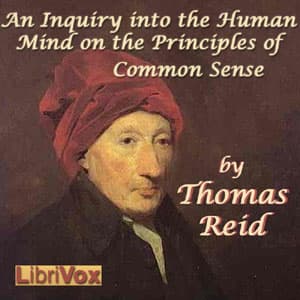
That line hit me somewhere around the two-hour mark, driving back from a client meeting in Houston. Reid's laying out his case against the philosophical skeptics of his day, and I'm thinking—this is exactly the kind of foundational thinking we've lost. The man's arguing that when you see a tree, you're actually seeing a tree, not some mental representation of a tree. Sounds obvious, right? But in 1764, this was fighting words against the dominant philosophy.
When a Scottish Minister Picked a Fight with John Locke
Let me cut to the chase: this is dense material. Ten hours of 18th-century Scottish Enlightenment philosophy isn't exactly light entertainment. Reid systematically dismantles the empiricist position that all knowledge comes purely from sensation. His target? Locke, Berkeley, Hume—the heavy hitters. And he does it with the methodical precision of a good after-action report.
What makes Reid worth your time is his common sense approach. He's essentially saying: look, if your philosophy leads you to conclude that the external world might not exist, maybe your philosophy is broken, not reality. As someone who's had to make life-or-death decisions based on what my senses told me in Kandahar, I appreciate a philosopher who respects the evidence right in front of him.
The structure follows Reid's examination of each sense—smell, taste, hearing, touch, sight—and what each actually contributes to our knowledge. It's systematic, almost military in its organization. But here's where it gets interesting: he's not just cataloging sensations. He's building a case that our minds come pre-equipped with certain principles—what he calls "common sense"—that aren't learned from experience but are necessary for experience to make any sense at all.
The LibriVox Reality Check
Now, about the audio production. This is LibriVox, which means volunteer readers. And with a ten-hour philosophical treatise, you're getting multiple narrators across chapters. The quality varies—some readers handle Reid's 18th-century prose with appropriate gravity, others sound like they're reading a grocery list. No music, no production flourishes, just straight reads.
Is this a problem? Depends on your expectations. For a free audiobook of a 260-year-old philosophy text, you're getting exactly what you pay for. The inconsistency between readers actually helped me stay alert during the denser passages—each chapter felt like a fresh start. But if you're used to polished productions with professional narrators, this will test your patience.
The language itself is the bigger challenge. Reid writes in the formal style of his era—long sentences, careful qualifications, references to contemporary debates that require some context to fully appreciate. At 1.25x speed, it's manageable, but you'll want to be in a focused state. This isn't background listening material.
Who Should Deploy This (And Who Should Stand Down)
If you've got any interest in epistemology—how we know what we know—Reid is essential reading. Schopenhauer called this book "ten times more instructive than all the philosophy written since Kant," and while that's probably hyperbole, the man had a point. Reid influenced everyone from the American Founders to modern cognitive scientists.
This is for: philosophy students, history of ideas enthusiasts, anyone who's ever gotten into a late-night argument about whether reality is "real." Also useful if you're trying to understand where certain strains of American pragmatism came from—Reid's common sense philosophy had a direct pipeline to the Founding Fathers through Scottish education.
Skip if: you want entertainment, you need a polished production, or you're not willing to actively engage with the material. This demands attention. I had to rewind sections multiple times, and I'm no stranger to dense briefings.
Debrief Complete
Worth your time? Here's the honest assessment. As a historical document and a work of philosophy, Reid's Inquiry is legitimately important. He engages seriously with Locke, Berkeley, and Hume, and his counterarguments are rigorous. The LibriVox production is serviceable but uneven.
I found myself thinking about Reid's arguments days later, particularly his point that skepticism about the external world is self-defeating—you can't consistently live as if nothing is real. That's the kind of insight that sticks.
Marcus Luttrell spends a good chunk of Lone Survivor wrestling with a different kind of certainty—what your body and training are telling you when theory and reality diverge under fire—and it's the same tension Reid's circling around, just without the footnotes.Ranger slept through most of this one, but he's not much for epistemology. For those willing to put in the work, this is a foundational text that rewards close attention. Just don't expect the narration to carry you through the tough parts.






![Steve Jobs [unabridged audiobook] audiobook cover](/_next/image?url=https%3A%2F%2Fcovers.audiobooks.com%2Fimages%2Fcovers%2Ffull%2F9788499923406.jpg&w=1920&q=75)