
Look, I Know What You're Thinking
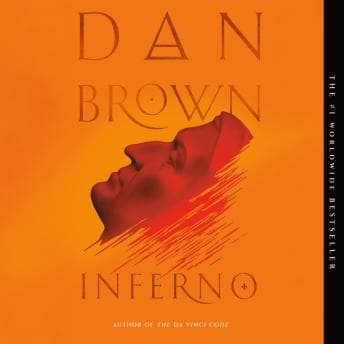
Another Dan Brown book? Really, Tom? Yes. Really. I was grinding through a particularly soul-crushing debugging session at 2 AM - my thesis code was throwing errors that made no sense, Dr. Patel's last email was still haunting me, and I needed something that would keep me awake without requiring actual brainpower. Inferno hit different at that hour. Paul Michael's voice cutting through the silence of my apartment, Robert Langdon stumbling around Florence with amnesia, and me pretending I was being productive while absolutely not working on procedural generation.
Here's the thing about Dan Brown novels: they're basically literary popcorn. You know exactly what you're getting. Symbology professor gets caught up in ancient conspiracy, runs around famous European landmarks, solves puzzles while being chased by mysterious figures. It's the same formula as The Da Vinci Code and Angels & Demons. If you want more Dan Brown but with a different flavor, Deception Point trades art history for NASA conspiracy theories. And honestly? I'm fine with that. Sometimes you want a Sanderson-level magic system with 400 pages of appendices. Sometimes you want a guy running through the Palazzo Vecchio while someone explains Dante's Inferno to you.
Paul Michael Absolutely Nails It
Okay, so the real reason to grab the audiobook instead of the print version - Paul Michael. This dude's Italian pronunciation is chef's kiss. When he's rattling off location names and art history references, it sounds authentic. Not like when I try to pronounce things in my D&D campaigns and my players just stare at me. The narration quality here rivals what I heard in Court of Wings and Ruin - both narrators understand that voice work can make or break a thriller. His Langdon is measured and professorial without being boring, which is harder than it sounds. The man has to deliver paragraphs of exposition about Botticelli and the Black Death and somehow make it feel urgent.
What really impressed me though? The minor characters. There's this thing some narrators do where everyone who isn't the protagonist sounds like a cardboard cutout. Paul Michael doesn't do that. Sienna Brooks gets this slightly softer delivery that works for her character. The various Italian officials and villains each have their own thing going on. It's not full-cast production level, but it's way better than the single-narrator monotone you sometimes get with thrillers.
The pacing is steady - not breakneck, but it keeps moving. At 17 hours, this could've dragged hard. It doesn't. I got through it over maybe a week of coding sessions and one very long drive back to my parents' place. (Mom asked about my thesis. I changed the subject to Italian Renaissance art. She was confused but impressed.)
The Dan Brown Experience (For Better and Worse)
Let's be real for a second. If you've read one Robert Langdon book, you know the beats. Mysterious opening, amnesia twist (that's new-ish), chase sequences through famous locations, historical puzzles, shocking revelation about a character's true motives, ending that makes you go "huh, okay." It's formulaic. But it's a formula that works.
The Dante stuff is actually pretty interesting. Brown does his research - or at least, he presents enough detail that it feels researched. I found myself pausing the audiobook to look up Botticelli's Map of Hell and the actual structure of Dante's Inferno. That's the Dan Brown effect. He makes you feel smarter for consuming what is essentially a beach read thriller. Is it accurate? Probably not entirely. Do I care? Not really. I'm the guy who defends LitRPG stat blocks in fiction. I'm not here to gatekeep historical accuracy.
The villain's motivation is... look, it's about overpopulation and extreme solutions. It felt edgy in 2013 when this came out. Now it hits a little different post-pandemic. Not in a bad way, just - yeah. The themes about plague and population control are weirdly prescient. Or maybe Dan Brown just reads a lot of scientific journals. Either way, it adds weight to what could've been a generic "mad scientist" plot.
Who Should Listen (And Who Should Skip)
If you're already a Langdon fan, you know if you want this. It's more of what you liked before. If you've never done a Dan Brown audiobook, this is honestly a solid entry point - the amnesia angle means you're learning things alongside Langdon instead of him just lecturing.
Best for: long drives, coding sessions, chores, anything where you need your brain partially engaged but not fully. It's not a "stop everything and focus" book. It's a "make the boring parts of life more interesting" book. I listened while doing laundry, while debugging, while pretending to organize my board game collection.
Skip if: you hate info-dumps (though honestly, you're wrong), you want something unpredictable, or you're allergic to the Dan Brown formula. Also maybe skip if discussions of plague and mass death aren't your thing right now. Fair warning.
The audio quality is clean, professional, no weird production issues. Paul Michael has Audie Awards for a reason. At 1.25x speed it flows nicely if you're impatient, but honestly the default pace works fine.
Final Verdict
Is this high literature? No. Is it a perfectly executed thriller audiobook that kept me awake through multiple late-night coding sessions? Absolutely. Paul Michael elevates material that could've been forgettable into something genuinely entertaining. The Italian pronunciation alone is worth the price of admission. My D&D group would probably roll their eyes at the historical accuracy, but they'd also secretly enjoy it.
I listened to this instead of writing my thesis. Worth it. (Sorry, Dr. Patel.)