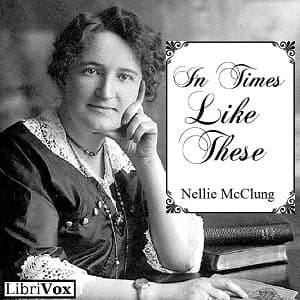

Nellie McClung was absolutely furious. And I mean that as the highest compliment.
I started this audiobook during a Sunday afternoon cooking session - one of those elaborate biryani situations that takes three hours and requires you to stay close to the stove. By the time the rice was layered, I'd completely forgotten about dinner. McClung had me pacing my kitchen, wooden spoon in hand, muttering "yes, exactly" to no one.
A Psychologist's Dream Subject
Here's what fascinates me about McClung: she was doing applied psychology before the field had a name. Published in 1915, In Times Like These reads like a case study in cognitive dissonance - specifically, how an entire society convinced itself that half its population was simultaneously too delicate for voting booths but sturdy enough for factory floors and childbirth.
McClung understood something that modern researchers have only recently quantified: people don't change their minds because of logic. They change because someone makes them feel the absurdity of their position. Her weapon of choice? Humor so sharp it leaves marks.
The protagonist here - and yes, I'm treating McClung herself as a character, fight me - exhibits classic cognitive reframing techniques. She takes anti-suffrage arguments and simply... reverses the gender. What if men couldn't vote because they're too emotional? Too focused on business to understand domestic policy? The research actually shows this technique (perspective-taking through role reversal) is one of the most effective tools for building empathy. I saw similar psychological insight at work in Adult Children of Emotionally Immature Parents, which uses reframing to help readers see their family dynamics from outside their own defensive patterns. McClung was doing it a century before psychologists gave it a name.
The Voice Carrying History
DPranitis delivers this as a LibriVox recording, which means we're working with volunteer narration rather than studio production. The audio is clean and clear - no distracting background noise or jarring cuts. The pacing is measured, almost conversational, which actually suits McClung's rhetorical style. She wrote these essays to be read aloud at suffrage meetings, and hearing them spoken restores something that reading alone might miss.
What I found myself asking: why does this voice work? It's not theatrical. There's no dramatic emphasis on the satirical passages. And somehow that restraint makes McClung's wit land harder. The understatement lets you arrive at the joke yourself.
At just over five hours, this is a manageable commitment. I'd recommend taking it in chunks - maybe an hour at a time - because McClung packs so much into each essay that you need processing time.
When Rage Becomes Literature
This is a fascinating case study in how anger transforms into art. McClung isn't just mad - she's strategically, productively, brilliantly mad. She builds arguments the way a prosecutor builds cases, stacking evidence until the opposition's position collapses under its own weight.
But here's the uncomfortable part: reading this in 2024, you'll recognize every single argument. The "but women are different" justifications. The "we're protecting you" paternalism. The concern-trolling about how equality would actually hurt women. McClung died in 1951, and somehow we're still having these conversations.
Psychologically, this doesn't entirely track - you'd expect a century of progress to have retired these rhetorical strategies. But that's what makes this book valuable as a primary source. It's not just history. It's a diagnostic tool. The Short and Tragic Life of Robert Peace works the same way - ostensibly a biography, but really a case study in how systemic barriers persist across generations despite individual brilliance.
Who This Is For (And Who Should Skip It)
If you study rhetoric, feminism, Canadian history, or just want to understand how social movements actually work - this is essential listening. McClung was a master class in persuasion, and her techniques are still applicable. Skip it if you want neutral historical overview or academic detachment. McClung had an agenda and she pursued it with zero apologies. That's either refreshing or exhausting depending on your tolerance for conviction.
Also worth noting: this is early 20th century feminism, with all the limitations that implies. McClung's arguments occasionally rely on class assumptions and maternal essentialism that haven't aged well. She was a product of her time, fighting battles with the tools available. Understanding that context is part of the listening experience.
My Therapist Would Have Thoughts
She'd probably point out that I spent five hours listening to a woman from 1915 articulate frustrations I still feel in 2024, and maybe that's not entirely healthy. She'd be right. But she'd also understand why I needed it.
Some books are cathartic. Some are educational. This one manages to be both - a historical document that feels uncomfortably current, delivered in a format that honors its origins as spoken word.
The biryani turned out great, by the way. McClung would approve of multitasking.