
I was debugging a particularly gnarly race condition at 11 PM, too wired to sleep but too fried to actually think, when I decided to throw on some classic Wells. Something about Victorian sci-fi feels right when your brain is mush and your coffee has gone cold. What I got was... complicated.
Bottom Line: Worth your commute if you get the right version. But there's a catch, and it's a big one.
The Setup Is Basically Incel Revenge Fantasy Meets Climate Fiction
Look, I need to be honest about what this book actually is. Willie is in love with Nettie. Nettie runs off with a rich guy. Willie decides murder is the appropriate response. This is the plot of the first half. Wells wrote this in 1906, and it shows—not in the prose, which is genuinely beautiful, but in the way Willie's obsession is treated as romantic tragedy rather than the red flag parade it actually is.
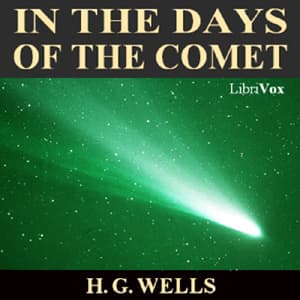
But here's where Wells does something interesting: the comet. That green glow in the sky isn't just set dressing. When Willie is literally about to pull the trigger—battleships are shelling the coast and he's lost his targets in the chaos—the comet's gas puts everyone to sleep. When humanity wakes up, they're... different. Better. The rage is gone, replaced by something like collective clarity.
It's basically The Purge in reverse. Instead of one night where everyone's worst impulses come out, it's one night where everyone's worst impulses get wiped clean. As someone who's seen what happens to distributed systems when you wipe the cache and start fresh—sometimes it works beautifully, sometimes you lose everything important. Wells is firmly in the optimist camp.
The Socialist Manifesto Problem
Okay, so some listeners HATE the second half of this book. And I get it. Once humanity wakes up transformed, Wells basically uses the remaining hours to describe his utopian vision in excruciating detail. Free love! Communal property! The end of jealousy! If you're expecting War of the Worlds-style action, you're going to be disappointed.
But here's my take as someone who reads business books that could've been blog posts: at least Wells commits. He's not hedging. He genuinely believed a cosmic event could reset human nature, and he spends the back half exploring what that would actually look like. Is it heavy-handed? Absolutely. Is it naive? By 2024 standards, painfully so. But there's something almost charming about that level of earnest optimism.
The ROI on this audiobook depends entirely on what you're looking for. If you want action and plot, front-load your attention. If you're interested in early 20th century utopian thought (and honestly, it's fascinating as a historical artifact), the back half is where Wells really gets going.
The Narrator Lottery
Here's where I have to issue a serious warning. This is a "Various Readers" situation, and the quality varies WILDLY. I ran into the same lottery with Middle Temple Murder—also Various Readers, also a coin flip on whether your assigned narrator is an asset or an obstacle. The LibriVox-style volunteer recordings are a mixed bag—some versions have been called "almost impossible to listen to" due to mispronunciations and pacing issues. One reviewer specifically called out the Roger Wood version as error-filled.
I got lucky with my version—the clarity was good enough that Wells' prose came through, and his mode of thinking really is captured with striking precision when the narrator isn't stumbling. But this is the audiobook equivalent of a legacy codebase: some parts are elegant, some parts make you want to scream, and you won't know which until you're already invested.
At 1.5x speed, the pacing issues become more noticeable in the rough patches. I'd actually recommend 1.25x for this one, which is unusual for me. Give yourself time to process the language—Wells writes in long, winding sentences that reward patience.
Who Gets Value Here (And Who Should Bail)
Perfect for: Train rides, insomnia, any situation where you want something intellectually interesting but not plot-critical. If you zone out during the utopia sections, you won't miss crucial story beats. Wells completists and anyone curious about pre-WWI socialist thought will find this genuinely fascinating.
His other work holds up similarly as historical artifact—I gave Island of Dr. Moreau a similar rating for exactly that reason: brilliant premise, dated execution, worth your time anyway.Skip if: You need consistent narration quality, you're allergic to political philosophy in your fiction, or you're expecting Martian tripods. Also skip if preachy utopian monologues make you want to throw your phone.
This is basically a thought experiment with a murder mystery wrapper. The science doesn't hold up (comets don't work like that, obviously), but Wells isn't really writing hard sci-fi here. He's writing social commentary with a cosmic reset button.
The Debug Report
I finished this across four late-night sessions, which is probably the right way to experience it. The book has two distinct halves that almost feel like different novels stitched together. The first half is tense, personal, driven by Willie's increasingly unhinged narration. The second half is philosophical, expansive, and yeah, preachy.
Would I recommend it? With caveats. Check which version you're getting before you commit. Accept that you're signing up for early socialist propaganda dressed in sci-fi clothing. And maybe have something lighter queued up for after—I followed this with a Bobiverse relisten, which was the correct palate cleanser.
Wells was trying to imagine how humanity could be better. That he thought it would take a cosmic accident rather than our own effort says something about his faith in us. Over a century later, I'm not sure he was wrong to be skeptical.