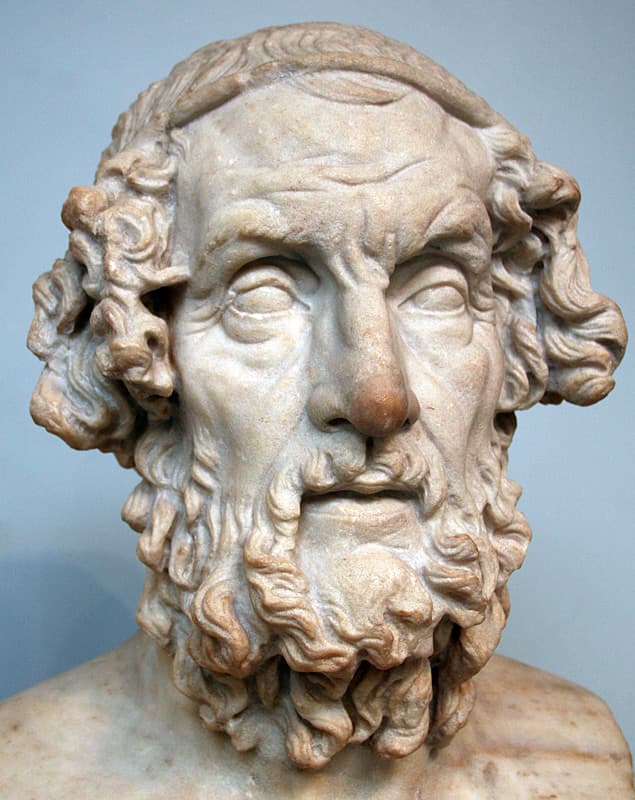

What happens when 73 strangers decide to resurrect a 2,800-year-old war poem?
I've been teaching Homer for two decades. I've watched students' eyes glaze over at "wine-dark sea" and "rosy-fingered dawn." I've graded papers where kids clearly SparkNoted their way through Achilles' rage. And yet here I am, walking the lakefront at 6 AM on a Saturday, genuinely moved by volunteers reading ancient Greek poetry into their laptop microphones.
This is the LibriVox Iliad. It's free. It's messy. It's weirdly beautiful.
The Chorus of Voices Problem (That Isn't Really a Problem)
Let's address the obvious: this is not a polished Audible production. You've got 73 different readers cycling through 24 books of dactylic hexameter. One reader has a slight Southern drawl. Another sounds like they're recording in what might be a bathroom. ML Cohen—and multiple reviewers agree on this—stands out as genuinely excellent, bringing real theatrical weight to the text.
But here's the thing. The Iliad wasn't written. It was sung. By different bards. In different villages. Over centuries. The poem itself is a patchwork of oral tradition, stitched together from countless performances by countless voices. That same sense of voices layered across time shows up in Blood of the Covenant, though obviously with less dactylic hexameter. So this LibriVox version, with its rotating cast and varying audio quality? It's accidentally authentic in a way that expensive productions aren't.
My students would hate this take. I love it.
When Hector Says Goodbye
Book Six. Hector returns to Troy and finds his wife Andromache with their infant son. The baby screams at Hector's war helmet—terrified of his own father's bronze crest. Hector laughs, removes the helmet, and holds his boy.
He'll be dead within days.
The volunteer reading this section didn't do anything fancy. No dramatic pauses, no actorly choices. Just the words, delivered plainly. And somehow that plainness made it worse. More real. Denise asked why I'd stopped walking. I was just standing there, staring at the lake.
This is why we still read the classics. Not because English teachers like me force them on teenagers. Wolf Hunters wrestles with some of those same father-son dynamics, though in a very different context. Because a poet nearly three millennia ago understood something about fathers and sons and war that we still haven't figured out.
The Commitment Question
Fourteen and a half hours. That's the ask. And unlike contemporary audiobooks where you can zone out during exposition, Homer requires attention. The catalogues of ships. The genealogies of warriors. The extended similes comparing soldiers to bees, to lions, to waves breaking on rocks.
I listened at 1.0x because—and I know this sounds pretentious—the rhythm matters. The repetition is intentional. Speed this up and you lose the incantatory quality that made these poems sacred texts for an entire civilization.
But I'll be honest: I split this across three weeks. Some mornings I only managed twenty minutes before faculty meetings. Some nights I fell asleep during battle catalogues and had to rewind. This isn't a binge-listen. It's a slow commitment, like reading the actual text but with someone else doing the heavy lifting.
Who Should Press Play (And Who Should Skip)
If you tried reading the Iliad in college and gave up around Book Two (when Homer spends what feels like an eternity listing every Greek ship), this might save you. Hearing the names spoken—even imperfectly—helps your brain process them as sounds rather than puzzles. If you're a teacher looking for something to recommend to students who genuinely can't afford audiobooks? This is it. One reviewer specifically mentioned finally understanding the story after struggling with the text. That matters.
Skip this if you want a premium audio experience with consistent production values. Robert Fagles' translation read by Derek Jacobi exists. It's gorgeous. It's also not free.
Worth Pausing the Faculty Meeting For
I can't give this a perfect score. The audio quality varies. Some readers are better than others. There's no music, no sound effects, no professional editing to smooth transitions between volunteers.
But I also can't dismiss what LibriVox has done here. They took the oldest work of European literature and made it accessible to anyone with an internet connection. They did it for free. They did it with love.
The Iliad is about glory—the desperate human need to be remembered after death. These 73 volunteers probably won't be remembered. But they gave voice to Achilles, to Hector, to Priam begging for his son's body. They kept a 2,800-year-old story alive for another generation.
That's its own kind of glory.