
The Night Shift
I was driving back from a site survey in San Antonio—pitch black on I-35, just me and the hum of the tires—when I started this. Bad idea.
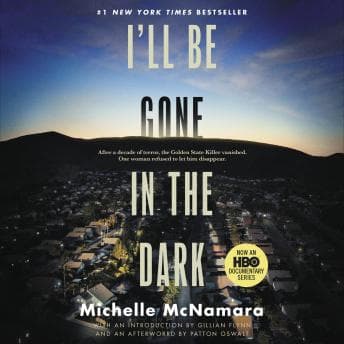
Usually, I keep the heavy stuff for daylight hours. But I'll Be Gone in the Dark isn't your standard "whodunit" paperback that Linda picks up at the airport. This is an operation. A deep, obsession-fueled intelligence gathering mission that just happens to be about one of the worst predators in American history.
(And honestly, listening to this while checking your rearview mirror every thirty seconds? It adds a layer of paranoia I haven't felt since my first tour in the sandbox.)
The Intel Analyst Without a Badge
Here's the thing about Michelle McNamara. She wasn't a cop. She wasn't a fed. But the way she worked? She dug through data like an intel analyst looking for IED patterns in a haystack.
I respect that.
Most true crime books are gawkers. They look at the blood and the gore and try to shock you. That same analytical rigor—looking past the surface to understand systems—is what makes New Jim Crow so powerful. McNamara looked at the data. She looked at the geography, the timeline, the specific knots used in the bindings. She treated the Golden State Killer (GSK) not like a monster under the bed, but like a target to be acquired.
But—and this is where it gets heavy—she makes it personal. The book isn't just about the creep climbing through windows in the 70s. It's about the cost of the hunt. The late nights. The obsession that eats at your sleep and your relationships. I've seen guys get like this downrange, obsessing over a High Value Target until they burn out. McNamara burned the candle at both ends, and frankly, it's tragic she didn't live to see the cuffs go on.
The Voice in the Dark
Gabra Zackman handles the heavy lifting here, and she nailed it.
She doesn't do that annoying "spooky voice" that some narrators use when they're trying to sell a murder mystery. She plays it straight. Calm. Almost clinical. It's the voice of a professional giving a briefing on a grim situation. The facts are terrifying enough on their own. You don't need to dress them up.
(There's a section where she describes the killer's heavy breathing on the phone... had to turn the volume down. Ranger, my German Shepherd, actually perked his ears up at that part. He knew something was off.)
The intro by Gillian Flynn and the afterword by Patton Oswalt (McNamara's husband) are tough. Especially Oswalt. You can hear the raw edge in the writing there. It reminds you that while we're being entertained by a mystery, real people lost a wife, a mother, a friend.
The Fog of War
Now, for the critique. If you want a straight A-to-Z timeline, you're going to get frustrated.
This book is messy.
It jumps around between the 70s, the 80s, and McNamara's present-day investigation. Less of a linear story and more like looking at a detective's corkboard covered in string and photos.
At times, I lost track of which attack we were discussing or which jurisdiction we were in. Sacramento? Orange County? It blurs. But in a way, that's accurate to the case. The GSK used jurisdiction lines against the cops. The confusion was part of his MO. So, while it bugged the part of my brain that likes orderly After Action Reports, it worked for the atmosphere.
Fair warning: This isn't background noise. I tried listening while doing inventory in the garage and realized I'd missed ten minutes of crucial connections. You have to lock in.
The Debrief
This isn't an easy listen. It's dark, it's disturbing, and it's unfinished in the saddest way possible. But it's also a clinic in how to hunt a ghost.
McNamara didn't catch him herself, but she lit the fuse that eventually blew the case wide open.
Who should listen: True crime fans who want substance over sensationalism, and anyone who appreciates obsessive, data-driven investigation. Who should skip: If you need linear structure or can't handle graphic descriptions of home invasions and sexual assault, steer clear.
If you can handle the darkness, it's worth the ride. Just maybe don't listen to it alone on a dark highway.
Mission accomplished, Michelle.