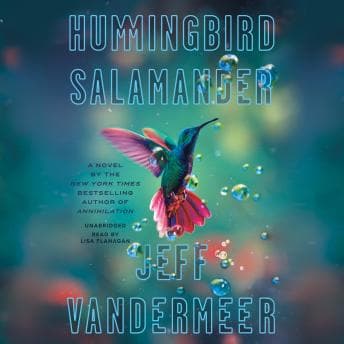

Everyone kept telling me VanderMeer is weird. That his books are strange fever dreams you either surrender to or bounce off hard. And I'd nod along, having only read Annihilation years ago—which was weird, sure, but manageable weird. So I went into Hummingbird Salamander expecting literary strangeness.
What I got instead was a conspiracy thriller wearing an ecological horror costume. And I'm still not sure how I feel about that.
The Obsession That Eats Everything
Let me set the scene: It's 2 AM, Denise is asleep, I've got a stack of sophomore essays on The Great Gatsby that I'm definitely not grading, and Lisa Flanagan is whispering about taxidermied endangered species into my earbuds. Jane Smith—not her real name, obviously—receives a key from a dead woman. That key leads to a storage unit. That storage unit contains a hummingbird. That hummingbird becomes an obsession that consumes her career, her marriage, her sanity.
This reminds me of what Hemingway said about writing—the iceberg theory, where the dignity of movement comes from what's left unsaid. VanderMeer inverts that. Everything is said. Jane's paranoid narration spills over with detail, with suspicion, with the creeping certainty that climate collapse isn't coming—it's already here, and we're all just pretending not to notice.
Flanagan's dry, slightly insinuating delivery is perfect for this. Her voice has this quality—not quite cold, but reserved. Watchful. When Jane describes her transformation from suburban security consultant to someone willing to break into buildings and assault strangers for answers, Flanagan doesn't dramatize it. She just... lets it happen. The restraint is chilling.
When Silence Becomes Punctuation
Here's where I have to give credit: Flanagan does something remarkable with the male characters. There's a scene—I won't spoil it—where Jane confronts someone from Silvina's past, and Flanagan shifts into this lower register that's distinctly masculine without becoming a caricature. She differentiates without performing. That's harder than it sounds. I've listened to plenty of audiobooks where the narrator's "man voice" pulled me right out of the story. Not here.
The urgency in her delivery matches VanderMeer's short, punchy sentences. This is a book that moves in staccato bursts. Observation. Suspicion. Action. Consequence. Flanagan rides that rhythm beautifully.
But—and there's always a but—I understand why some listeners found the experience frustrating. The plot tangles. It doubles back. Jane's obsession with Silvina becomes the reader's obsession with Jane's obsession, which is either brilliant metafiction or exhausting recursion depending on your patience. By hour eight, I was invested but also... tired? The way you're tired after teaching back-to-back periods of juniors who want to argue that Holden Caulfield is "just annoying."
The Ending Problem (No Spoilers, I Promise)
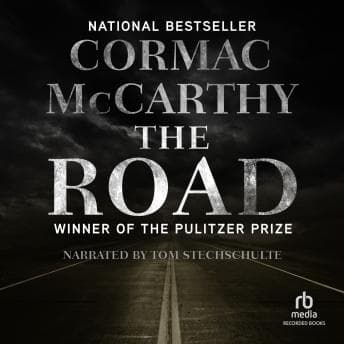
Look, I'm not going to pretend the conclusion satisfied me. VanderMeer is doing something deliberate here—the anti-climax mirrors the real-world truth that ecological collapse doesn't have a neat resolution, that our individual actions against systemic destruction are necessarily incomplete. I get it. I teach this stuff. When we read The Road in my senior elective, I spend a whole period on McCarthy's refusal to give us hope.
But understanding a choice intellectually doesn't mean it lands emotionally. The final stretch is beautiful—genuinely beautiful, with some of VanderMeer's best prose—but it left me with that hollow feeling. Like finishing a meal that was technically perfect but somehow didn't fill you up.
Flanagan, for her part, delivers the ending with appropriate weight. If the material had given her more to work with, I think she'd have devastated me.
Who Should Press Play (And Who Should Walk Away)
If you loved Annihilation but wished it had more conspiracy thriller DNA—this is your book. If you want ecological horror that doesn't flinch from implicating everyone, including its protagonist, including you—this is your book. If you need tidy resolutions, skip it. If you listen to audiobooks as background noise while doing other things, definitely skip it. This demands attention. The layers are the point.
My students would hate this. The ambiguity, the unreliable narrator, the way VanderMeer refuses to tell you what anything means. That same refusal to provide easy answers drives Yellow House, though it approaches the mystery from a completely different angle. They'd call it "confusing" and "pointless" and I'd spend three days trying to explain that sometimes art asks questions instead of answering them.
I loved it. Mostly.
Worth Pausing the Faculty Meeting For
Here's my honest assessment: Lisa Flanagan's performance elevates material that could have been impenetrable. VanderMeer's prose deserves to be savored—this is absolutely a 1.0x book, don't you dare speed it up—and Flanagan understands that. The conspiracy elements work. The ecological dread works. The character study of a woman dismantling her own life works.
The ending doesn't quite work. But I'm still thinking about it three days later, which is more than I can say for most thrillers.
Worth your time. Worth your credit. Just don't expect closure.