
Look, I teach teenagers who think Fitzgerald is ancient history, so when I tell you that a book about a ten-year-old girl navigating family secrets in rural Australia kept me grading papers until 2 AM, you should understand the gravity of that statement.
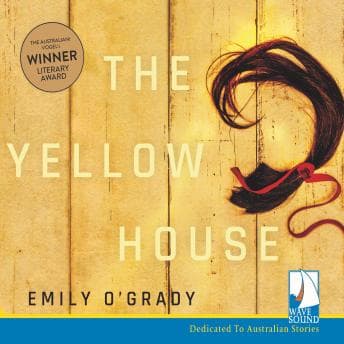
Emily O'Grady's The Yellow House is one of those novels that sneaks up on you. I started it during my lakefront walk with Denise, thinking it would be a quick literary fiction listen. Eight hours later, I'm standing in my kitchen at midnight, dishes undone, completely wrecked by a story about inherited shame and the violence we pass down like heirlooms.
The Weight of What Children Don't Know
Here's what O'Grady understands that so many writers get wrong: children are unreliable narrators not because they lie, but because adults lie to them. Cub, our ten-year-old protagonist, lives in the shadow of her grandfather Les's crimes—crimes the community remembers but no one will explain to her. She knows something is wrong. She feels the ostracism, the whispers, the way her family has become pariahs. But she's piecing together a puzzle where half the pieces have been hidden in a drawer.
This is the kind of narrative tension I try to explain to my students when we read To Kill a Mockingbird. I tried teaching that same concept through Magic Shop, though honestly that one didn't land with the same emotional weight. Scout doesn't understand everything she witnesses—and that gap between what the child sees and what the reader understands creates this devastating dramatic irony. O'Grady does the same thing here, but darker. Much darker.
The prose itself deserves attention. O'Grady won the Australian/Vogel Literary Award for this—it's for unpublished manuscripts by writers under 35, basically Australia's way of saying "we found someone." And they did. Her sentences have this spare, haunting quality. The Australian landscape becomes almost Gothic, the abandoned knackery in the bottom paddock as menacing as any haunted house. My students would probably find the pacing slow. I found it deliberate. There's a difference.
Danielle Baynes and the Problem of Innocence
Baynes has a difficult job here, and I want to be honest about how she handles it.
She commits fully to Cub's voice—childlike, wondering, slightly bewildered by the adult world closing in around her. When the narration works, it really works. There are moments where Baynes captures that specific loneliness of being a kid who knows she's being lied to but can't prove it. The emotional delivery is sympathetic without being saccharine.
But here's the thing—sustaining a child's voice for eight and a half hours is a high-wire act. Some listeners apparently found it monotonous. I get that. During the longer descriptive passages, I did find my attention drifting occasionally. (This is where I admit I was also trying to grade sophomore essays on The Great Gatsby, so my focus wasn't exactly laser-sharp.)
The pacing issues aren't really Baynes's fault, though. O'Grady's prose is literary in the best sense—meaning it breathes, it takes its time. That translates differently in audio than on the page. When you're reading, you can skim a dense paragraph. When you're listening, you're committed.
When the Secrets Surface
The arrival of Cub's estranged aunt Helena and cousin Tilly into the yellow house—Granddad Les's old place—is when the novel really tightens its grip. Suddenly the buried history has a face. Suddenly Cub has someone to compare notes with, someone who might actually tell her the truth.
I won't spoil what Les did. The novel reveals it gradually, and that slow reveal is part of its power. But I will say this: O'Grady isn't interested in sensationalizing violence. She's interested in what violence does to the people left behind. How it shapes families across generations. How children inherit guilt they didn't earn.
(Don't tell my students I said this, but this is exactly the kind of book I wish they'd read instead of complaining about Faulkner. Same themes. More accessible. Still devastating.)
Who This Is (and Isn't) For
If you loved Room or My Year of Rest and Relaxation—books that use limited perspectives to illuminate larger horrors—this is your next listen. If you appreciate the Southern Gothic tradition but want to see it transplanted to the Australian outback, O'Grady delivers.
But if child narrators make you impatient? If you need plot to move at thriller pace? Skip this one. The novel sits with discomfort. It doesn't resolve everything neatly. Some readers found that frustrating. I found it honest.
I listened at 1.0x, obviously, because the prose deserves to be heard as written. But I could see bumping to 1.1x during some of the more meandering descriptive sections if you're feeling restless.
Cold Coffee and Inherited Ghosts
Denise asked me what I was listening to, and I tried to explain it, and I ended up just saying "it's about how families destroy themselves slowly." She nodded like she understood. Twenty years of marriage will do that.
The Yellow House is a debut novel that reads like the work of someone who's been writing for decades. It's not a comfortable listen. It's not meant to be. But it's the kind of story that stays with you—that makes you think about what secrets your own family might be keeping, what violence might be hidden in your own history.
Worth pausing the faculty meeting for. Definitely worth the lost sleep.