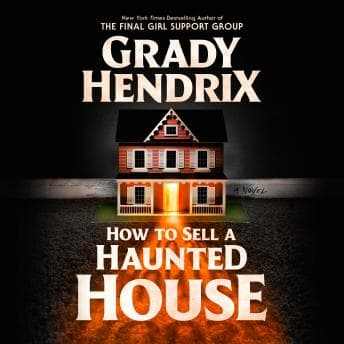

There's a moment early in this book—maybe around the two-hour mark—where Louise is just staring at her dead mother's puppet collection, and the sheer weight of the clutter hits her. That feeling? I know that feeling. I've seen families in the waiting room fighting over who gets mom's car keys while the doctor is still coding her in Trauma Bay 2.
I picked this up expecting a standard spook-fest for my drive home. You know, something to keep me awake on the I-10 after a twelve-hour shift. What I got was a therapy session interrupted by a slasher movie.
The Family Drama is the Real Horror
Let's be real for a second. I'm the eldest of five. I was the first to go to college. My mom wanted a doctor, she got a nurse (and she's finally happy about it, thank God). But listening to Louise deal with her brother Mark? I yelled at my dashboard. Loudly.
The way Grady Hendrix writes sibling resentment is so accurate it hurts. Mark is that family member who never grew up, the one who makes everything harder just by existing. And Louise is the one trying to hold it all together while falling apart.
I honestly forgot this was a horror book for the first half. It felt like a memoir of a dysfunctional family clearing out a hoarder house. That same slow-burn dread shows up in Haunted, though this one hits harder because the family dysfunction feels so real. As someone who deals with crisis for a living, watching these two bicker over inheritance while ignoring the obvious red flags (like, I don't know, the creepy dolls?) was exhausting. In a good way. It felt true.
Then the Puppets Started Talking
Okay, so about the narration. We've got a dual setup here with Jay and Mikhaila Aaseng. I usually like a single narrator—it's less jarring when I'm zoning out on the freeway—but this mostly worked.
Mostly.
Here's the thing: switching between a male and female narrator for different chapters can mess with the flow. You get used to one voice for a character, then bam, it changes. It took me a solid hour to stop twitching every time they swapped.
But—and this is a big but—Mikhaila's voice for Pupkin? That puppet?
Yikes.
It's this high-pitched, squeaky, nursery-rhyme nightmare fuel. There's a scene involving a needle (I won't spoil it, but as a nurse, I flinched) where the narration goes from "annoying little brother" to "pure psychological terror" in about three seconds.
I actually had to pause it in the driveway because I didn't want to walk into my dark house with that voice in my ear. House of a Thousand Candles creeped me out too, but at least that one didn't follow me home. Carlos asked me why I looked so pale when I came in. I told him it was just a long shift. (Lying to your husband about being scared of puppets is valid, right?)
Clocking Out on This One
This isn't just about a haunted house. It's about how we let our parents' baggage haunt us until we actually deal with it. Or until it tries to kill us with a hammer.
The pacing drags a bit in the middle—there's a lot of walking around Charleston and talking—but once the third act hits, it's chaos. Messy, loud, and weirdly emotional.
Who should listen: Anyone with complicated sibling relationships or unresolved family stuff—this will hit close to home. Who should skip: If you need constant scares to stay engaged, that slow-burn middle section might lose you. And if dolls already freak you out? Maybe don't.
Me? I'm just glad my mom only collects ceramic elephants.