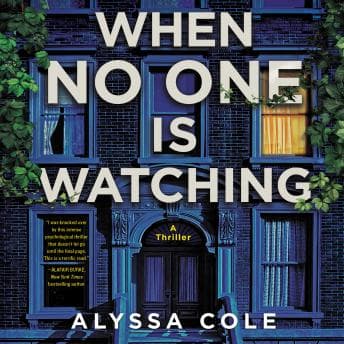

"History isn't sentimental. It doesn't give a damn about your feelings."
That line hit me somewhere around the two-hour mark, and I had to pause my walk along the lakefront to just... sit with it. Denise asked if I was okay. I wasn't, really. Not in the way you're "not okay" after a thriller gut-punches you with something true.
Look, I teach American literature. I've assigned Invisible Man and Native Son more times than I can count. I've watched students squirm through discussions about systemic racism, watched them try to keep it safely in the past tense. And then Alyssa Cole comes along and writes a thriller that makes gentrification feel like a horror movie—because, honestly? It kind of is.
The Rear Window Comparison Only Gets You Halfway There
The marketing calls this "Rear Window meets Get Out" and sure, fine, that's not wrong. But it undersells what Cole is doing here. Sydney Green isn't just watching her Brooklyn neighborhood change—she's documenting its erasure. The walking tour she creates isn't a hobby; it's an act of resistance. And when her new neighbor Theo (white, recently arrived, suspiciously helpful) wants to join her project, the tension isn't just "will they won't they." It's "can she trust him at all."
This is the part where I'd normally tell you the plot. But honestly, the less you know going in, the better. What I will say: Cole plays with your expectations brilliantly. Every time I thought I knew where this was going, she'd yank the rug. Not in a cheap twist way—more like she was showing me all the pieces and I was just too comfortable to see the picture.
(My students would probably figure it out faster. They're less trusting than I am. Good for them.)
Two Narrators, Zero Whiplash
Dual narration can go so wrong. I've listened to audiobooks where switching narrators felt like changing radio stations mid-song. Susan Dalian and Jay Aaseng don't have that problem. Dalian carries Sydney's chapters with this warm, grounded presence that slowly—so slowly you almost don't notice—tightens into something more desperate. She understands that Sydney's frustration isn't just anger; it's grief. Grief for a neighborhood, for neighbors, for a version of home that keeps slipping away.
Aaseng handles Theo's perspective with exactly the right amount of uncertainty. There's a moment early on where he cheerfully shouts "I've got beer!" to defuse a confrontation, and the delivery is perfect—awkward white guy trying too hard, completely unaware of how he's reading the room. His character voices are solid, though I'll be honest: some of his female character voices took me a second to adjust to. Not bad, just... noticeable.
The alternating POVs do make some minor characters harder to track. I lost the thread on a couple of neighbors and had to rewind once or twice. Minor complaint for narration that otherwise nails the mounting paranoia.
When History Becomes Horror
Here's what got under my skin about Cole's approach: she's not subtle about the historical parallels. She's not trying to be. The walking tour sections weave in real history—Weeksville, Black communities systematically erased, the long American tradition of taking what isn't yours and calling it "progress." And then she shows you what that looks like when it's happening now, in real time, to people who are still alive.
Is it heavy-handed? Some readers might think so. I didn't. I thought it was necessary. Because the horror in this book isn't just the thriller plot (though that's horrifying enough). It's the recognition. The "oh, this is happening everywhere" feeling that settles into your chest.
I kept thinking about my own neighborhood. About the new coffee shop where the laundromat used to be. About the neighbors I don't see anymore.
Class Dismissed—I Have Two Hours Left
The pacing shifts in the final third—things accelerate fast, and some readers might feel whiplash. I didn't mind it. That same breakneck momentum carried me through Locked On, though that one leaned harder into action than social commentary. By that point, I was too invested to care about structure. I finished the last two hours in one sitting, grading papers completely forgotten. (Sorry, sophomore English. Your essays on The Great Gatsby waited an extra day.)
Cole won the Edgar for this, and the Audie for Best Thriller/Suspense. Both deserved. This is her thriller debut, which is frankly absurd—it reads like someone who's been doing this for years.
Who This Is For (And Who Should Maybe Wait)
If you're sensitive to depictions of racial violence and injustice, know that this book doesn't look away. It's not gratuitous, but it's not gentle either. That's the point. Skip this one if you need your thrillers to stay safely in "entertainment" territory.
For everyone else: put this in your ears. Listen at 1.0x—the narrators' pacing is deliberate, and rushing it would lose something. And maybe take a walk while you do. You'll want to look at your neighborhood a little differently afterward.