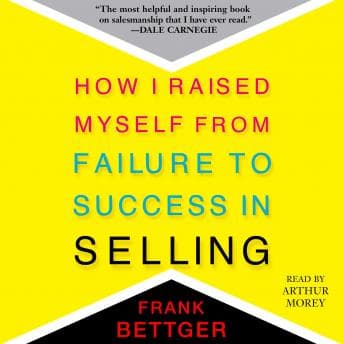

What's the ROI on a sales book written in 1947? I mean, honestly, should I even be listening to advice from a guy who sold insurance before computers existed?
Turns out - pretty solid, actually.
I started this one skeptical. Six hours of old-school sales wisdom while debugging a particularly nasty race condition at work. The juxtaposition was weird. Frank Bettger's talking about handshakes and in-person cold calls while I'm staring at distributed system logs. But here's the thing: the core principles? They're basically the same psychological patterns I use when I'm trying to get buy-in for a technical proposal from stakeholders who don't speak engineer.
The Enthusiasm Algorithm
Bettger's whole thesis boils down to a simple formula: enthusiasm + genuine interest in people + systematic follow-up = sales success. It's not rocket science. It's not even particularly groundbreaking if you've read any modern business psychology. But the way he presents it - through his own failures, his own embarrassing moments - makes it stick.
The man was a failed baseball player who became a failed insurance salesman. Then he figured out that acting enthusiastic (even when he wasn't feeling it) created a feedback loop that made him actually enthusiastic. It's basically cognitive behavioral therapy before CBT was a thing. And as someone who has to psych myself up for 7AM standups, I get it.
What surprised me was how much of this applies to tech. Selling isn't just for salespeople - I'm constantly selling ideas to my team, selling architectural decisions to leadership, selling myself in performance reviews. Bettger's framework for asking questions instead of making statements? That's literally how I run design reviews now.
Arthur Morey Does the Heavy Lifting
This book could've been a slog. Old-timey language, dated examples (so many references to "calling on" people that don't translate to our Slack-and-Zoom world). But Arthur Morey's narration keeps it moving. His voice has this warm, conversational quality that makes Bettger sound like your slightly eccentric uncle sharing war stories over Thanksgiving dinner.
The pacing is solid - not too fast, not dragging. I listened at 1.5x (my default for business books that could've been blog posts) and it held up fine. No weird audio artifacts, no distracting production issues. Just clean, professional narration.
Some reviewers mentioned his accent being "pronounced" but honestly? I didn't notice. Maybe I've been desensitized by years of international standup calls.
The Parts That Actually Stuck
The "seven golden rules for closing a sale" section is where the book really delivers. Bettger breaks down his process into repeatable steps - and as an engineer, I appreciate anything with a clear methodology. His emphasis on preparation, on knowing your product inside and out, on anticipating objections before they come up? That's just good systems thinking applied to human interaction.
The fear chapter hit different. Bettger talks about how he conquered his terror of public speaking and cold calling, and his solution is basically exposure therapy with a side of aggressive self-talk. Not groundbreaking, but hearing him describe his own panic attacks and sweaty palms made me feel better about my own pre-presentation jitters.
Where it drags: the insurance-specific examples. There are sections where he goes deep on policy types and coverage options that are just... not relevant to anyone who isn't selling insurance in 1940s America. I zoned out during a few of these on my morning commute and had to rewind. (Okay, I didn't rewind. I just moved on. Life's too short.)
The Dale Carnegie Connection
This book is basically "How to Win Friends and Influence People" but for sales specifically. Which makes sense - Carnegie endorsed it, and you can feel the same philosophy running through both. If you've already read Carnegie, some of this will feel repetitive. If you haven't, this is actually a decent entry point because it's more practical and less theoretical. And if you want something that goes deeper into the psychological patterns behind persuasion, Secret attempts a similar framework (with mixed results, honestly).
The Zig Ziglar foreword is a nice bonus. Quick context-setting before Morey takes over.
Who This Is (and Isn't) For
Perfect for: commute, gym, any time you need motivation without heavy cognitive load. This isn't a book that requires your full attention - you can miss a few sentences and still follow the thread. Skip if you're looking for modern sales tactics, digital marketing strategies, or anything involving technology. This is pure fundamentals. Timeless, but not cutting-edge.
The Bottom Line (In Engineer Terms)
The ROI calculation: six hours of listening for principles that apply to any situation where you need to persuade humans. For me, that's worth about four commutes. I've spent more time on worse books.
Would I recommend it to Kevin? Probably not - he's in product, not sales. But for anyone who has to convince people of anything for a living (so... everyone?), it's a solid foundation. Just don't expect it to teach you how to write better cold emails.