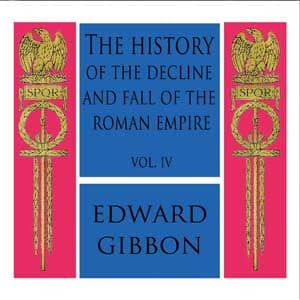

Let me cut to the chase: this is a free audiobook of one of history's greatest works, and you get exactly what you pay for. I was driving back from a client meeting in Houston—three hours of I-10 that feels like six—when I decided to tackle Gibbon's fourth volume. By the time I hit Schulenburg, I was genuinely conflicted about whether to keep going or switch to my backup thriller.
Here's the thing. I've read Gibbon before, the physical books, back when I was stationed in Germany and had too much time between rotations. The man wrote like he was getting paid by the syllable, but there's a reason his work became the template for every serious historian who followed. This is the real deal—18th century scholarship that still holds up, covering the Empire's slow-motion collapse with the kind of detail that makes you realize how much modern writers owe him.
The Volunteer Problem
LibriVox runs on donated labor, and I respect the hell out of anyone who volunteers their time to record dense historical text for strangers. That said, respect doesn't make the listening experience smoother. You've got readers cycling through chapters with accents ranging from British to Indian to what I'm pretty sure was Finnish. One minute you're following along fine, next minute someone's pronouncing "swords" with a hard W and you're yanked right out of 4th century Constantinople.
I've briefed generals who couldn't stay on message. These volunteers have the same problem—no unified standard, no quality control, just earnest effort meeting inconsistent execution. Some readers clearly practiced. Others sound like they're sight-reading Gibbon's elaborate 18th century prose for the first time, stumbling over Latin terms and place names that any Roman history buff would catch.
When Free Costs You Something
Nine and a half hours isn't that long by Gibbon standards—this is volume four of six, after all. But the mental energy required to constantly adjust to new voices, new accents, new pronunciation quirks? That's exhausting. I've sat through intelligence briefings from coalition partners with thick accents, and even that was easier to follow because at least there was consistency.
The text itself covers fascinating material—we're deep into the Empire's eastern survival and western disintegration by this point. Gibbon's analysis of institutional decay, military overextension, and the corrosive effects of internal division hits different when you've watched similar dynamics play out in real time during your career. I saw that same pattern of institutional rot dissected in Secret Empires, though Schweizer's looking at modern American corruption instead of fourth-century Rome. But you need focus to appreciate it. This isn't background listening material. Not even close.
Gibbon Deserves Better Production
Compared to professional audiobook productions of historical works—say, anything from Audible's Great Courses series—this feels like the difference between a Pentagon briefing and a community college presentation. The content's solid, but the delivery undermines the material. If you're new to Gibbon, this version might actually turn you off from one of history's essential texts, and that'd be a shame.
I found myself wishing someone like Simon Vance or John Lee had tackled this. A single narrator who understood the rhythm of Gibbon's prose, who'd done the homework on pronunciation, who could maintain consistent energy across ten hours. Instead, you get a patchwork of well-meaning volunteers.
Who Should Deploy This Version (And Who Shouldn't)
If you're broke, patient, and already familiar enough with Roman history that mispronounced names won't throw you, this works. Students who need to absorb Gibbon for a class but can't afford the professional versions—I get it. Tight budgets are a reality.
Skip this if you're new to Gibbon or if inconsistent narration drives you up the wall. If you've got a credit to spend or a library subscription, use it. Find a professionally produced version. Gibbon's work is too important and too demanding to fight your way through subpar audio. Ranger slept through most of this one, and honestly, I can't blame him.
Mission Assessment
The source material remains essential—Gibbon literally invented modern historical methodology. But this particular audio version is like trying to appreciate a gourmet meal while someone keeps changing the lighting and background music every fifteen minutes. Worth it if free is your only option. Otherwise, invest in something that does the text justice.





![Steve Jobs [unabridged audiobook] audiobook cover](/_next/image?url=https%3A%2F%2Fcovers.audiobooks.com%2Fimages%2Fcovers%2Ffull%2F9788499923406.jpg&w=1920&q=75)