
Let me cut to the chase: I've listened to audiobooks narrated by exhausted soldiers, bored contractors, and one memorable chaplain who sounded like he was reading his own eulogy. None of them prepared me for a synthesized voice trying to sell me on FBI political intrigue.
I was stuck in my truck outside a client's office in Round Rock, waiting on a security assessment meeting that was running forty minutes late. Figured I'd knock out the first couple chapters of this new thriller series. Five hours later, I'd finished the whole thing—partly because the plot kept me curious, partly because I was genuinely fascinated by how weird the AI narration made everything feel.
The Robot in the Room
Here's the thing about Caroline, our synthesized narrator: she's consistent. I'll give her that. Consistent like a metronome. Consistent like an MRE that tastes exactly the same whether you're eating it in Kuwait or Kansas. The problem is, FBI thrillers shouldn't feel like listening to your GPS give you directions through a murder investigation.
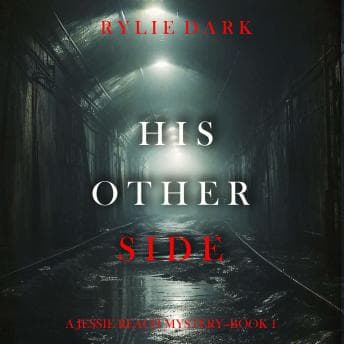
The British accent threw me immediately. Jessie Reach is an FBI agent working political murders in what I assume is Washington D.C., and she sounds like she's about to offer me tea and biscuits. Some pronunciations hit my ear wrong—nothing catastrophic, but enough that I'd catch myself rewinding to figure out if I'd missed something or if the voice just mangled a word. By hour three, I'd adjusted. By hour five, I barely noticed. Whether that's adaptation or Stockholm syndrome, I couldn't tell you.
The Actual Mission
Rylie Dark knows how to structure a thriller. The setup is solid: serial killer targeting politicians, elite FBI team assembled, Jessie Reach positioned as the brilliant lead investigator navigating treacherous political waters. It's familiar territory—I've read probably fifty books with this exact premise—but Dark executes the formula competently. Rylie Dark's other series starter Too Late runs the same playbook with a different lead, and I'd say the formula holds up better there than it does here.
The political angle had some teeth to it. Not as sharp as I'd like (I've seen enough actual political maneuvering to know the real stuff is both more boring and more terrifying than fiction usually captures), but Dark doesn't insult your intelligence with cartoon villains or obvious red herrings. I genuinely didn't call the killer, which is rare for me. Twenty-five years of threat assessment tends to make you paranoid enough to suspect everyone.
Pacing works. At just over five hours, it's a quick deployment—no bloated middle section, no unnecessary subplots about Jessie's complicated love life. She's got a job, she does the job, complications arise, resolution follows. Mission-focused, just how I like it.
Where It Lost Me
The synthesized voice strips out all the tension that should come from dialogue. When Jessie confronts a suspect or argues with a superior, it all lands with the same emotional weight—which is to say, almost none. Human narrators modulate. They speed up during action, slow down during reveals, add gravel to their voice when things get dark. Caroline just... continues. Same pace, same tone, same delivery.
Caroline narrates Something Knocking with that same unbroken flatness—I went in hoping the voice might perform differently across a different series, came out with the same verdict.There's a scene where Jessie discovers something genuinely disturbing about the killer's methodology. Should've been a gut-punch moment. Instead, it felt like someone reading me the ingredients list on a cereal box. The words were all there, the impact wasn't.
The AI also struggles with context. Names that should be emphasized get the same treatment as throwaway articles. Dramatic pauses don't exist. It's like watching a movie with all the music removed—technically complete, but missing the emotional architecture.
Who Should Saddle Up (And Who Should Stand Down)
If you're curious about AI narration and want to test the waters with a decent thriller, this is a reasonable entry point. Short commitment, competent plot, and you'll know within the first hour whether you can tolerate the synthetic voice.
If you need your narrators to actually perform—to bring emotional range and character differentiation—skip this version. The story might be worth reading in print or waiting for a human-narrated edition if one ever materializes.
If you're like me and you've got windshield time to kill and a high tolerance for imperfect audio (I once listened to an entire Tom Clancy novel through a speaker that buzzed every time someone said a word with an 'S'), you'll get through it fine. Ranger slept through most of it, which I'm choosing to interpret as peaceful rather than bored.
Cooper Out
HIS OTHER SIDE delivers a solid FBI thriller hamstrung by narration that can't keep pace with its own material. The plot earned my attention. The AI voice earned my grudging tolerance. Together, they produced an experience I'd describe as "acceptable under field conditions"—meaning I finished it, I didn't hate it, but I wouldn't recommend it as anyone's first choice.
Worth your time? If you're already curious about AI narration or you're desperate for a quick thriller fix, sure. If you've got other options, exercise them. Sometimes the mission parameters just aren't ideal, and you adapt. That's what I did here.