
Look, I need to get something off my chest: I have spent twenty years teaching Brontë and Austen and telling teenagers that Victorian romance is sophisticated literature, and then I go and devour a historical romance novel set in the same era while hiding my phone screen at a faculty meeting like a kid reading comics behind his textbook. The hypocrisy is not lost on me. Principal Martinez, I was absolutely not listening to a scene where a lady doctor and a spy nearly combust from sexual tension during your presentation on standardized testing metrics. Absolutely not.
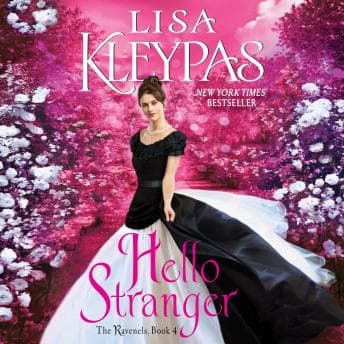
But here's the thing about Lisa Kleypas — and this is what I've been trying to explain to my wife Denise on our Saturday lakefront walks — she writes romance the way the best historical fiction writers write war. With research. With period-accurate detail. With an understanding that the personal is always political. Hello Stranger is the fourth Ravenels book, and Kleypas drops you into a version of Victorian London where a female physician and a half-Irish spy with daddy issues find each other and proceed to make terrible decisions for approximately ten hours of audio.
A Female Physician in Corset-Era England (And Why That Matters)
Dr. Garrett Gibson is not your typical romance heroine, and I mean that specifically. She's not "feisty" in that vague, hand-wavy way romance blurbs love to promise. She's a working surgeon in an era when women couldn't vote, couldn't own property after marriage, and certainly couldn't cut open a man's abdomen to save his life. Kleypas builds her competence into every interaction — Garrett doesn't just tell us she's a doctor, she performs medicine on the page, and the plot hinges on her medical skill in ways that actually matter to the climax. When Ethan Ransom gets hurt (and oh, he gets hurt), it's Garrett's expertise that drives the narrative forward, not some convenient coincidence.
Ethan, meanwhile, is a Ravenel by-blow — illegitimate, Irish, working as a government agent doing things the Crown would rather not acknowledge publicly. He's the kind of character who would fascinate my AP Lit students if he showed up in a Dickens novel instead of a romance. The class dynamics are real. His mixed identity — Irish enough to be looked down on, English enough to be useful — creates genuine tension that goes beyond will-they-won't-they. The only other recent read where I felt that kind of identity-as-stakes pressure bearing down on a character this consistently was Delilah Green Doesn't Care, which is a completely different genre and century but somehow does the same thing — uses social belonging as the real source of romantic tension, not just as backdrop.
This reminds me of what Hemingway said about writing — that the dignity of movement of an iceberg is due to only one-eighth of it being above water. Kleypas does her research and then trusts the reader to feel its weight without dumping footnotes on you.
Mary Jane Wells and the Voice Like Dark Velvet
Now. The narration. Mary Jane Wells gives Ethan this light Irish brogue that thickens when he's emotional — when he's angry, when he's tender, when he's trying to lie and failing. It's a smart choice because accent-as-emotional-barometer is something you can only do in audio. In print, Kleypas describes his voice as "dark velvet," and Wells actually delivers on that promise, which — let me tell you — is rare. Most narrators hear "dark velvet" and give you "slightly lower register." Wells gives you warmth with an edge. The kind of voice that makes you understand why a brilliant, rational woman would throw caution out a Victorian window.
Her Garrett is controlled, precise, with just enough vulnerability leaking through the composure to keep you invested. The contrast between the two voices — Garrett's educated English clarity and Ethan's rougher, warmer Irish tones — does the work of establishing their class divide without a single word of exposition. The narrator understands that pause is punctuation, and she uses silence between their loaded exchanges the way a good jazz musician uses rests.
I listened at 1.0x, obviously, because I'm me, and the pacing felt right. At ten hours, it's a comfortable listen — not bloated, not rushed. The middle section with the government conspiracy plot drags slightly compared to the character work, but that's a Kleypas structural habit across the Ravenels series, not a narration issue.
Who This Is Actually For (And Who Should Probably Skip It)
If you loved The Wallflowers or The Hathaways — Kleypas's earlier series — this is their spiritual successor with sharper politics and more explicit content. Fair warning on that last point: there's violence, there's steam, and there's a scene involving surgery that made me wince more than any romance scene. If you're looking for a gentle period piece, this has teeth.
If you're a literary fiction reader who's never touched romance, this is actually a decent entry point. Kleypas writes prose that deserves to be savored — not Faulkner-level density, but real craft. My students would hate this. I love it.
If you need a full cast or sound effects, this is a single-narrator production and Wells carries it alone. She carries it well.
The Assignment I'd Actually Give
Spend a credit on this if you want smart historical romance performed by a narrator who understands that voice acting isn't about showing off — it's about disappearing into the characters until you forget someone's reading to you. It's not going to change your life. But it'll make a long walk, a late night, or a truly boring faculty meeting feel like something worth showing up for.