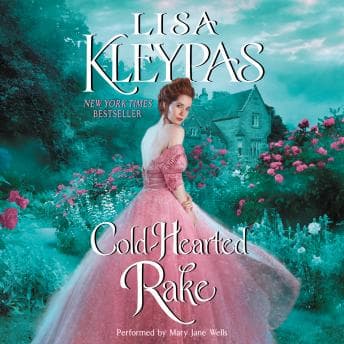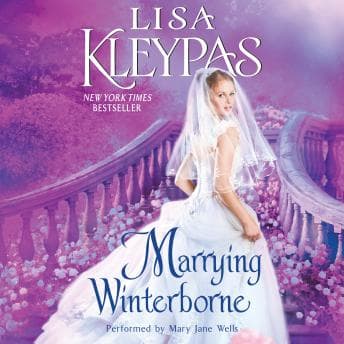

I went into this one expecting a pretty standard historical romance. Rich guy, sheltered lady, some longing glances across ballrooms. And yeah, that's technically what happens. But Lisa Kleypas does this thing where she takes what should be predictable and makes you feel it in your chest anyway.
Rhys Winterborne is not your typical Regency hero. He's Welsh, working-class, built his empire from nothing, and has zero patience for aristocratic nonsense. Helen Ravenel is gentle, quiet, raised in near-isolation by a neglectful father. On paper? They shouldn't work. In practice? The chemistry is chef's kiss. I was folding laundry when they had their first real conversation and I just... stopped. Stood there with a sock in my hand like an idiot because the tension was that good.
The Slow Burn That Actually Burned
Here's what got me - this isn't just attraction. Kleypas builds something deeper. Rhys sees Helen. Not as a trophy or a conquest, but as someone worth understanding. And Helen? She's not some wilting flower waiting to be rescued. She has her own secrets, her own quiet strength. When she decides to fight for this relationship, you believe it.
The conflict isn't manufactured drama. It's class, it's family, it's the very real question of what happens when two people from completely different worlds try to build something together. There's a subplot involving Helen's past that I won't spoil, but when it came out? I ugly-cried at my desk. Diego jumped off my lap because I was shaking. (Frida, characteristically, did not care.)
Mary Jane Wells and That Welsh Accent
The narration. Mary Jane Wells has this warmth to her voice that works perfectly for Helen - soft but not weak, if that makes sense. Her Rhys is where things get interesting. She gives him this slight Welsh accent, this rougher edge, and it works. Mostly. There were a few moments where I noticed the accent more than the emotion, but honestly? Minor complaint. When she hit the emotional beats, she hit them hard.
The pacing felt right for the story. Some reviewers mentioned it drags in places, and I can see that - there are slower sections in the middle where the plot takes a breath. But I was listening at 1.0x (as one does when savoring), and it felt intentional. Like the book was giving you time to sit with these characters before everything got complicated.
Production quality is clean. No weird audio glitches, no jarring cuts. Just eleven hours of solid storytelling.
Who Needs This (And Who Should Skip)
This is a rainy Sunday book. It's for when you want to feel wrapped up in something romantic without checking your brain at the door. If you need constant action or plot twists every chapter, this might test your patience. But if you want to watch two people fall in love in a way that feels earned? This is your book.
The vibes are immaculate - Victorian London, the contrast between high society and Rhys's department store empire, the way Kleypas describes fabrics and spaces without it feeling like a history lecture. I kept pausing to look up Victorian fashion because I got curious. That's the mark of good historical romance, honestly.
Abuela would have loved this one. She always said the best love stories are about people who choose each other despite everything. That same kind of choosing—messy, complicated, worth it—shows up in His Sub, though with a very different flavor. Rhys and Helen choose each other over and over, even when it's hard. Even when it would be easier to walk away.
My heart. MY HEART.
If you've read other Kleypas - especially the Ravenels series - you'll recognize some characters from previous books. But this works as a standalone. I hadn't read the first one and followed everything fine. Fair warning though: you might want to go back and read the whole series after. I'm already eyeing the next audiobook.
Abuela Was Right About Love Stories
This book felt like being held. Like someone understood exactly what kind of comfort you needed and delivered it in eleven hours of perfectly paced romantic tension. Not every book needs to reinvent the genre. Sometimes it just needs to do the thing well. And this? This does the thing beautifully.