
I was sitting in the hospital parking garage at 7:45 AM, engine running, too wired to drive home after a night that included two GSWs and a pedestrian versus truck. My hands were still buzzing from compressions. I needed something loud and plot-heavy enough to keep my brain from replaying the shift on loop during the drive. Hell's Corner was already queued up, and that opening explosion in Lafayette Park - a bomb going off during a State Dinner motorcade - hit different when you're still smelling Betadine on your scrubs.
I yelled at my dashboard during this one. But not about the medicine, for once.
When the Bomb Goes Off and Then Everything Gets Complicated
Baldacci does something smart here. The explosion happens fast - almost too fast - and then the book becomes less about the bang and more about who's pulling strings behind it. Oliver Stone is standing right there in Lafayette Park when the bomb detonates, which puts him squarely in the crosshairs of every agency scrambling for answers. Enter Mary Chapman from MI-5, who's got her own agenda and doesn't particularly care about American interagency turf wars. The Camel Club - Stone, Harry Finn, the whole crew - gets dragged into an investigation where nobody's telling the truth and the real target might not be who anyone thinks it is.
At 7 and a half hours, it moves. There's no fat on this thing. Baldacci layers misdirection on top of misdirection, and just when I thought I had the conspiracy figured out (somewhere around hour 4, pulling into my driveway, refusing to get out of the car), he yanked the rug. I sat there with my seatbelt still on like an idiot. Carlos texted me asking if I was okay because he could see me through the kitchen window just... sitting in the car, gesturing at nothing.
The political thriller elements feel grounded - the interagency friction between FBI, CIA, Secret Service, and MI-5 reads like somebody actually talked to people who've navigated that mess. Stone as a character has always been Baldacci's best creation in this series. He's damaged, brilliant, paranoid for good reasons, and old enough to be tired of everyone's games. That weariness comes through.
Two Narrators, Two Very Different Energies
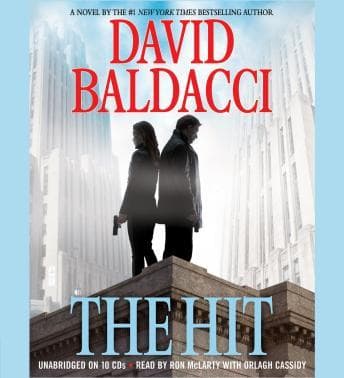
Okay, so here's the thing about the dual narration. Orlagh Cassidy is excellent. She handles the female roles - particularly Mary Chapman - with sharp accents and real character differentiation. Chapman sounds British and capable and like she's always three steps ahead of whatever room she's in. Cassidy makes you believe this woman has actually held a weapon and used it, which is a weirdly specific compliment but I mean it.
Ron McLarty handles the male roles, and... look, he's fine. He's competent. But he doesn't have the same electricity Cassidy brings. His Stone is steady, which works for the character, but there were stretches where I wanted more grit in the delivery, more edge. When you're bouncing between the two narrators, the contrast becomes obvious. It's like watching a theater production where one actor is giving 110% and the other is giving a solid 85%. You notice.
The production itself has some subtle sound effects during key moments - the explosion, certain tense sequences - which I appreciated. It's not overdone. Just enough to pull you deeper in. The dual narration format creates this almost theatrical quality that works well for a book juggling this many players and perspectives.
What I Yelled About (Not Medical For Once)
My dashboard complaint this time was plot-related. There's a stretch in the middle where the conspiracy threads multiply so fast I had to rewind twice to keep track of who was betraying whom. On audio, with no ability to flip back and check a character's allegiance, that's a real issue. If you're listening while doing anything that requires even partial attention - cooking, folding laundry, wrangling children - you will lose the thread. This is a focus listen. Period. The same warning applies to Pieces of Her — another one where the conspiracy layers stack fast and the second you let your attention drift, you're swimming.
Also, and this is minor, but some of the dialogue between Stone and Chapman dips into that genre thing where every conversation is loaded with cryptic one-liners and meaningful pauses. Real people don't talk like that. (Then again, real people don't run secret intelligence clubs out of a cemetery caretaker's cottage, so maybe I should let it go.)
Who's Grabbing This One
If you're already invested in the Camel Club series, this is a strong entry. If you're new to Baldacci, you could start here but you'd miss some character history that adds weight to Stone's decisions. Fans of political thrillers with layered conspiracies - the kind where you genuinely don't know who to trust until the last hour - this delivers. Skip it if you need a slow build or like your thrillers simple and linear. This is not that.
Perfect for that post-shift decompression when your brain needs to chew on something that isn't your own life. Just... maybe don't try to multitask.
Night Shift Stamp of Approval
Seven and a half hours well spent. Cassidy's narration elevates the whole production, McLarty holds it together without dazzling, and Baldacci's plot kept me parked in my own driveway like a weirdo more than once. Not flawless, but the kind of solid, smart thriller that respects your intelligence. My mom wouldn't read this - she's still working through her stack of Danielle Steel - but she'd appreciate that I finished a whole book in two commutes. Efficiency. She raised me right.