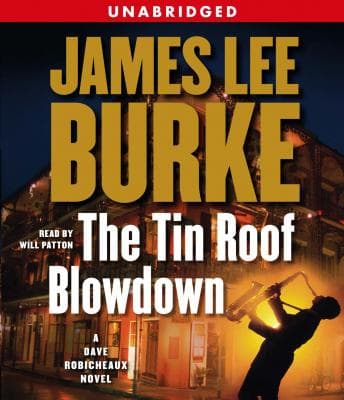
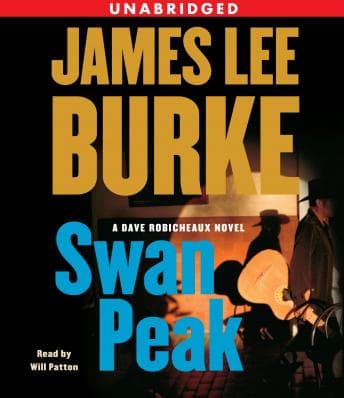
"But a plane crash on the Gulf brings a young girl into his life—" That's the jacket copy, and it's the exact moment I stopped chopping onions and just stood there in my kitchen, wooden spoon in hand, because I knew. I knew what Burke was doing. He was giving Dave Robicheaux the one thing a recovering addict with a hero complex cannot resist: someone to save.
I found myself asking: why does Robicheaux really leave New Orleans? He says it's for peace. He says it's the bayou, the tranquil beauty, the quiet life with his wife. But psychologically? This is a man running from his own pattern recognition. He knows what he becomes when the city gets its hooks in him. The bottle, the badge, the violence—they're all the same drug for Dave. And Burke understands this about his character in a way that's almost clinical. The protagonist exhibits classic avoidance coping dressed up as healthy life change. My therapist would have thoughts about this character.
A Recovering Cop Is Still a Cop
What makes Robicheaux compelling—and what Burke nails in this second novel—is that the man's sobriety and his savior complex are locked in a death match. He's winning against booze but losing against the need to intervene. A plane goes down. A child survives. And Dave can't not get involved. This is a fascinating case study in how trauma survivors often replicate the exact conditions they're trying to escape, because the chaos is familiar. It's home. I traced almost the exact same pattern in Dead Girl in 2A, where the protagonist's damage isn't backstory—it's the whole architecture of every choice she makes.
The supporting cast works as psychological pressure points rather than fully independent agents. Bubba Rocque—a childhood friend turned brutal hood—represents the life Dave might have lived. Rocque's "hungry Cajun wife" (Burke's phrasing, not mine, and it tells you everything about how Dave sees women who want things) is the temptation narrative externalized. The federal agent with "more guts than sense" is Dave's own recklessness wearing a different badge. Burke may write like a Southern poet, but he's constructing a character study through mirrors.
Here's my issue, though. At three hours and fifteen minutes, this is an abridged version. And you feel it. Characters who should breathe get compressed. The research actually shows that listeners have flagged this—some find the characters underdeveloped, the story hard to follow. I don't think that's Burke's fault. I think that's the abridgment carving out the connective tissue that makes Burke's languid bayou pacing work. You're getting the skeleton of the novel when the flesh is where the beauty lives.
Will Patton Becomes the Bayou
Will Patton narrating Robicheaux is one of those pairings that feels inevitable in retrospect. His Southern accent doesn't sit on top of the text like decoration—it lives inside it. There's a weariness in how he delivers Dave's internal monologue that captures the specific exhaustion of a man who's tired of being the person he keeps being. When Patton voices Dave describing the Gulf, or the bayou at dusk, you hear someone who genuinely loves a place that keeps hurting him. That's not easy to perform.
I don't have granular details on how he differentiates the full cast—Bubba versus the fed versus the Cajun wife—and with an abridged runtime of just over three hours, there's less room for vocal characterization to develop. But Patton's emotional delivery is the engine here. He doesn't narrate the violence; he lets you hear what the violence costs Dave. That distinction matters.
Who Gets the Most Out of This
If you're already invested in the Robicheaux series, this is worth your time as a bridge between books—a short, intense listen that deepens your understanding of who Dave is when he's trying not to be himself. If you're new to Burke, I'd honestly say start with the unabridged versions if they're available, because this abridged cut doesn't fully showcase why people call Burke one of the great American crime writers.
Fans of psychologically honest crime fiction—where the detective's inner damage is the real mystery—will find something to chew on here. But if you need your thriller pacing tight and your plot points numerous, three hours of a man wrestling with his own worst instincts in bayou country might frustrate you.
I finished this while the dal was simmering, and I just stood there for a minute after it ended, thinking about how we keep choosing the patterns that hurt us. Which is pretty much Burke's entire thesis on Dave Robicheaux, and also why I became a psychologist.
The Case File, Closed
The author understands human nature—specifically, the human nature of men who confuse self-destruction with heroism. Will Patton makes you feel that confusion in your chest. But the abridged format is doing this story a disservice. You're getting a good listen, not the great one buried underneath. Burke deserves the full room to work. So does Dave.