
What makes a stranger on a plane feel like someone you've known your whole life?
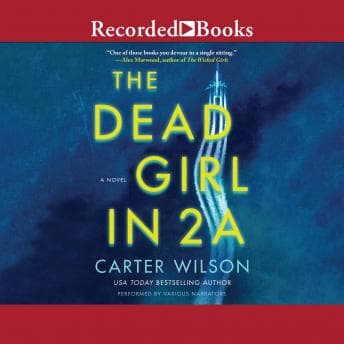
I was driving home from a brutal night shift—we'd had three codes before 4 AM, and I was running on caffeine and spite—when the opening scene hit me. Jake Buchanan sits down next to Clara Stowe in seat 2A, and there's this immediate, unsettling recognition between them. Neither can place the other. And then Clara casually mentions she's flying to Colorado to kill herself.
I almost missed my exit.
That Opening Scene Does the Heavy Lifting
Carter Wilson knows how to hook you. The airplane setup is claustrophobic in the best way—two strangers circling around a connection they can't name, with Clara's bombshell confession hanging in the recycled cabin air. It's the kind of premise that made me grip my steering wheel and mutter "oh no" like I was watching a patient's vitals tank.
The story splits after they land. Jake becomes obsessed with finding Clara before she follows through on her plan. That same obsessive-hunt energy drives Vanishing Hour, though the stakes there are different. Clara's running toward something she doesn't fully understand. And there's a third thread—a manipulative figure from their shared past who's been pulling strings for decades.
Wilson layers in the psychological thriller elements without going full soap opera, which I appreciated. 20th Victim walks that same line between thriller intensity and restraint. The memory fog both characters experience feels earned, not like a cheap trick.
Three Narrators, Mixed Results
Here's where I have to be honest. Jennifer O'Donnell, Jonathan Todd Ross, and Michael Braun all do competent work. The dual-voiced structure—alternating between Jake and Clara's perspectives—helps keep the timelines straight. But there's something... flat about the delivery at times. Someone in the reviews nailed it: they sound like they're used to narrating safety trainings.
And look, I've sat through enough hospital compliance videos to recognize that tone. It's professional. It's clear. It's also not quite right for a psychological thriller about childhood trauma and suicide and manipulation. When the story needed to punch me in the gut, the narration sometimes felt like it was reading me the side effects of a new medication.
That said, the audiobook format worked better for me than I think reading it would have. The alternating voices helped me track whose head I was in, and during the revelations about what connected Jake and Clara—I won't spoil it, but it's dark—having actual human voices made the horror land differently.
The Medical Details (Yes, I Noticed)
Wilson doesn't lean heavily into medical territory, but when he touches on psychological trauma and its physical manifestations, he doesn't embarrass himself. The way he writes about dissociation and memory suppression tracks with what I've seen in patients who've experienced severe childhood trauma. No, I didn't yell at my dashboard about inaccurate defibrillator use. This isn't that kind of thriller.
What it IS is a slow-burn psychological puzzle. The pacing drags slightly in the middle—around hour 5 or 6, I was getting impatient for answers—but Wilson pays it off. The twists, when they come, actually surprised me. I said "What?" out loud at least twice, which Carlos can confirm because I was apparently loud enough to wake him when I got home.
Who's Going to Love This (And Who Should Skip)
If you want a thriller with a unique premise and you're okay with narration that's competent but not electric, this is worth your time. Perfect for that post-shift decompression when you need something engaging enough to keep you awake but not so intense you can't sleep after.
Skip it if you need your narrators to really ACT. These three tell the story fine, but they don't inhabit it the way some thriller narrators do. Also, content warning: suicide is a central theme, not a peripheral one. If that's a trigger, protect yourself.
Clocking Out With This One
I finished this on my third consecutive night shift, parked in my driveway at 7:45 AM because I couldn't go inside without knowing how it ended. That's the Carter Wilson effect—the man knows how to build paranoia and payoff. The Colorado Book Award wasn't a fluke.
But I kept thinking about what this audiobook COULD have been with narrators who brought more emotional range. The story deserved someone who could make Clara's desperation feel visceral, who could make Jake's obsession sound unhinged. What we got was... professional. Safe. Like a safety training, yeah.
Still. That opening scene. That twist. The way Wilson makes you question every memory and every motive. Worth the listen, even if you might want to bump the speed to 1.25x during the slower middle sections.