
"The things you learn at eighty-two that you never knew at twenty-two."
That line hit me somewhere around hour two, sitting in the back row of a professional development seminar about "differentiated assessment strategies" while Mitch Albom was telling me about an old rabbi preparing to die. I should feel guilty about that. I don't. Principal Martinez, if you're reading this - the PD was great. (It wasn't. But neither was the coffee.)
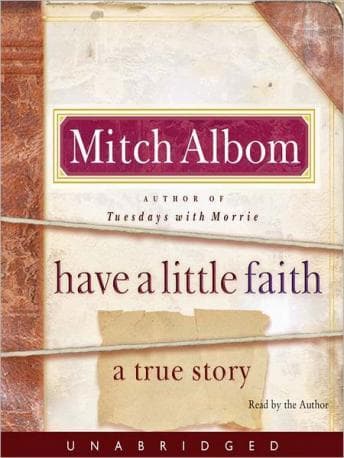
Here's the setup: Albert Lewis, an eighty-two-year-old rabbi from Albom's childhood synagogue in New Jersey, asks Albom to write his eulogy. Not now - when the time comes. Albom, who'd drifted from faith the way most of us drift from our college ideals, says yes but insists on getting to know the man first. What follows is eight years of visits, conversations, and the slow, sometimes uncomfortable process of a lapsed believer sitting across from someone who never stopped believing.
Meanwhile, in Detroit, Albom meets Henry Covington - a pastor who's a former drug dealer, former convict, current shepherd to the homeless, preaching in a church with a literal hole in its roof. Two men. Two faiths. Two Americas, really.
The Sermon You Actually Want to Hear
Let's talk about what Albom is really saying here. This isn't a book about religion. Not really. It's a book about what happens when you put an eighty-two-year-old suburban rabbi and a reformed inner-city pastor side by side and discover they're essentially telling you the same thing from opposite ends of the American experience. I kept thinking about how rarely books manage that kind of quiet moral convergence without feeling engineered — though Silverthorn pulls off something similarly unexpected, finding common ground between characters you'd never think to put in the same room. The rabbi quotes Torah; the pastor quotes Scripture. The rabbi worries about his congregation's marriages; the pastor worries about keeping his congregation alive through winter. But both men keep circling the same truth - that faith is less about certainty and more about showing up when certainty has packed its bags.
Albom structures this as alternating chapters, moving between New Jersey and Detroit, and the juxtaposition does most of the heavy lifting. He doesn't need to spell out the parallels because they're obvious once you're paying attention. A rabbi preparing for death. A pastor fighting to keep a church from literally collapsing. Both clinging to something invisible.
The eulogy scene, when it finally arrives, earned its weight. Eight years of conversations compressed into a few minutes of tribute - and Albom doesn't oversell it. He lets the accumulated weight of those visits do the work. This reminds me of what Hemingway said about the dignity of the iceberg - what's beneath the surface matters more than what's showing.
Albom Reads Albom (And That's Both the Gift and the Problem)
Here's where it gets complicated. Albom narrates this himself, and he reads the way he writes - warm, earnest, conversational. No dramatic character voices. No theatrical shifts. He sounds like a guy telling you this story over dinner, which is exactly right for the material. When he recounts Rabbi Lewis's dry humor or Pastor Covington's hard-won wisdom, there's an authenticity that a hired narrator couldn't fake. He was in those rooms. He heard those voices. You can tell.
But - and this is the honest part - that same warmth occasionally tips into something sweeter than the subject deserves. There are moments where the prose already leans sentimental, and Albom's delivery leans right along with it instead of pulling back. Someone described his style as sweet tea that needs a squirt of lemon, and that's pretty much exactly right. The material about Covington's criminal past, the decay of inner-city Detroit, the real struggle of faith in poverty - that stuff has an edge to it. But Albom's voice smooths those edges down. Not always. But enough that I noticed.
He's a rare author who reads his own work well. I just wish he'd trusted the harder moments to land without cushioning them.
At Under Five Hours, the Brevity Is the Point
At 4 hours and 51 minutes, this is barely longer than a faculty meeting. (Sorry, Principal Martinez.) But the length works. Albom isn't trying to write a theological treatise. He's trying to capture two relationships and what they taught him about belief. The prose deserves to be savored at 1.0x - there's a rhythm to his short, declarative sentences that gets lost if you speed it up. He writes the way a preacher pauses between lines, and the narrator understands that pause is punctuation.
My students would probably skip this one - too quiet, too reflective, no explosions or enemies-to-lovers tropes. But that's exactly why it works for those of us old enough to have questioned something we used to believe in and wondered if we could get it back.
Who This Is For (and Who Should Keep Walking)
If you loved Tuesdays with Morrie, this is its spiritual successor - literally. If you're looking for rigorous theology or interfaith debate, look elsewhere. This is memoir-as-meditation, not argument. It's for the person who listens to audiobooks on the lakefront and doesn't mind getting a little misty-eyed in public.
If saccharine writing makes you itch, you'll feel it here. Fair warning.
The Assignment I'd Actually Give
I'm not going to pretend this book changed my life. But it did something smaller and maybe more useful - it reminded me that the two men I'd least expect to agree on anything were basically saying the same prayer in different languages. And that the hole in the roof isn't just about one church in Detroit. Worth pausing the faculty meeting for. Definitely worth the five hours.