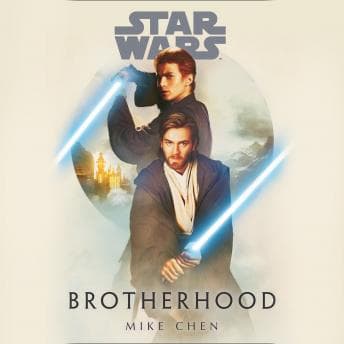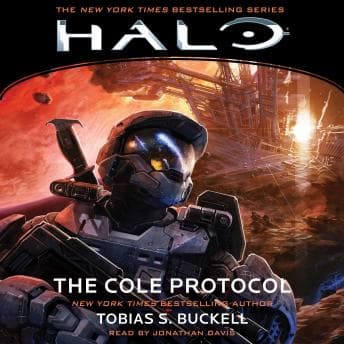

So here's the thing - everyone told me the Halo books were just glorified game manuals with some explosions stapled on. I went in expecting a novelization-tier cash grab while grinding through a late-night coding session that was definitely not thesis work. And look, I'm not going to pretend this is Sanderson-level world-building. But Tobias Buckell did something I genuinely didn't expect: he made me care about asteroid politics.
The Rubble Is Basically a D&D Sandbox Setting and I'm Here for It
The setup is what hooked me. You've got this cobbled-together asteroid settlement called the Rubble, where human insurrectionists have somehow brokered a deal with the Kig-Yar - the Jackals, for you Halo heads - and they're just... coexisting. In the middle of a genocide. The sheer audacity of that premise is wild. Buckell takes what could've been a simple "Spartans go boom" story and layers in actual factional complexity. You've got UNSC loyalists, insurrectionists who hate Earth more than they hate the Covenant, opportunistic alien traders, and the Prophets pulling strings from offstage. My D&D group would love this - it reads like a campaign where the DM set up five competing factions and said "okay, roll initiative."
The progression is satisfying, too. Jacob Keyes - yeah, that Keyes, pre-Captain rank - gets saddled with an ONI mission that's basically "go to the sketchy part of space and don't die," and watching him navigate the political minefield of the Rubble while Gray Team operates like a three-person wrecking ball on the periphery gives the book a nice dual-track structure. Gray Team is basically a party of three murder hobos with government sanction, and I respect that energy.
Where it stumbles a bit is the Elite antagonist. He's ambitious, he's brutal, he wants to climb the Covenant ranks - and that's about it. The book tells us he's ruthless but never quite makes him feel dangerous the way, say, the Bloody Nine feels dangerous in a Joe Abercrombie book. He's functional as a threat, not memorable as a character. Stephen King runs into the same problem occasionally - I wrote about it in my Night Shift review, where some of the monsters work as atmosphere but never quite land as presences you genuinely fear.
Jonathan Davis and the Covenant Pronunciation Gauntlet
Jonathan Davis does strong work here. The thing that impressed me most is how effortlessly he handles the Covenant vocabulary - Kig-Yar, Sangheili, all those consonant-heavy alien terms that would trip up lesser narrators. He rattles them off like he's been speaking the language his whole life, and that matters when you're building immersion in a universe with this much invented terminology. His character differentiation is clean too; you always know who's talking even when you're half-focused on debugging a recursive function at 2 AM. (Not that I would know anything about that.)
The war scenes are where Davis really earns his keep. There's genuine intensity in his delivery during the combat sequences - the kind of performance that made me stop pretending to code and just listen. Steven Pacey walked so other narrators could run, and Davis is at least jogging at a respectable pace here.
Now, the production issues. There's this background squeak - this faint, high-pitched whine that shows up intermittently. It's not deal-breaking, but once you notice it, you can't un-notice it. Think of it like a stuck pixel on your monitor. Also, whoever mixed the background music - those little Halo theme callbacks from the first game - occasionally cranked it loud enough to compete with Davis's voice. Minor sins, but they're there, and at full credit price, they're worth noting.
Who This Is For (and Who Should Eject)
If you're a Halo fan who wants more than just Master Chief punching things, this is a great entry point into the expanded universe. Buckell brings legitimate sci-fi chops - the man has Hugo and Nebula nominations for a reason - and the Rubble setting is genuinely inventive enough to stand on its own even if you stripped the Halo branding off.
If you don't like info-dumps, this isn't for you (but you're wrong). There's a fair amount of political setup and faction-explaining in the first few hours. I ate it up. Your mileage may vary.
If you need your military sci-fi to be wall-to-wall action with zero downtime, you might find the middle section a touch slow. The payoff is worth it though - the climax ties everything together and lays groundwork for the games in a way that actually feels earned rather than shoehorned.
Roll for Credit Spend
I read this instead of writing my thesis, and I don't regret it. At just over ten hours, it's a compact listen that doesn't overstay its welcome - the pacing clocks in way tighter than some of those 40-hour epic fantasy marathons I usually mainline. Davis is reliable, Buckell's world-building ambitions outpace what you'd expect from a franchise tie-in, and the Rubble is a setting I'd genuinely want to revisit. The production hiccups and a slightly undercooked villain keep it from the top tier, but this is solid military sci-fi that happens to have "Halo" on the cover rather than being a Halo book that happens to contain sci-fi.