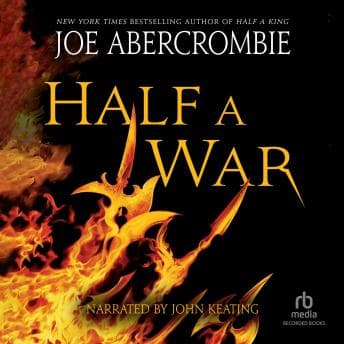

Abercrombie writes endings like someone who's watched too many peace treaties fall apart - which, given his track record, is exactly on brand.
I started Half a War during a Monday 6AM Caltrain that was somehow more packed than usual (shoutout to whatever conference was happening in Mountain View). Finished it Wednesday evening on the ride back, slightly delirious from a day spent chasing a memory leak in production. And honestly? That exhausted, slightly cynical headspace was perfect for this book. Father Yarvi would approve.
The Right Words Cut Deeper Than Swords (And Abercrombie Knows It)
TL;DR: Worth your commute. This is basically Game of Thrones but for people who want their political scheming in a tighter, meaner package - and actually finished.
Half a War wraps up the Shattered Sea trilogy by doing what Abercrombie does best: making you root for characters while slowly revealing that everyone - everyone - has been playing a longer game than you thought. Princess Skara is the new POV anchor, and she's the kind of character I eat up: physically powerless, weaponizing diplomacy and perception. She's basically a junior PM who's realized the real product is manipulation. (I say this with respect. I've been in those sprint planning meetings.)
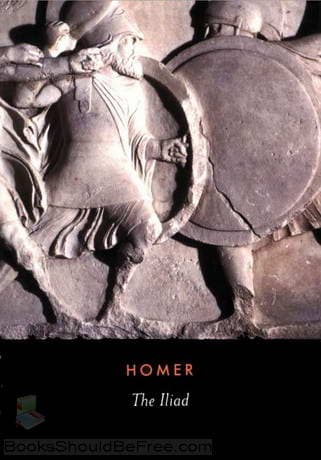
The political maneuvering between Yarvi, Grandmother Wexen, and the various kings and ministers hits differently when you're a systems person. It reads like distributed consensus problems - everyone's trying to coordinate without trusting anyone, and there's always someone who's going to defect from the protocol. The original blueprint for that kind of everyone-betrays-everyone political warfare is probably The Iliad - different mythology, same brutal lesson that the people doing the coordinating are usually the first ones to get sacrificed for the coalition. Yarvi's arc across three books is essentially "what happens when you optimize for winning at the expense of everything else," and the answer Abercrombie lands on is... uncomfortable. In a good way.
Bright Yilling as the antagonist is pure menace - a man who worships Death and fights like it's a religious experience. But the real tension isn't the battles. It's the scenes where Skara has to smile at people she wants to destroy, where alliances get built on promises everyone knows are lies. Half a war is fought with swords, and the other half is fought with words you can't take back.
John Keating Is Not Steven Pacey (And That's... Mostly Fine)
Let's address the elephant in the longship. If you've listened to Abercrombie's First Law trilogy with Steven Pacey, you've been ruined. Pacey is the Ray Porter of grimdark fantasy - once you've heard his Glokta, nothing else compares. John Keating is working in that shadow, and he knows it.
Here's the thing though: Keating grew on me. The first hour or so, I noticed what other listeners complain about - a flatness, characters bleeding together vocally. But by the time the political machinery really starts grinding, he finds his groove. His Father Yarvi has this sly, almost oily quality that made my skin crawl in exactly the right way. Skara comes through with a brightness and steel that works. And he does this Suffolk-ish accent thing - rounding 'i' sounds to 'oi' - for certain characters that actually helps place them geographically in the world.
Where he stumbles: the warriors. Raith and Thorn are both supposed to be crackling with barely-contained violence, and Keating sometimes delivers their lines with the same energy as someone reading a grocery list. The battle sequences don't pop the way they should. At 1.5x, this actually helped - the pacing tightened up and the monotone passages felt more like controlled intensity rather than flatness.
Narrator rating: solid 3.5. Not gonna lie, I occasionally wondered what Pacey would've done with certain scenes. But Keating earns his keep in the political dialogue, which is where this book lives anyway.
Who Gets On This Longship
Perfect for: train, gym. The political scheming threads are followable even when you're half-asleep, and the action sequences (when they hit) wake you up. Skip for: deep work. There are enough character POV switches that you'll lose the thread if you're not giving it at least 60% of your attention.
If you've read the first two Shattered Sea books, obviously you're finishing the trilogy. If you haven't - don't start here. This is the payoff book, where every alliance and betrayal from Half a King and Half the World comes due. The ROI on this audiobook is highest if you've put in the earlier investment.
People who love Abercrombie's First Law world should calibrate expectations: this is YA-adjacent Abercrombie. Still dark, still morally grey, but the prose is leaner and the characters are younger. It's like comparing a microservice to a monolith - smaller scope, faster execution, less complexity. That's not a criticism. Sometimes you want the focused thing.
The Commit Message
Half a War lands the trilogy with the kind of ending that makes you sit on the Caltrain platform for an extra minute after your stop, just staring at nothing. Abercrombie's thesis - that power corrupts not through mustache-twirling villainy but through a thousand small compromises that each seemed reasonable at the time - hits with the subtlety of a production incident at 2AM. You see it coming and you still can't stop it.
Keating's narration is the weakest link, but it's a chain that holds. I finished this in 3 commutes (plus a lunch break I definitely didn't tell my manager about), and I'd do it again. Not a must-listen on the strength of the audio alone, but the story underneath is vintage Abercrombie - which means it'll leave a bruise.