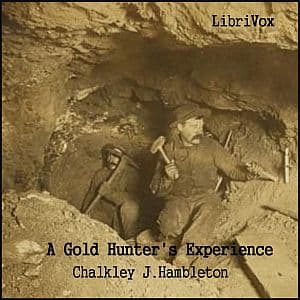

"Early in the summer of 1860, I had an attack of gold fever."
That opening line hit me at about 6:45 AM, pulling into my driveway after a twelve-hour shift where I'd had exactly one granola bar and three cups of terrible coffee. I should've gone inside. Instead I sat in the car with the engine off, listening to a dead Chicago lawyer tell me about his terrible life choices in 1860, and honestly? It was the most relaxed I'd felt all night.
A 19th-Century Guy Who Knows He Got Played
Here's what I loved about Chalkley J. Hambleton - and yes, that is his actual name, which sounds like something a Dickens character would be embarrassed by. This man wrote his gold rush memoir in 1898, almost forty years after the fact, and he is fully, completely aware that he was a fool. Not in a self-pitying way. In a "let me tell you exactly how I got hustled so you can laugh with me" way.
The bit about the nugget scam? Where he watches a guy wash "several nice nuggets of shining gold" from the dirt, gets all excited, and then finds out those same nuggets had been planted and "washed out several times before" for every new sucker who wandered into camp? I actually laughed out loud. Because I've seen that same energy in the ER - the frequent flyer who knows exactly which symptoms to describe to get the good meds. Hustlers don't change. They just change zip codes.
And the ending, where he talks about throwing fifty gold mine claims into a real estate deal like loose change, then musing about how they would've made "magnificent wedding presents" - useless ones, but magnificent? That dry humor is genuinely funny. This man was writing for his family and friends, not trying to impress publishers, and it shows. There's an honesty to it that you don't get from polished memoirs. That same unvarnished quality is what made Glass Castle: A Memoir stick with me - when someone's writing for themselves and not for a publisher's checklist, you can feel the difference on every single page.
Sue Anderson Does What She Needs To Do
Let me be straight about this: it's a LibriVox recording. Free audiobook, volunteer narrator, two hours long. You're not getting a multi-million dollar Audible production here. Sue Anderson reads clearly, keeps a steady pace, and doesn't get in the way of Hambleton's own voice - which is the right call for a first-person memoir this short. She's not doing character voices or dramatic pauses. She's reading you a letter from someone's great-great-grandfather, and she treats it with respect.
Is it going to blow you away with vocal performance? No. Did I ever have to rewind because I couldn't understand her? Also no. For a two-hour listen, that's really all I needed.
The recording quality is clean enough - no weird background noise or volume drops that I noticed. It's a simple, no-frills production that matches the simple, no-frills source material.
The Stuff That Actually Surprised Me
I expected a dry frontier account. What I got was a surprisingly relatable story about a young guy in his early thirties, stuck in a recession (the Panic of 1857 - which, fun fact, I'd never heard of), watching his prospects dry up, and making a desperate pivot. Four guys hauling 24 tons of mining equipment by ox cart from Missouri to Colorado. TWENTY-FOUR TONS. By ox cart. Across the Great Plains.
The descriptions of the journey itself - buffalo herds, encounters with Indigenous people, and especially the "returning army of disappointed gold seekers" heading the opposite direction - those hit different when you realize he kept going even after seeing all those people coming back empty-handed. That's not courage. That's the sunk cost fallacy with hooves.
Two years later he came home "a wiser if not richer man" and became a successful lawyer. Which is basically the 1860s version of "I spent my twenties finding myself" except with more dysentery risk.
Who This Is For (And Who Should Keep Scrolling)
If you're into American history, westward expansion, or gold rush stories and you want something short, honest, and occasionally funny - this is a solid two-hour listen. It's free through LibriVox, so the barrier to entry is literally just your time.
If you need high production values, dramatic narration, or a story that builds to some big climax - skip it. This is a guy telling you about the time he made a bad investment. A really entertaining bad investment, but still.
Perfect for that post-shift decompression when you want something that engages your brain just enough to keep you from replaying the shift, but not so much that you can't wind down. My mom would love this - she's always telling me stories about people in our family who made questionable career moves, and Hambleton would fit right in at our dinner table.
Night Shift Prescription
Two hours. Free. Honest. Funny in places you don't expect. It's not going to change your life, but it'll make one commute home genuinely pleasant - and sometimes that's exactly enough. Carlos didn't even ask why I was still sitting in the car. He just brought me coffee. Smart man.






![Steve Jobs [unabridged audiobook] audiobook cover](/_next/image?url=https%3A%2F%2Fcovers.audiobooks.com%2Fimages%2Fcovers%2Ffull%2F9788499923406.jpg&w=1920&q=75)