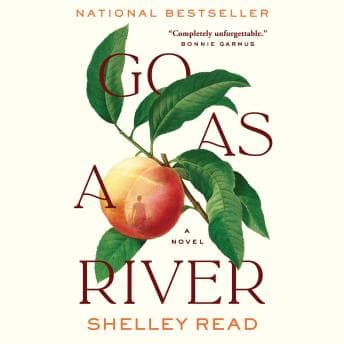

Look, I need to get something off my chest. I am so tired of books being compared to Where the Crawdads Sing. Every single novel with a woman, some nature, and a hint of trauma gets slapped with that comparison like it's a participation trophy. So when I saw this book marketed that way, I almost passed. Almost.
I'm glad I didn't. But also—and I say this with love—this audiobook tested my patience in ways that reminded me of waiting for lab results on a patient who won't stop asking "is it cancer?" every thirty seconds.
The Slow Drip Before the IV Hits
The first couple hours of this book are slow. I'm talking night-shift-at-3-AM-when-nothing's-happening slow. I was driving home after a brutal twelve-hour shift, the sun was coming up over the Superstitions, and I kept thinking "okay, when does this thing actually start?" Victoria's life on the peach farm is painted in these careful, deliberate strokes—which I respect as a craft choice—but Cynthia Farrell's narration doesn't help the pacing. Her voice has this steady, almost stern quality that works beautifully later when Victoria is surviving in the wilderness, but early on? It feels like being read a bedtime story by someone who doesn't believe in bedtime.
Once the story picks up momentum though—once Victoria meets Wilson Moon and everything starts falling apart—I understood why Read took her time. You need to feel what Victoria's losing. The peach orchard. The only home she's known. The weight of being the sole woman managing a household of broken men. (That part hit different. Eldest daughter energy is real.)
When the Medicine Gets Real
Here's where I have to give credit. The survival sections in the Colorado mountains? Accurate enough that I wasn't yelling at my dashboard. When Victoria is struggling through pregnancy alone in the wilderness, the physical details—the fear, the pain, the sheer biological reality of what her body is doing—felt grounded. Not dramatized for shock value. Not sanitized for comfort. Just real.
Farrell's narration actually serves these sections well. That unchanging, stern voice I complained about earlier? It becomes Victoria's survival mode. Her emotional flatness isn't a bug, it's a feature. This is a woman who has learned to endure. Farrell doesn't give you the crying breakdown you might expect—she gives you the quiet, grinding determination of someone who keeps moving because stopping means dying.
The male characters are less distinct in Farrell's voice. Wilson Moon deserved more—his displacement from tribal land, his determination to live freely, all of that gets somewhat flattened when he sounds too similar to Victoria's father and brothers. But the emotional core of the story belongs to Victoria, and Farrell carries that weight.
A River Doesn't Rush (But Sometimes You Wish It Would)
The book's central metaphor—life as a river, gathering and flowing, finding a way forward even when dammed—is beautiful. It's also very on-the-nose. Read tells you what the metaphor means. Repeatedly. I get it. Victoria is the river. The actual Gunnison River is also the river. We're all rivers. The town of Iola will be submerged. Everything is water and flow and persistence.
As someone who's actually worked a code on a patient we all knew wasn't coming back, I understand the human need to find meaning in loss. But the book occasionally tips from earned wisdom into something that feels a little... instructional? Like Read doesn't quite trust us to get there ourselves.
That said, the historical foundation—the real destruction of Iola in the 1960s—gives the novel weight. This isn't just a metaphor. This is something that happened to real people, real farms, real orchards. Real peaches. (My mom would love this book, by the way. She'd cry over the peach orchard and then lecture me about how I should've been a doctor who writes novels.)
Who Should Listen—And Who Should Wait for Coffee
If you loved The Four Winds or Great Circle—books about women surviving impossible circumstances through sheer stubborn endurance—you'll find a lot to love here. If you need action and fast pacing, start at 1.25x speed or accept that this is a slow-burn listen that rewards patience.
This is not a background audiobook. Don't put this on while you're doing charting or folding laundry. It requires your attention, especially in the quieter early chapters. Post-shift decompression? Perfect. Long solo drive? Ideal. Trying to stay awake during a night shift? Maybe pick something with more murders.
Speaking of murders—I tried Jefferson Key on a particularly brutal overnight once, and while the thriller mechanics kept me alert, I spent half the shift muttering corrections at my dashboard about how hospitals actually work.Night Shift Prescription
Carlos asked why I was crying in the car when I pulled into the driveway. I blamed allergies. It wasn't allergies. There's a moment near the end—I won't spoil it—where everything Victoria has lost and everything she's built collides, and Farrell delivers it with this quiet devastation that finally justifies all that earlier restraint.
Go as a River isn't perfect. It's slow to start, occasionally heavy-handed with its themes, and the narration won't work for everyone. But it's honest. It earns its emotional moments instead of manufacturing them. And for a debut novel, Shelley Read has written something that feels lived-in rather than researched.
Night shift approved. Just give it time to flow.