
I picked this one up because it's only four hours. Four hours! That's basically one really good nap time plus a couple of school runs. Perfect, right? And everyone kept saying it was this beautiful love story, and I'm a sucker for a good romance. What nobody warned me about is that this book would make me feel like I was back in my college lit class, except I'm sitting in the Target parking lot trying to figure out what just happened while Sophie screams about goldfish crackers.
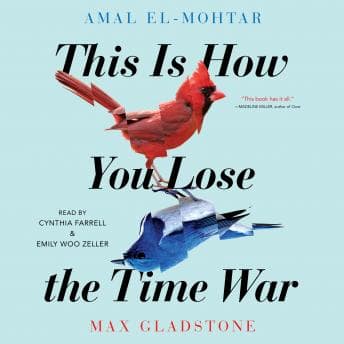
Here's the thing. This Is How You Lose The Time War is gorgeous. Like, genuinely stunning prose. Two rival time-traveling agents from opposing factions start leaving each other secret letters across different eras and realities, and slowly fall in love. It's epistolary romance meets sci-fi, and the writing is the kind of poetic that makes you want to pull over and just... sit with a sentence for a minute.
But I'm going to be honest with you. I had to rewind so many times.
The Brain-Melting Beauty Problem
The prose is dense. Really dense. The kind of dense where you're listening and thinking "that was beautiful" and also "wait, what just happened?" Normally I can follow a book through 47 interruptions (my personal record), but this one? Every time Lucas asked me where his other shoe was, I lost the thread completely.
The writing is intentionally layered and complex—it's written by two poets, basically, and you can tell. There are metaphors wrapped in metaphors, wordplay that rewards attention, and these letters between Red and Blue that are simultaneously love notes and coded messages and literary flex. It's stunning. It's also not exactly multitasking-friendly.
I ended up having to listen to certain chapters during that sacred 45 minutes of car-in-garage time, when nobody could interrupt me. And even then, I caught myself rewinding.
Two Voices, One Heart
The dual narration here is something special. Cynthia Farrell and Emily Woo Zeller each take one of the main characters—Red and Blue—and they recorded separately but somehow sound like they're in conversation with each other. Kind of staggering when you think about it.
Both narrators bring this emotional intensity that makes you believe every word. When Red writes to Blue, you feel the longing. When Blue responds, you feel the danger of what they're risking. The performances are full of feeling without being over-the-top.
That said, I did occasionally get confused about who was speaking. Their voices aren't wildly different in tone, and when you're also trying to remember if you packed Emma's lunch, it can blur together. Not a dealbreaker, but if you need super distinct voices to track characters, heads up.
Who Should Listen (And Who Should Wait)
Here's my honest take: this is not a book for when your brain is fried. This is a book for when you actually have mental bandwidth and want to feel something beautiful. It's short—which I appreciated—but it packs a lot into those four hours.
If you love poetic writing, enemies-to-lovers done with actual literary weight, and don't mind working a little for your story, this is incredible. Hugo and Nebula winner for a reason. The love story is genuinely moving, and the ending hit me harder than expected. (I may have cried in the school pickup line. May have.)
But if you're looking for something you can half-listen to while refereeing sibling fights? Skip this one—or at least save it for a quieter moment. The prose demands attention. It's the opposite of a beach read. Nightfall had that same brain-demanding intensity—gorgeous sci-fi that made me work for it.
I think I would have loved this even more if I'd listened at night, after the kids were asleep, when I could actually focus. As it was, I got maybe 70% of the beauty and had to accept that some of the more elaborate wordplay sailed right over my head.
Cold Coffee Verdict
This Is How You Lose The Time War is the kind of book that makes you feel smarter for having listened to it, even if you didn't catch everything. The romance is achingly real despite being wrapped in time-travel weirdness. The narrators bring genuine emotion to every letter. And at four hours, it's a commitment you can actually finish.
Just maybe don't start it during the morning school run. Save it for when you can actually pay attention. Your brain will thank you, and so will Red and Blue.