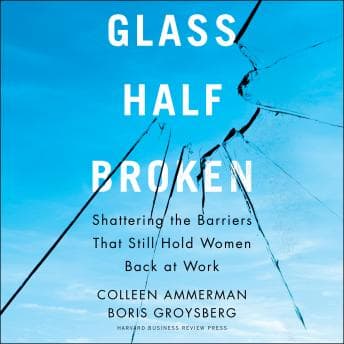

Everyone kept telling me this would be the definitive book on women in leadership. The Harvard seal, the research credentials, the endorsements from every Fortune 500 CHRO with a LinkedIn presence. I went in expecting another academic rehash of stats I already knew, dressed up in consultant-speak.
I was half right. And half wrong.
The Data Hits Different When It's Organized This Way
Here's what Ammerman and Groysberg do that most gender-gap books don't: they trace the entire career pipeline, stage by stage, and show you exactly where women get pushed out—and why it's different reasons at each point. Early career? Networking disadvantages. Mid-career? The motherhood penalty collides with the promotion window. Senior levels? Sponsorship gaps and the "prove it again" bias.
My parents never had language for why my mom handled the front counter while my dad made the business decisions at their dry cleaning shop. They just called it "how things are." This book gives you the vocabulary and the receipts. Whether that changes anything is a different question.
The research synthesis is genuinely useful. They pull from psychology, sociology, economics—and actually explain the mechanisms, not just the outcomes. Brainstorm does something similar with adolescent neuroscience—breaking down the actual brain mechanisms instead of just cataloging teenage behaviors. Why do women get interrupted more in meetings? It's not just bias—it's status expectations that get reinforced through micro-interactions. Why do diversity initiatives fail? Because they target symptoms instead of systems.
Skip to chapter 4 if you're short on time. That's where the organizational strategy stuff lives, and it's the most actionable section.
Chloe Cannon Does the Job (But Just the Job)
Cannon's narration is... fine. Professional. Clear. The kind of performance that doesn't distract but also doesn't elevate. For a research-heavy book like this, that's probably the right call—you don't need dramatic flair when someone's walking you through regression analyses and case studies.
But at nine hours, the even-keeled delivery started to flatten. I was listening during a late-night flight delay at O'Hare (Jenny was asleep on my shoulder, bless her), and I had to bump it to 1.75x just to stay engaged. The content is dense enough that you need some vocal variation to break up the academic rhythm. Cannon doesn't quite provide that.
No accent quirks, no pronunciation stumbles. Just competent delivery that serves the material without adding to it.
The Consultant in Me Wanted More Edge
Here's my issue: this book is written for HR departments and well-meaning executives who need research backing to justify initiatives they already want to implement. It's designed to be cited in board presentations. And that's valuable—I've seen too many DEI programs get killed because someone couldn't point to "the Harvard study."
But it pulls punches. The systemic critiques are there, but they're wrapped in so much academic hedging that the urgency gets lost. I've watched three companies implement the exact strategies this book recommends—mentorship programs, bias training, flexible work policies—and seen them fail because leadership wasn't actually committed. The book acknowledges this problem but doesn't really grapple with it.
My 2.0x speed couldn't save this one from feeling like it was written by committee. Which, given it's two authors synthesizing other people's research, maybe it was.
Who Gets the ROI (And Who Doesn't)
If you're a manager who genuinely wants to understand why your pipeline looks the way it does—not just the what, but the why—this is worth your time. The framework is solid. The research is current (pre-pandemic, but the dynamics haven't changed much, honestly).
If you're a woman navigating corporate America looking for tactical advice on your own career? This isn't really for you. It's about organizational change, not individual strategy. You'll get validation, but not a playbook. Skip it.
If you've already read Lean In, Brotopia, and a dozen McKinsey reports on the gender gap? You'll recognize about 60% of this. Same issue I had with No Excuses!—lots of repackaged wisdom you've heard before, with a few genuinely new frameworks buried inside. The other 40% is the career-stage framework, which is genuinely useful.
Jenny would say I'm being harsh. Jenny is right. But she'd also agree that nine hours is a lot of time to invest in research synthesis when you could read the executive summary in twenty minutes.
Park's Final Calculation
This is what my parents did instinctively—recognized the barriers, worked around them, never expected the system to change. Now there's a Harvard Business School book about it. The career-stage framework is worth the listen. The other 7 hours? Diminishing returns.
Solid for corporate libraries. Solid for managers who need ammunition. For everyone else, the audiobook format might be overkill. Read the summary, skim the chapters relevant to your situation, and move on.