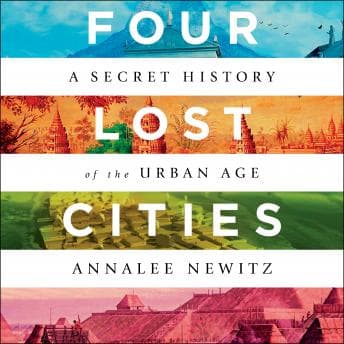

Look, I'll be honest - I almost didn't finish this one. Not because it's bad. It's actually pretty damn good. But because I kept stopping to Google images of Çatalhöyük and falling down Wikipedia rabbit holes about Cahokia. That's either a compliment to Annalee Newitz or an indictment of my self-discipline. Probably both.
Here's the debrief: Four Lost Cities examines the rise and fall of four ancient urban centers - a Neolithic settlement in Turkey, Pompeii, Angkor in Cambodia, and Cahokia near modern-day St. Louis. Newitz isn't just cataloging ruins. She's asking the hard questions about why civilizations collapse and what that means for the cities we're building now.
The Intel That Actually Matters
What grabbed me right away was Newitz's focus on the people history usually ignores. The slaves. The women. The immigrant laborers who actually built these monuments. I've spent enough time in places where the official story and the ground truth are two very different things. That disconnect between official narrative and reality runs through Killing Kennedy too, though in a very different context. Newitz gets that. She's done the legwork - literally traveled to all four sites - and you can tell she's synthesizing cutting-edge archaeological research, not just rehashing textbook material.
The Cahokia sections hit different for me. Here's an indigenous metropolis that rivaled European cities of the same era, sitting right there in Illinois, and most Americans have never heard of it. I've driven past East St. Louis more times than I can count. Never knew what was buried there. That's the kind of thing that makes you question what else you've missed.
The book draws smart parallels between ancient urban planning and modern challenges - environmental stress, political instability, inequality. Newitz isn't preachy about it, but the implications are clear. Cities die. Sometimes slowly, sometimes fast. And the warning signs are often the same.
Chloe Cannon Behind the Mic
Chloe Cannon is... competent. Maybe that sounds like faint praise, but hear me out. She nails the pronunciation of places and names I'd absolutely butcher - and trust me, "Çatalhöyük" would come out of my mouth sounding like a sneeze. Her pacing is steady. Production is clean. No complaints on the technical side.
But - and there's a but - the delivery can run flat. I noticed it during some of the drier archaeological explanations. There's a detachment that occasionally creeps in, almost like she's reading a particularly dense briefing document rather than telling a story. (And I've sat through enough briefings to know that tone.) It's not a dealbreaker, but if you're expecting dramatic flair or emotional range, you won't find it here.
I bumped it up to 1.25x during the middle sections. Helped with the pacing without losing comprehension. Worth trying if you find yourself drifting.
The Visualization Problem
Here's my one real gripe with the audiobook format for this particular book: you can't see anything. Newitz is describing archaeological sites, artifacts, urban layouts - visual stuff. I found myself pulling over to look up images on my phone more than once. (Ranger was not impressed with the delays to his park visits.)
This isn't Cannon's fault or even a production issue. It's just the nature of the material. If you're the type who needs to see what you're learning about, consider having a tablet handy. Or maybe grab the physical book and use the audiobook for review.
The Debrief
If you're into history, archaeology, or urban planning - yes, absolutely worth your time. Newitz writes with the accessibility of good journalism but the depth of someone who's actually done the research. The book was named a Best Book of the Year by NPR and Science Friday for a reason. If you need high-energy narration or a more immersive audio experience, sample first. The content is strong, but the delivery is workmanlike rather than inspiring.
I learned more about ancient urban collapse in eight hours than I expected. And honestly? It's got me thinking about the cities we're building now in ways I hadn't before. That's the mark of a book that does its job.
Ranger approved - though he's still waiting for that audiobook about military working dogs.