
Does the human need for ritual stem from a fear of death, or a fear of what the dead leave behind? I found myself spiraling into this very specific existential crisis while stirring a pot of Dal Makhani—a dish that, much like this audiobook, absolutely refuses to be rushed—at 11 PM on a Tuesday.
I picked up Ghostway expecting a standard procedural. You know the pattern: grumpy detective, bloody crime scene, neat resolution. I treat these mysteries like logic puzzles to distract me from my own stalled research papers. But as George Guidall's voice filled my kitchen, I realized I wasn't listening to a crime novel. I was listening to a study in cognitive dissonance.
## Jim Chee: A Case Study in Identity IntegrationJim Chee is not your typical brooding cop. He's trying to be a modern lawman while training to be a hatathli (a singer/healer). Most authors handle this duality clumsily, but Hillerman—and by extension, Guidall—nails the internal friction. There's a scene early on at the Shiprock Wash-O-Mat (a setting so wonderfully mundane for a murder) where the violence feels secondary to the cultural violation. An old man, a Polaroid, and a sudden death. Guidall narrates the chaos with a dry, gravelly authority that makes the sudden violence feel disturbingly real, rather than cinematic.
## Guidall's Voice: Tobacco Smoke and Desert SandGuidall is the gold standard for a reason. He doesn't do "voices" in the cartoonish sense. He does attitudes. When he voices the elders, he slows his cadence, adding a weight that implies decades of sun and silence. He treats the Navajo terms with a respect that feels earned, not performative. It's a texture thing—his voice sounds like it's been cured in tobacco smoke and desert sand.
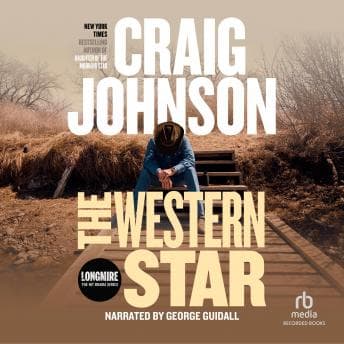
Guidall brings that same weathered gravitas to Spirit of Steamboat—a completely different setting, but the same sense that he's inhabited the story rather than merely read it.But let's be honest about the pacing. My mother, who watches Bollywood movies at 1.5x speed, would have abandoned this by Chapter 3. It is slow. There were moments around the halfway mark where the investigation into the Ghost Way ceremony—a ritual to cleanse a person of the chindi or evil spirit—felt like it was drifting into an anthropology lecture. Psychologically, it's brilliant; the idea that trauma (or "ghost sickness") must be ritually purged is a concept modern therapy is still catching up to. But narratively? It tests your patience.
## Who This Is (and Isn't) ForIf you need a cliffhanger every ten minutes, you will be checking your watch. Skip this one. But if you're drawn to character studies where motivation matters more than body count—where a detective chases harmony (hozhoni) rather than just justice—this will reward your patience. It's for listeners who find Western crime fiction's "justice is blind" framework a bit... limited.
Yet, I couldn't stop listening. Not because of the "whodunit"—which is clever enough—but because Chee's motivation is so distinct. He isn't chasing the bad guy solely for justice; he's doing it to restore hozhoni. It's a motivation that feels alien to the Western canon, and that's exactly why it works.
Compare that to Echo Burning, where Reacher's moral calculus is brutally utilitarian—same genre, completely opposite psychological architecture, and honestly the contrast tells you everything about why Chee stuck with me. ## Final DiagnosisBy the time the Dal was finally done, I was convinced. It's not a thriller. It's a mood piece with a body count.