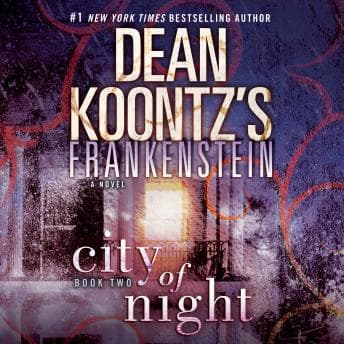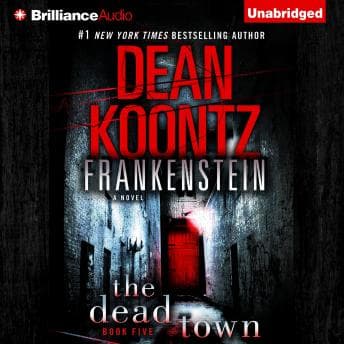

What happens when the guy who reinvented Frankenstein's monster for the 21st century finally has to end it all - does he stick the landing or faceplant into the Montana snow?
I've been with this series since book one, listening between shifts, and I'll be honest - by the time I got to The Dead Town, I was nervous. Series finales have a way of disappointing, especially in genre fiction where the buildup has been five books of escalating crazy. I started this one on a Saturday morning, rare day off, kids at my sister's, Carlos still asleep. Made myself a giant pot of coffee and just... sat in the quiet house and listened. Which felt appropriate for a book about a town going silent in the worst possible way.
Rainbow Falls Felt Like a Real Small Town Under Siege - And That Bothered Me
Here's the thing about working in a Level 1 trauma center: you know what real chaos looks like. You know the difference between Hollywood panic and actual crisis response. And Koontz does something interesting here - Rainbow Falls doesn't fall apart the way movies show you. The survivors cluster, they improvise, they argue about stupid things while the world burns. That felt right to me. When a community is under threat from Victor Frankenstein's replicants - these things that look human but aren't, that are replacing people one by one - the response isn't organized heroism. It's messy, fearful people making do.
But I also couldn't shake the feeling that Koontz stretched some of this thinner than it needed to be. Nine hours is reasonable, but there are stretches in the middle where we're cycling through character perspectives and I'm waiting for the actual confrontation to kick in. The scattered survivors coming together is a good structure, but some of those threads felt like they existed to pad runtime rather than build tension.
And then there's Jocko. I need to talk about Jocko.
Jocko Is the Reason I Didn't Yell at My Dashboard This Time
Every long series needs a character that makes you smile when things get dark, and Jocko - this bizarre, self-aware, oddly endearing creature - is the emotional center of this book in a way I didn't expect. Christopher Lane voices him with this mix of childlike wonder and existential dread that just... works. I actually laughed out loud during one of his scenes, alone in my living room at 8 AM, and then immediately felt a pang of something heavier underneath the humor. That's good writing paired with good performance.
Lane carries this whole book on his back. Single narrator, dozens of characters, and he never loses the thread. His Victor Frankenstein is cold and precise - you can hear the god complex dripping off every syllable. His regular townspeople sound like regular townspeople. He doesn't do anything flashy, no wild accents or vocal gymnastics, but there's a steadiness to his read that keeps the tension simmering even when the plot wanders. The medical details are accurate. Finally. Or at least close enough that I wasn't screaming corrections at anyone.
Where It Lands - and Where It Stumbles
The final battle sequence is legitimately tense. Koontz knows how to build to a climax, and when it hits, it hits hard. There's a nihilistic edge to Victor's plan that feels more disturbing now than it probably did when this was published - the idea that someone with enough resources and enough contempt for humanity could just... replace us. Not destroy us. Replace us. As someone who's actually worked a code on a patient whose family didn't even know they were sick, the horror of something wearing your loved one's face but being fundamentally empty inside? That landed.
But - and this is where the longtime Koontz fans who called this book disappointing have a point - the resolution feels rushed compared to the buildup. Five books of escalating threat and the ending wraps up faster than you'd expect. It's satisfying enough, but I wanted to sit in the aftermath longer. I wanted to feel the weight of what these characters survived. Instead, it's almost neat. Too neat for a story this dark.
Some listeners have been brutal about this one - I saw someone call it "a pile of rubbish," and look, I get the frustration if you were expecting Koontz at his absolute peak. This is not his best work. But as a series conclusion? It does the job. King's Just After Sunset gave me that same bittersweet feeling - stories that don't quite reach the heights you know the author is capable of, but still do enough of the right things that you close them feeling like your time wasn't wasted. It connects the narrative threads, gives the characters their moments, and Christopher Lane's performance elevates material that might've felt flat on the page.
Who Gets This Prescription
If you've listened to books one through four, you're finishing this. You have to. And it's worth it - not transcendent, but satisfying in the way that watching the last episode of a show you've committed to is satisfying. If you haven't started the series, do NOT start here. You'll be completely lost.
Perfect for that post-shift decompression - dark enough to match your mood, familiar enough not to demand too much from a tired brain. Night shift approved, with the caveat that the middle section might lull you if you're already fighting sleep.
Carlos asked why I was just sitting in the kitchen staring at nothing when it ended. I told him I was thinking about what makes us human. He handed me more coffee and didn't ask follow-up questions. Smart man.