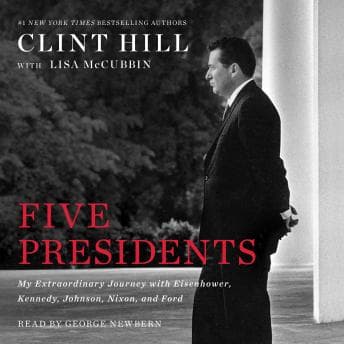
Let me start with a complaint. Clint Hill is the kind of guy I would've wanted on my detail - methodical, observant, completely dedicated to mission. But the man buries the lede constantly. You're listening along, he's describing some mundane motorcade route, and then - almost as an afterthought - he drops that he was six feet from JFK when the third shot hit. Just... casually. Like he's mentioning the weather.
I finished this one during a late-night drive back from a client meeting in Houston. Ranger was asleep in the back, the I-35 corridor was empty, and Hill's voice - well, Newbern's interpretation of Hill's voice - was walking me through seventeen years of history I thought I knew. Turns out I didn't know the half of it.
The Man Behind the Sunglasses
Here's what grabbed me: Hill isn't interested in being a hero. The guy literally climbed onto the back of a moving limousine in Dallas - the most famous Secret Service moment in history - and he spends maybe ten minutes on it across fourteen hours. What he wants you to understand is the job. The endless waiting. The golf rounds with Eisenhower where you're scanning tree lines instead of watching the swing. The way Johnson would suddenly decide to drive his own car at 90 mph on his ranch roads while agents scrambled to keep up.
Newbern nails the delivery. It's measured, professional - exactly how a career Secret Service agent would debrief. No dramatics. When he describes Nixon's final days in office, the paranoia and isolation, there's this clinical detachment that somehow makes it more devastating. You're not being told how to feel. You're being given the facts and trusted to process them like an adult.
Five Very Different Commanders
What I didn't expect was how much personality comes through for each president. Eisenhower was the general who never stopped being a general - everything scheduled, everything precise. Kennedy was charming but reckless (and Hill doesn't sugarcoat the security nightmares that created). Johnson was volcanic, demanding, but also surprisingly vulnerable when the Vietnam protests surrounded the White House. Nixon... Nixon was already unraveling long before Watergate.
And Ford - poor Ford. The man inherited the biggest mess in modern presidential history and Hill clearly respected how he handled it. There's a moment where Hill describes the mood in the White House after Nixon's resignation, the staff shell-shocked, the country furious, and Ford just... getting to work. No drama. Just duty.
That hit home for me. (Ranger would approve - he's big on duty.)
Where It Drags
Look, I'm not going to pretend fourteen and a half hours flew by. There are stretches - particularly during the Eisenhower years - where Hill's commitment to chronological accuracy means you're getting detailed accounts of trips that didn't amount to much. The man remembers every hotel, every motorcade route, every foreign dignitary's name. It's impressive. It's also sometimes tedious.
But here's the thing: when you've served, you understand why he does this. The job is 99% boredom and 1% absolute chaos. Hill is giving you the authentic experience, whether you want it or not.
The Dallas Factor
You can't review this book without addressing November 22, 1963. Hill has talked about it before - in his Kennedy-specific books - but here it's contextualized within a full career. You understand what he'd already seen, what he'd already survived, and why that day broke something in him that took decades to repair.
He doesn't dramatize. He doesn't need to. When he describes the sound of the shots, the chaos in the car, Jackie Kennedy's face - it's delivered with the same measured tone as everything else. And that restraint hits harder than any theatrical performance could.
Who Should Listen (And Who Should Skip)
History buffs who want the ground-level view, not the thirty-thousand-foot analysis. That same ground-level perspective is what makes Federalist Papers worth the effort - primary sources beat analysis every time. Anyone who's served in any protective or military capacity - you'll recognize the mindset. People who are tired of partisan takes on these presidents and want to hear from someone who served them all without political agenda.
Skip it if you need action every chapter. This is a career memoir, not a thriller. The pace matches the reality of the job.
Debrief Complete
Clint Hill gave seventeen years to protecting the most powerful men on earth. This audiobook is his after-action report - thorough, honest, occasionally tedious, but ultimately worth your time. Newbern's narration feels like sitting across from a retired agent at a quiet bar, listening to stories you won't find in any history book.
Ranger and I both approve. Worth the long drive.








![Steve Jobs [unabridged audiobook] audiobook cover](/_next/image?url=https%3A%2F%2Fcovers.audiobooks.com%2Fimages%2Fcovers%2Ffull%2F9788499923406.jpg&w=1920&q=75)