
What makes a person stay somewhere they know is dangerous?
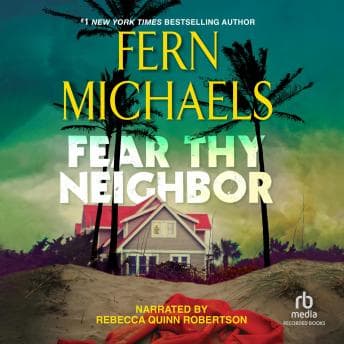
I was chopping onions for a dal that would take way too long for a weeknight when Alison Marshall decided to buy a beach house on Palmetto Island. And I found myself pausing, knife in hand, genuinely curious about her psychology. A twenty-nine-year-old with no family, no ties, drifting through Florida towns since high school—the research actually shows this kind of rootlessness often creates hypervigilance, not naivety. So why does Alison ignore every red flag this island throws at her?
That question kept me listening through eight and a half hours. It also kept me frustrated.
The Protagonist Exhibits Classic... Wait, Does She?
Here's my problem with Alison Marshall: she doesn't track. Psychologically, I mean. Fern Michaels gives us a woman who's survived on her own for over a decade, worked odd jobs, saved carefully, made it to nearly thirty without anyone's help. That's a survivor profile. That's someone who should have finely tuned threat detection.
But Alison on Palmetto Island? She's oblivious in ways that made me want to shake my phone. The locals are cold—not just unfriendly, actively hostile—and she keeps making excuses for them. The realtor is weird. The neighbors are weird. Everyone is weird. And Alison just... stays. Keeps unpacking boxes. Plants a garden, probably.
My therapist would have thoughts about this character. Specifically, she'd ask why Alison's attachment to the idea of "home" overrides her survival instincts. That could be a fascinating character study—the desperation for belonging making someone blind to danger. But Michaels doesn't dig into it. Alison just does things because the plot needs her to.
When the Narrator Carries the Weight
Rebecca Quinn Robertson is working overtime here. Her pacing is genuinely good—she knows when to slow down for suspense, when to push through action. By hour three, I was listening more for her delivery than for the story itself. She kept me hooked when the plot wobbled.
And the plot does wobble. The "dark secret" the island community is hiding? I kept waiting for it to land with the weight it deserved. The motives of the antagonists felt murky—not in a mysterious way, but in a "did anyone edit this?" way. Characters acted suspicious because they needed to be suspicious, not because their psychology supported it.
Hummingbird Salamander has a similar problem with antagonist motives—but at least that book commits to keeping you genuinely disoriented, which feels intentional rather than accidental.(I finished the dal. It was too salty. Much like my feelings about this book.)
A Case Study in Almost
The bones are good. Small island community with a secret. Outsider protagonist. Escalating paranoia. This is classic thriller territory, and Michaels has written over 150 books—she knows structure. The first few hours genuinely work. You feel Alison's hope, then her unease, then her fear.
But somewhere around the midpoint, the story starts relying on coincidence instead of consequence. Characters appear and disappear based on plot convenience. The "stark choice" promised in the description—stay and join them, or escape—doesn't feel as stark when you're not entirely sure what "joining them" even means.
I found myself asking: why does the island even want Alison? What's special about her? The answer seems to be... nothing, really. She's just there. Which makes the whole conspiracy feel less sinister and more arbitrary.
Who Should Tune In (And Who Should Keep Scrolling)
If you're looking for a beach read that doesn't require deep investment—something to half-listen to while you're doing something else—this works. Robertson's narration is engaging enough to keep you company. The Florida setting is vivid. There are twists, and some of them land.
But if you're like me—if you need character motivations to make sense, if you'll spend an hour analyzing why a protagonist made a choice that no reasonable person would make—you might end up more annoyed than entertained. Skip this one if you can't turn off the "but why?" part of your brain.
The Data Is In: Mixed Results
Here's what I've learned from listening to people talk about this audiobook: the divide is real. Some listeners found it addictive, couldn't turn it off, loved every twist. Others—and I'm closer to this camp—found the protagonist unlikable and the plot inconsistent.
I don't think either group is wrong. This is a book that works if you don't interrogate it. If you can just ride the wave of suspense without asking "but why would she do that?" you'll have a good time. Robertson's delivery genuinely helps.
I interrogated it. I couldn't help myself. That's the psychology researcher curse—I analyze fictional characters like case studies and I'm not sorry about it.
Case Closed (But Not Satisfactorily)
Fear Thy Neighbor is a competent thriller with a narrator who elevates the material. It's not a waste of time. But it's also not going to stick with me the way books with psychologically coherent characters do. Alison Marshall will fade from my memory by next week, replaced by protagonists whose choices I can actually understand.
Worth a listen if you're in the mood for something light with suspense elements. Just don't expect the character work to hold up under scrutiny. Some of us can't turn that part of our brains off—and this book doesn't reward the effort.
The stories in Skeleton Crew: Selections actually do reward that scrutiny—each piece holds up when you pull at the seams, which is rarer than it should be in the genre.