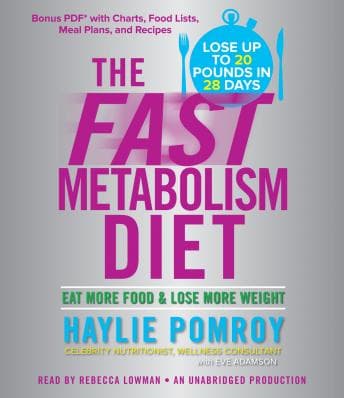

I was prepping a pitch deck at 11 PM - the kind of Sunday night where you're staring at market sizing slides and questioning your life choices - when I figured a diet book might be the mental palate cleanser I needed. Five hours later, I'm not sure I got what I came for.
Here's the thing about Haylie Pomroy's Fast Metabolism Diet: the core concept is actually solid. Rotate your macros through three phases each week - carbs Monday-Tuesday, proteins Wednesday-Thursday, then everything plus fats Friday-Sunday. Keep your metabolism guessing. It's basically periodization for eating, which any decent fitness coach will tell you has merit. My parents ran a dry cleaning business for 30 years and ate whatever was fast between customers, but they instinctively rotated between Korean, American, whatever was in the fridge. No phases, no guru, just survival eating. Now it has a book deal.
The First Two Hours Are a Hostage Situation
Skip to chapter 5. Thank me later. Seriously. The opening is a masterclass in padding runtime. You'll hear about Pomroy's celebrity clients, her philosophy, her backstory, her philosophy again, and approximately seventeen variations of "food is not the enemy." I get it - you need to establish credibility. But I've seen startup founders pitch faster than this book gets to the actual diet plan.
When the book finally delivers the goods, it's actually useful. The three-phase rotation is clearly explained, the food lists are practical, and there's a PDF companion with meal plans and recipes. That's real utility. But the journey to get there? My 2.0x speed couldn't save this one.
Rebecca Lowman Does What She Can
Lowman's narration is clean and professional - exactly what you want for instructional content. She's not fighting the material or trying to make grocery lists sound dramatic. Just steady, clear delivery that lets you absorb information without distraction. For a book that's essentially a long how-to manual, that's the right call.
But here's where the audiobook format hurts: you can't flip back to reference the phase breakdown or scan the food lists while cooking. The PDF companion helps, but if you're listening while commuting or at the gym, you're going to miss details you'll need later. This is the kind of book that probably works better in print, or at minimum requires a second listen with a notebook handy.
The Promise vs. The Fine Print
Pomroy sells you on "eat everything you love" and then - surprise - there's a list of restrictions longer than my client contracts. No wheat, no corn, no dairy, no soy, no refined sugar, no caffeine, no alcohol, no dried fruit, no fruit juice. Look, I'm not saying these restrictions are wrong. I'm saying the marketing is misleading. You hear "eat more food, lose weight" and imagine nachos. The reality is more like... strategic meal prep with very specific ingredients.
This is what bugs me about most diet books. The promise gets you in the door, then the reality is a completely different room. God Delusion does the opposite - Dawkins tells you exactly what you're getting from page one, no bait-and-switch. At least be honest upfront. My parents never promised their customers "dry cleaning with no chemicals." They just did good work.
Who's This Actually For?
If you've tried calorie counting and failed, if you're tired of elimination diets that cut entire food groups forever, if you want a structured rotation approach with real meal plans - this delivers. The science is reasonable, the framework is clear, and Pomroy clearly knows her stuff.
But if you're looking for a quick listen with actionable takeaways you can implement immediately? This isn't it. The front-loading of philosophy over practicality means you're investing significant time before you get to the payoff. And the audiobook format means you'll probably need the physical book anyway for reference.
The Consulting Partner's Take
I've seen worse frameworks. The three-phase rotation is logical, the food science is grounded, and there's genuine utility buried in here. But the packaging is inefficient. You're paying for 5 hours and 42 minutes when the core content could've been delivered in 2. Jenny would say I'm being harsh. Jenny is right. But she'd also agree that a good idea poorly packaged is still a problem.
The key takeaway is worth the listen. The other 3 hours? Not so much. Get the PDF, skim the phases, and save yourself the philosophical preamble.