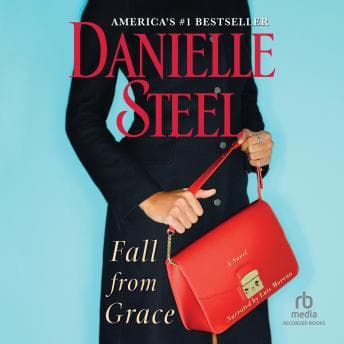

I picked this one up because sometimes you just need a book that does exactly what it promises on the tin. Danielle Steel has been doing this for decades—the woman has written 129 books, which is frankly terrifying—and Fall From Grace is peak Steel territory. Her other recent work Cast follows a similar pattern of characters rebuilding after loss, though that one leans harder into the Hollywood setting. Wealthy widow loses everything, must rebuild from scratch, finds herself along the way. You know the beats. But here's the thing: knowing the beats doesn't mean the journey isn't worth taking.
Sydney Wells has the kind of life my wife Denise and I joke about during our lakefront walks—the "what if we won the lottery" fantasy, except Sydney actually lived it. Devoted wealthy husband, beautiful home, the whole package. Then he dies in an accident and leaves her with nothing. Not because he didn't love her, but because he didn't update his will. And suddenly his vicious daughters from his first marriage control everything.
The Slow Descent That Feels Real
What got me about this book—and I wasn't expecting it—is how Steel handles Sydney's fall. It's not dramatic in a soap opera way. It's the quiet humiliation of being 49, suddenly homeless, and having to figure out who you are when your identity was wrapped up in a marriage. My students would probably roll their eyes at another "rich lady learns to work" story, but there's something genuinely affecting about watching someone rebuild from zero.
The fashion world setting is pure Steel escapism. Sydney takes a job that leads her into shady international deals, gets set up by her boss, faces criminal prosecution. It's a lot. Maybe too much? The plot stacks tragedy upon tragedy in a way that sometimes felt like Steel was playing misfortune bingo. But I kept listening through three faculty meetings (sorry again, Principal Martinez), so clearly something was working.
Luis Moreno Behind the Mic
Here's where things get interesting. Luis Moreno has this pleasant, clear voice that works beautifully for the emotional heavy lifting. When Sydney is processing her grief, when she's facing another betrayal, Moreno delivers. One listener said "the raw emotions portrayed by the narrator truly brought Sydney's struggles to life," and yeah, I get that. He's genuinely good at the character work.
But—and this is the thing that might make or break it for you—Moreno has this habit of sounding breathless at the end of sentences. Like he's running out of air right at the period. At first I barely noticed. By hour five, I noticed. By hour eight, I had to actively tune it out. Some listeners found it "very offputting," and I can see why. It's not a dealbreaker for me, but if you're the type who gets fixated on vocal tics, maybe sample first.
The production itself is clean. No weird background noise, no volume jumps. Just Moreno and the story for almost ten hours.
Who Should Queue This Up (And Who Should Skip)
Let me be real about something. This is comfort food reading. It's not Middlemarch. It's not trying to be. That's the beauty of knowing what kind of book you're getting into—unlike Sing, Unburied, Sing, which demands your full emotional investment and gives you literary weight in return. Steel writes accessible, emotionally engaging stories with characters you root for, and Fall From Grace delivers exactly that. Sydney goes from victim to survivor to successful designer, from New York to Hong Kong, and there's something deeply satisfying about watching her take life by the horns.
If you're a Steel fan, you already know you're listening to this. If you've never tried her work, this is actually a solid entry point—it's got all her signatures without being too dependent on previous books. If you're looking for literary fiction that'll make you think deep thoughts about the human condition... this ain't it. And that's fine. Skip this one if breathless vocal tics drive you up the wall, or if stacked-tragedy plots feel manipulative rather than compelling.
I listened to most of this while grading papers at 11 PM, and it was perfect for that—engaging enough to keep me awake, not so demanding that I lost track of whether my students actually understood symbolism in The Great Gatsby. (They didn't. They never do.)
The content warning here is basically "life is unfair and people are terrible"—there's loss, betrayal, emotional distress. Nothing graphic, but if you're in a fragile headspace about grief or financial anxiety, maybe save this for later.
Mr. Williams's Final Grade
Would I listen again? Probably not. But did I enjoy the ride? Yeah. Sometimes that's enough.