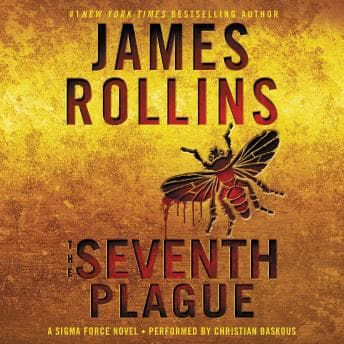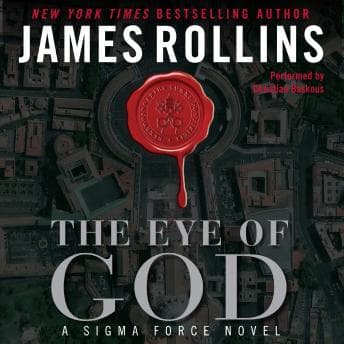

Look, I'm going to be honest with you. I started this one at 2 AM because I couldn't sleep - thesis anxiety, Dr. Patel's disappointed email still burning a hole in my inbox - and I figured some Sigma Force action would distract me. Genghis Khan's skull? Dark energy satellites? Ancient Vatican mysteries? This is basically D&D campaign fuel, and Rollins delivers exactly the kind of globe-trotting, conspiracy-laden adventure that makes you forget you're supposed to be writing about procedural generation algorithms.
But here's the thing. The narrator almost ruined it for me.
When Your DM Can't Do Accents
Christian Baskous has this weird energy where he's clearly TRYING - like, really trying - but the execution lands somewhere between community theater and a guy doing impressions at a party who doesn't realize he should stop. His Asian characters sound vaguely Italian. His Italian characters sound vaguely... I don't know, confused? It's like when your buddy insists he can voice all the NPCs in your campaign and you're too polite to tell him they all sound like the same person with a head cold.
The actual narration - the non-dialogue parts - gets this overdramatic quality that fights against the pacing. Rollins writes punchy, action-forward prose. Baskous reads it like he's announcing the apocalypse in every single sentence. By hour three, I was adjusting to it, but those first few hours? Rough. Really rough.
The one bright spot: Kowalski. The big lug gets some genuinely funny lines ("Why does that duck keep looking at me?" had me snort-laughing at 3 AM like an idiot), and Baskous actually nails the comedic timing there. It's weird - he can land a joke but can't differentiate between continents when doing accents.
Sanderson-Level Ambition in Thriller Form
Okay, so the story itself. This is Sanderson-level world-building in terms of sheer ambition - Rollins is connecting the fall of Rome to Genghis Khan to dark energy physics to biblical prophecy, and somehow it works? That same ambitious scope shows up in Prince, where Machiavelli's political philosophy gets woven into something equally sprawling. The magic system here is chef's kiss if you consider "fringe science presented as plausible" a magic system. (I do. Fight me.)
The satellite crash opening hooks you immediately. There's this image of the eastern seaboard in ruins, and you KNOW the next fourteen hours are going to be about preventing that. Classic ticking clock structure. Gray Pierce and the Sigma crew are basically fantasy adventurers with government funding and better gear - they're solving ancient puzzles, racing against shadowy enemies, uncovering truths that Would Shake The Foundations Of Everything We Know.
My D&D group would love this. The Vatican conspiracy stuff alone could fuel three campaign arcs. A tome bound in human skin? DNA-confirmed Genghis Khan remains? Come ON. That's premium worldbuilding right there.
But - and this is a big but - the narrator situation means you have to work harder than you should. I found myself rewinding sections because Baskous's rhythm threw me off, made me lose track of who was speaking. That's a problem when you've got multiple characters across multiple locations doing multiple things simultaneously.
Who Should Roll These Dice (And Who Should Pass)
If you're already a Sigma Force fan and you've listened to Peter J. Fernandez on other entries, brace yourself. Different narrator, different energy, and not in a good way. Some listeners straight-up said they won't buy another Baskous-narrated installment, and I get it.
But if you can push through the narration issues - or if you're like me, listening at 2 AM when your standards are lower and your need for distraction is higher - the actual story delivers. Rollins knows how to pace action, knows how to weave real history with speculative fiction, knows how to make you Google "was Genghis Khan's tomb really never found" at 4 AM instead of sleeping like a functional human.
Skip this if: you need clean character differentiation or you're planning background listening. The narrator won't help you track the multiple storylines. Grab it if: you're a conspiracy-thriller junkie who can forgive iffy voice work for genuinely creative historical speculation. Maybe bump it to 1.25x speed to smooth out some of the overdramatic pauses.
Final Loot Assessment
The book is solid - this is Rollins doing what Rollins does best, and if you're into action-adventure with historical conspiracy elements, you'll find plenty to love. But the audiobook experience specifically? That's where it stumbles. Hard.
I finished it. I don't regret the time. But I probably would've enjoyed it more in print, and that's not something I say often. If this is on your library's digital shelf through Libby or whatever, grab it there. Don't spend a credit on it unless you're a completionist who needs every Sigma Force entry in audio format.
Now if you'll excuse me, I need to email Dr. Patel and pretend I made progress on my thesis instead of listening to fourteen hours of Vatican conspiracies and Mongol mysteries.