
"Does she tell Bruce and ruin their idyllic honeymoon—or should she handle this psychopathic stalker on her own?"
I'm paraphrasing the audiobook description here, but when Karissa Vacker delivered that exact question about three hours in, I nearly rear-ended the car in front of me. Not because of the question itself—because I was already yelling at my dashboard. "TELL HIM. TELL YOUR HUSBAND. THIS IS NOT COMPLICATED."
Reader, she did not tell him. Obviously.
When Your Patient Won't Follow Discharge Instructions
Look, I've spent fifteen years watching people make terrible decisions about their own health. "I'll finish the antibiotics when I feel better." "I don't need to follow up with my cardiologist." "I'm sure this chest pain is just heartburn." So I have a high tolerance for fictional characters doing dumb things—it's realistic, honestly. People are messy. People panic. People convince themselves that ignoring a problem will make it go away.
Abigail Baskin fits that profile perfectly. She has a drunken one-night stand right before her wedding, convinces herself it meant nothing, and then this guy shows up at her honeymoon resort like something out of a fever dream. Her response? Handle it alone. Don't tell her millionaire husband. Just... manage it.
As someone who's actually worked a code, I can tell you: when things go sideways, you call for backup. You don't try to intubate someone solo while pretending everything's fine. But Abigail's in denial mode, and Vacker captures that spiral beautifully—the self-doubt, the second-guessing, the way fear makes you rationalize increasingly insane choices.
Vacker's Voice: Strong Where It Counts
Karissa Vacker is an AudioFile Earphones Award winner, and it shows—mostly. Her Abigail is pitch-perfect. The transition from tipsy bachelorette-party energy to creeping dread to full-blown terror? She nails every emotional beat. When Abigail spots a terrified woman in the shadows and no one believes her, Vacker's voice carries that particular frustration I know too well. The "I'm not crazy, something is wrong here" desperation that patients sometimes have when they know their body better than the chart says.
But—and this took me about an hour to adjust to—her male voices are rough. Not terrible, but you can feel her working at it. Bruce sounds vaguely the same as the stalker sometimes, which is awkward when you're trying to figure out who's speaking. By hour three I'd recalibrated my brain and stopped noticing, but those first sixty minutes? A little bumpy.
The New England Coast at 4 AM
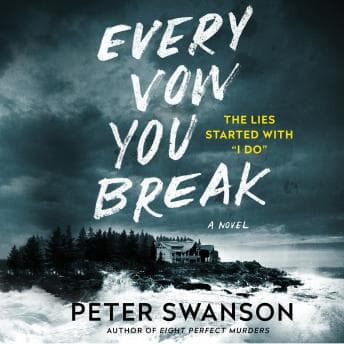
I finished this one over three night shifts, listening during my drives home when the Phoenix highways are empty and I'm trying to decompress before walking into my house smelling like hospital. Peter Swanson sets this on a remote Maine resort island, and there's something about that isolated coastal atmosphere that hit different at 4 AM. The fog. The feeling that something's not right but everyone's pretending it is. That's every night shift in a trauma center, honestly. Still Life has that same atmospheric dread, though it trades the coastal fog for small-town secrets.
The pacing is deliberate—some would say slow. I didn't mind it. After twelve hours of chaos, I wanted something that built tension gradually rather than throwing adrenaline at me. But if you're looking for a fast-paced thriller that punches you in the face immediately, this isn't it. It's more of a slow simmer. The dread accumulates.
Where It Gets Wobbly
I'm not going to spoil the twists, but I will say: some of them require you to suspend disbelief pretty hard. Like, "that's not how people work" hard. Honeymoon Crashers has a similar premise—honeymoon gone wrong—but leans into the absurdity instead of trying to play it straight. I've seen enough real trauma to know that human behavior under stress is unpredictable, but a few plot turns here made me squint at my steering wheel. The medical details are accurate—Swanson clearly did his research on that front—but the psychological logic gets shaky in the back half.
Also, Abigail's husband Bruce is... fine? He's described as kind and stable, which in thriller terms usually means "secretly terrible" or "boring obstacle." I won't tell you which one he turns out to be, but I will say I never felt invested in their relationship. The stalker is more interesting than the husband, which is probably the point, but it made me care less about whether the marriage survived.
Clocking Out
This is a solid post-shift decompression listen. Seven and a half hours—perfect for about four commutes or one very long road trip. The suspense builds effectively, Vacker's emotional delivery keeps you hooked even when the plot wobbles, and there's enough atmosphere to make you forget you're driving through the Sonoran Desert at dawn.
If you loved Swanson's previous work, especially Eight Perfect Murders, temper your expectations slightly. This one's good, not great. Some listeners found it a step down from his earlier stuff, and I get that. But as a standalone thriller for someone who needs to decompress from a job where the stakes are literally life and death? It works.
Carlos asked why I was muttering "just TELL him" at my dashboard for three days straight. I blamed work stress. He didn't believe me.
Who should listen: Anyone who likes psychological thrillers with slow-build tension and doesn't mind an imperfect protagonist making frustrating choices. Skip if you need breakneck pacing, if male-voice narration issues are a dealbreaker, or if you're the type who throws books across the room when characters don't communicate. Your blood pressure will thank you.