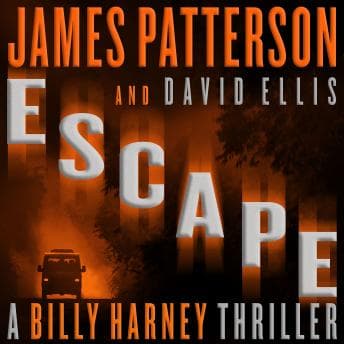

People keep telling me Patterson books are formulaic. That the co-author does the heavy lifting. That they're literary fast food. And honestly? They're not entirely wrong. But here's the thing - sometimes you want a good burger, not a seven-course meal. And Escape is a damn good burger.
I finished this one at 2 AM on a Tuesday, sitting in my home office waiting on a client's threat assessment report to come through. Ranger was snoring at my feet. Linda was long asleep. And I was wide awake because David Ellis (let's be real, he's driving this bus with Patterson riding shotgun) knows exactly how to structure a short chapter so you keep saying "just one more."
That Handwritten Note Changes Everything
Let me cut to the chase - the setup here is solid. Detective Billy Harney runs Chicago PD special ops, and when inmates break out of custody leaving dead officers behind, along with ditched Kevlar vests, assault rifles, and a personalized note addressed to Billy? Yeah, that's a hook. The personal angle - someone specifically targeting Harney while a young girl's life is on the line - keeps the stakes from feeling abstract. This isn't "stop the bad guy for justice." This is "stop the bad guy because he's in your head and he wants you to know it."
What Ellis does well is layer the investigation. You've got the billionaire crime boss angle, the prison escape mechanics, and the missing girl running simultaneously. At under nine hours, there's zero fat on this thing. Patterson's fingerprints show up in the chapter length - some are barely two minutes long at 1.25x speed - but Ellis brings the procedural credibility. The man is literally a justice on the Illinois Appellate Court. He knows how the system works, and more importantly, he knows how it breaks.
I've seen this scenario play out in real life - not the prison escape exactly, but the targeted taunting of law enforcement. It's a power play. And the book gets the psychology of that right. The antagonist isn't just smart; he's theatrical. The "Hi, Billy" note is the kind of detail that would make every cop in a briefing room go quiet. Ellis understands that.
Ballerini Carries the Badge
Edoardo Ballerini narrating Billy Harney just works. He's got this controlled intensity that fits a detective who's seen too much but hasn't gone cynical yet. His delivery on the shorter chapters - those rapid-fire scene breaks - maintains tension without feeling rushed. Where some narrators would phone in a two-page chapter, Ballerini treats each one like it matters.
I will say - and this is minor - that his female voices don't have huge range. You can tell the difference between characters, but it's more about cadence shifts than distinct vocal signatures. For a single-narrator thriller, that's acceptable. You're not here for a full cast production. You're here for the ride. And Ballerini keeps his foot on the gas.
One thing I noticed: his pacing on the action sequences feels natural. No over-dramatizing gunfire scenes or making tactical moments sound like a movie trailer. When officers go down during the escape, there's a weight to his read that doesn't try too hard. I appreciate restraint in an action scene. (My former lieutenants could've learned something about restraint, but that's another story.)
Where the Armor Shows Gaps
This is where it lost me, at least partially - the billionaire antagonist feels a bit stock. "Down to his last twenty million" is a fun line in the description, but in execution, the character doesn't have enough texture to feel truly dangerous on his own. He's dangerous because the plot needs him to be, not because you feel it in your gut. Compare that to the personal threat against Harney, which lands every time. The book is strongest when it's intimate and weakest when it tries to go big-picture conspiracy.
Also - and this bugs me with a lot of Patterson-branded books - some of the tactical details are just vague enough that I can't tell if they're being deliberately simplified for a general audience or if nobody consulted anyone who's actually worn that Kevlar. It's not "clip vs. magazine" level offensive, but there are moments where a cop or military reader will squint a little.
The missing girl subplot, though? That's the emotional backbone. Ellis knows that a ticking clock means nothing if you don't care about what happens when it hits zero. He made me care.
Who Gets the Green Light
If you liked The Black Book, this is a worthy companion. If you're new to Billy Harney, you can jump in here without much confusion - there's enough context dropped naturally. This is built for commuters, gym sessions, and anyone who needs a thriller that respects your time. Under nine hours, tight pacing, strong narrator.
Skip it if you need deep character psychology or literary prose. That's not what this is. This is a mission with a clear objective, and it executes.
Mission Debrief
Worth your time? Here's the debrief: Escape is a clean, efficient thriller that does exactly what it promises. Ballerini's narration elevates competent source material into a genuinely engaging listen. Not the best thriller I've heard this year, but one I'd hand to anyone who says they "don't have time to read." You've got nine hours. Use them. Ranger approved this one - he didn't even shift during the escape sequence, which is his version of a standing ovation. Treasure gave me a similar feeling - that rare efficiency where every hour earns its keep and you surface at the end wondering where the time went.