
I was supposed to be debugging my procedural dungeon generation code at 2 AM. Instead, I had my headphones in, Simon Vance's British RP voice washing over me while I pretended the Visual Studio window behind my audiobook app counted as productivity. Dr. Patel, if you're reading this—I was multitasking. Kind of.
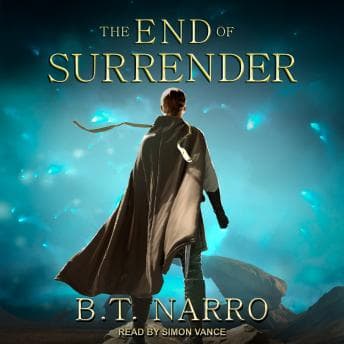
So look, End of Surrender is the fourth and final book of the Stalwart Link series, and if you haven't read books one through three, close this tab and go start from the beginning. This is not a standalone. This is payoff. Andar's full arc from uncertain kid to Ascendant lands here, and B.T. Narro clearly wrote this as someone who had a plan from the start.
The Rift, The Beast, and the Plan That Falls Apart
The setup is classic final-book-of-the-series stuff: Andar goes into the rift to destroy it, his allies hold the line against the massive guardian beast, and then—because this is fantasy and plans are just suggestions—everything goes sideways. What I liked is that the deviation isn't some random curveball for shock value. It flows from character decisions and the kind of desperation that feels earned after three books of buildup. The allies left behind don't just stand around waiting for Andar to fix things. They have to make their own calls, some of them bad, some of them brutal.
The progression is satisfying. Andar's growth into a "true Ascendant" isn't a sudden power-up—it's more like watching someone finally understand the system they've been fumbling through. If you're into progression fantasy at all (and if you're reading my reviews, you probably are), this scratches that itch. It's not LitRPG-level stat tracking, but there's a clear sense of leveling up that my D&D group would appreciate. Think less "I gained 500 XP" and more "I finally understood what my class abilities actually mean."
The world-building of Aathon has been building across all four books, and Narro pulls threads here that I'd honestly forgotten about from earlier entries. The people responsible for creating the rift aren't just faceless villains—they have reasons, and those reasons tie back into the larger lore in ways that made me pause my audiobook and think for a minute. That's a good sign.
Simon Vance: The Journalist at the Bar
Here's the thing about Simon Vance—the man has seventeen Audies and seventy-two Earphone Awards, so calling him "good" feels like telling Sanderson he writes decent magic systems. Understatement of the century. His delivery here has this quality that someone described perfectly as "a journalist letting you in on an incredible story over a beer," and yeah, that's exactly it. He's not performing at you. He's telling you something he thinks you need to hear.
His British RP works surprisingly well for a secondary-world fantasy. The formal register gives Aathon a certain weight, a gravity that a more casual American delivery might not have carried for a series finale where characters are making sacrifices and facing down the architects of world-ending catastrophe.
But—and this is the one thing I have to flag—if you've listened to books one through three, prepare yourself for some name pronunciation shifts. Apparently Simon decided some characters' names needed a refresh for book four, and once you notice it, you can't un-notice it. It's not catastrophic. But when you've spent thirty-plus hours hearing a name one way and suddenly it's different? It's like if your DM suddenly started pronouncing "Strahd" differently in the final session of Curse of Strahd. Jarring. Not a dealbreaker, but jarring.
Who's Rolling Initiative on This One
If you've been with the Stalwart Link series from book one, this is a no-brainer. You're already invested. The payoff is here and it's worth the ride. At just under ten hours, it's a tight finale—Narro doesn't pad it out with filler side quests, which I respect even as someone who usually wants more fantasy, not less.
If you haven't started the series? Don't start here. You'll be completely lost. Go back to book one. I'll wait. (I have plenty of thesis procrastination time.)
If you're the type who needs Sanderson-level world-building with hard magic system rules laid out in appendices, this is softer than that. The magic system isn't chef's kiss levels of rigorous, but it's consistent and it serves the story. Think more Abercrombie than Sanderson in terms of how the world unfolds—through character experience rather than exposition. Theft of Swords sits in that same camp—world-building that earns its weight through what characters live through rather than what gets explained at them.
And if pronunciation consistency in narration is something that drives you absolutely up the wall? Maybe read the ebook for this one. Just being honest.
My Thesis Can Wait Another Day
I read this instead of writing my thesis, and I don't regret it. End of Surrender does what a series finale should do: it raises the stakes, it pays off character arcs, and it doesn't pull its punches on the sacrifices. Simon Vance is an elite narrator doing strong work on a series that deserved his talent—name pronunciation hiccups and all. Not the best fantasy series I've ever consumed, but a solid one that stuck its landing. And in this genre? That's worth something.