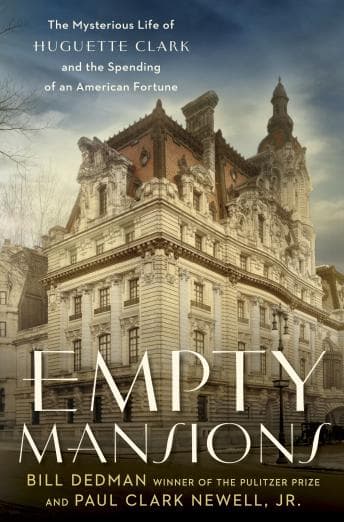

What do you do with a woman who had everything and chose... nothing? I mean, not nothing exactly, but a hospital room for twenty years when she owned mansions across the country? This question kept circling my brain at 2 AM, Frida curled on my chest, Diego judging me from the windowsill, while Kimberly Farr walked me through Huguette Clark's impossible life.
I picked this up because I'd been staring at Gilded Age mansion photos on Pinterest for a design project - those ridiculous 121-room Fifth Avenue palaces that make zero sense for a family of four. And suddenly here was a book about a woman who inherited all of that and just... walked away from it. Into a hospital room. By choice.
The Ghost in the Gilded Frame
Okay, confession time: the first few hours almost lost me. Bill Dedman spends a LOT of time on W.A. Clark - Huguette's copper baron father, the political scandals, the railroad building, the founding of Las Vegas. Important context? Sure. But I was designing wedding invitations and my attention kept drifting. I almost gave up around hour three.
But here's the thing - and this is why I'm so glad I pushed through - you need that foundation of obscene wealth to understand what Huguette walked away from. When Dedman finally gets to her story, to the paintings she hoarded, the antique dolls she collected obsessively, the Stradivarius gathering dust... my heart. MY HEART. This woman was building her own tiny world inside hospital walls while her mansions sat empty, their gardens growing wild.
The book felt like opening a jewelry box that's been locked for decades. Everything inside is beautiful and sad and slightly strange.
Kimberly Farr Made Me Stay
Let me be real - Farr's narration is what pulled me through those slower early sections. Her voice has this quality I can only describe as "patient wealth." She sounds like someone who has all the time in the world, which is perfect for a story about a woman who lived to 104 and spent most of it waiting... for what, exactly? That's the mystery.
And then - AND THEN - there's bonus audio. Actual phone calls between Huguette and her cousin Paul. The first time her voice came through my earbuds, I literally stopped working. Set down my stylus. Just listened. She sounds like a woman from another century because she basically was. That same sense of someone caught between eras comes through in Golden Girl, though in a completely different way. Formal, soft, slightly bewildered by the modern world pressing against her hospital windows. I ugly-cried. Not dramatic sobbing, but that quiet kind where tears just slide down and you don't bother wiping them because you're too busy listening.
The Vibes Are Immaculate (And Deeply Unsettling)
This is a rainy Sunday book, but make it a rainy Sunday where you're also thinking about your own relationship with stuff. With money. With the people who might fight over whatever you leave behind.
Because that's the dark undercurrent here - the $300 million inheritance battle, the nurse who received $30 million in gifts, the relatives circling. Dedman handles it with the investigative precision you'd expect from a Pulitzer winner, but there's genuine tenderness too. He and Newell clearly cared about getting Huguette right, not just exposing her.
Abuela would have loved this one. She had opinions about rich people, strong ones, but she also understood choosing your own weird little world over what everyone expects. She did it herself, in her way. Different scale, same spirit. Straight Shooter explores that same tension between public expectation and private truth, just in the sports world instead of gilded mansions.
Skip If You Need Speed, Stay If You Love Ghosts
If you need plot momentum, constant action, a story that sprints - this isn't it. Several book clubs apparently gave up early, and I get it. The pacing in the first third requires patience. But if you're the kind of person who finds a photograph of an abandoned mansion and wants to know everything about who lived there, why they left, what happened to their things... you'll be obsessed. If you've ever wondered what extreme wealth actually does to a person's soul, Huguette Clark is your case study.
My Heart Is Still in That Hospital Room
I finished this at 3:47 AM, which was a terrible life choice but also the only possible ending. Thirteen and a half hours of slow-building fascination, occasional frustration, and genuine emotional devastation. Huguette Clark spent twenty years in a hospital room surrounded by nurses instead of her paintings, her dolls, her empty mansions. And somehow that was the life she chose.
I don't fully understand her. I don't think anyone can. But I felt her - this bright, talented woman who retreated so far from the world that when she died, no one had photographed her in decades.
The chemistry here is *chef's kiss* - not romantic chemistry, but the pull between extreme privilege and extreme isolation. Between having everything and wanting almost nothing. Between the world that wanted her fortune and the woman who just wanted to be left alone with her dolls.
I'm still thinking about her. I think I will be for a while.