I was supposed to be running a combat encounter for my Thursday night D&D campaign - stat blocks open in one tab, monster manual PDF in another - when Xe Sands dropped into Elijah's voice and I just... stopped. Dice stayed in the bag. My players got a text that said 'session postponed, sorry.' That's either a glowing endorsement or a confession. Probably both.
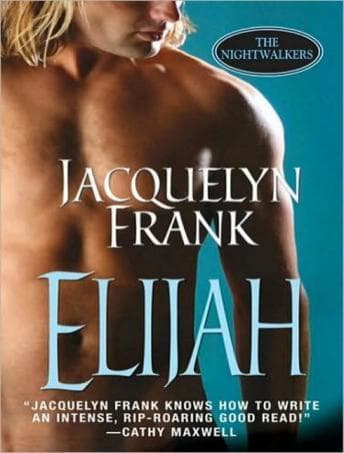
Elijah is book three in Jacquelyn Frank's Nightwalkers series, and look - I came in skeptical. Paranormal romance isn't exactly my usual lane. I'm the guy who listens to 40-hour epic fantasy doorstoppers and complains they were too short. But the setup here actually scratched my world-building itch harder than I expected: three centuries of war between Nightwalkers and Lycanthropes, a decade of uneasy peace, and then the Warrior Captain of the Nightwalkers gets ambushed by necromancers and left for dead in enemy territory. The Lycanthrope Queen finds him. Classic enemies-to-lovers architecture, yes - but Frank builds actual political weight around it. The romance isn't happening in a vacuum. There are consequences for both peoples. The necromancer threat that closes in on them isn't just a backdrop; it's the thing that forces the question of whether three centuries of suspicion can actually break in a single generation. My D&D group would eat this lore up.
The Part Where I Talk About Elijah's Voice Living In My Head Now
Okay, Xe Sands. Here's where I have to be honest with you, because the listener reviews are genuinely split and I think I understand why.
The male voices? Genuinely impressive. Elijah specifically - Sands captures this particular flavor of dangerous-but-honorable warrior that's hard to pull off without tipping into parody. He sounds like someone who has won every fight he's ever been in and is quietly, privately bewildered that this one woman is the thing he can't strategize his way through. That specific emotional frequency, communicated through voice alone, is not a given. Steven Pacey walked so other narrators could run, and Sands is running.
Siena's Russian accent, though - it's there, it's functional, it's not the best I've heard. It never pulled me fully out of the story, but it doesn't disappear into the background either. You're aware of it as a performance choice in a way you're not aware of the male voices. Small thing, but worth naming.
The pacing complaint I've seen in reviews - that the narration is slow, almost soporific - I get it, but I'd push back slightly. Sands has a measured, intimate delivery style. If you're running at 1.0x expecting action-audiobook energy, yeah, you might find yourself drifting. Bump it to 1.15x or 1.25x and the whole thing opens up. The emotional beats land harder when the pacing doesn't feel like it's breathing on your behalf.
Who This Is Actually For (And Who Should Bail)
If you're coming in purely for the romance heat - it's there, it delivers, no complaints. But what I didn't expect was to be genuinely invested in the Nightwalker-Lycanthrope political situation by hour three. The fight sequences between Nightwalkers and the necromancer-hunter coalition have actual tactical texture. Frank isn't just using the fantasy elements as set dressing for the romance; the world has internal logic. It's not Sanderson-level magic system architecture, but it's more coherent than a lot of paranormal romance I've encountered.
Who should skip it: if slow-burn political romance with explicit content isn't your thing, this isn't going to convert you. Also, if you need your narrator to run hot and fast, Sands' style might genuinely not work for you - and that's a real incompatibility, not a flaw in either party.
Who should absolutely listen: fantasy readers who've been curious about paranormal romance but wanted something with actual world stakes. People who liked the political complexity of early Nalini Singh. Romancing Mister Bridgerton scratches a similar itch if you want that same sense of social stakes wrapped around the romance - different flavor, same structural satisfaction. Anyone who has ever wanted a romance where the 'enemies' part of enemies-to-lovers carries genuine geopolitical weight.
I read this instead of writing my thesis. Dr. Patel, if you're reading this - the necromancers made me do it.