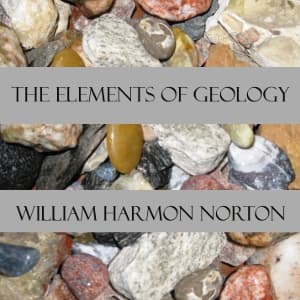

So I was up at 3AM last Tuesday - not an outage this time, just insomnia after a gnarly debugging session where I'd been staring at log timestamps for six straight hours. Brain wouldn't shut off. I needed something dense enough to occupy the hamster wheel but not so exciting I'd stay awake until my alarm. Enter: a geology textbook from 1905, read by a rotating cast of LibriVox volunteers. Reader, it worked. But also... it kind of didn't? Because I ended up genuinely interested.
1905 Called, and Its Pedagogy Actually Slaps
Let me compare this to basically every modern pop-science book I've listened to in the last two years. You know the format: catchy anecdote, one insight stretched across 300 pages, seventeen callbacks to the catchy anecdote, somehow still gets a TED talk. Beyond Good and Evil gave me the same frustrated feeling - another dense thinker packaged for modern attention spans in a way that kept making me want the original instead. William Harmon Norton's Elements of Geology is the polar opposite. This is a professor who taught Greek, Latin, AND geology at Cornell College in Iowa, and the man writes like he respects your time - which is wild for a 13-hour, 41-minute audiobook.
The structural choice Norton made is actually clever. Instead of the standard geology textbook approach (here's dynamics, here's structure, here's physiography, here's history - four neat silos), he threads each geological process directly into the landforms and rock structures it produces. Cause → effect, immediate connection. It's basically how I wish technical documentation was organized - don't tell me about the API in one section and the data model in another; show me the request and the response together. Norton got it in 1905.
The sections on river erosion and delta formation are genuinely clear. He walks through how the Mississippi built its delta with the kind of patient, step-by-step logic that reminds me of a good whiteboard session. Glaciation gets similar treatment - he connects ice movement to moraine deposits to the specific lake formations you can see across the northern US. Pre-plate-tectonics, so there's no continental drift framework, which means his explanations for mountain building and volcanic activity are... creative. Sometimes wrong. But watching a smart person reason from incomplete data? That's its own kind of fascinating.
The LibriVox Lottery
Okay, here's where I have to be honest about the audio experience, because this is LibriVox and that means you're playing narrator roulette every few chapters. Some volunteers are clear, well-paced, and have that pleasant public-radio quality. Others sound like they're reading in a room with the acoustic properties of a bathroom. Volume levels shift between readers. Pronunciation consistency for geological terms - let's just say it varies.
This isn't a knock on the volunteers. They're doing free labor to make public domain texts accessible, and that's genuinely great. But compared to, say, a Ray Porter production (Ray Porter narrates this. Need I say more? ...kidding, he absolutely does not narrate this), you're going to notice the seams. I found myself adjusting volume constantly, which is not ideal when you're half-conscious at 3AM or crammed onto the 6:47 Caltrain.
The lack of any visual aids is also a real limitation. Norton's writing references diagrams and figures constantly - "as shown in Fig. 47" - and obviously you can't see Fig. 47. For a text this heavy on spatial reasoning (rock strata, cross-sections of valleys, glacier movement), that's a meaningful loss. Some chapters survive this fine. The historical geology sections near the end, where it's more narrative, work better in pure audio.
Who Should Grab This (And Who Should Run)
Perfect for: insomnia, long drives through actual geological landscapes (I'm now planning to relisten to the glaciation chapters next time Kevin and I drive up to Tahoe). Also genuinely useful if you want a foundational understanding of how landscapes form and you prefer structured explanation over pop-science hand-waving.
Skip for: commute listening unless you can handle inconsistent audio quality and don't mind rewinding. This is not a 1.5x book. I tried. At 1.5x the denser chapters became word soup. Stayed at 1x, occasionally dropped to 0.9x for the more technical passages - which I basically never do.
The ROI on this audiobook is weird to calculate. It's free. The content is legitimately educational and surprisingly well-organized for something 120 years old. But the production quality tax is real, and 13+ hours is a big commitment for what is, at the end of the day, an introductory geology textbook with no plate tectonics.
If you want modern geology with professional narration, this isn't it. If you want to hear how a brilliant early-1900s professor structured scientific thinking before we even understood continental drift - and you have a high tolerance for volunteer audio - there's something genuinely cool here. I finished it across maybe two weeks of insomnia sessions and a few weekend chores. Don't regret it. Wouldn't call it essential.
Commute-Worthiness: Conditional Pass
TL;DR: Worth your commute only if you're the kind of person who finds old scientific reasoning patterns interesting for their own sake. The content is solid 1905-era geology with a smart organizational approach. The audio is free and sounds like it. I learned things. I also learned I have opinions about moraine classification now, which Kevin finds deeply concerning.






![Steve Jobs [unabridged audiobook] audiobook cover](/_next/image?url=https%3A%2F%2Fcovers.audiobooks.com%2Fimages%2Fcovers%2Ffull%2F9788499923406.jpg&w=1920&q=75)