
Everyone kept telling me this was basically the Prime Video show but better, and honestly? I went in skeptical. I'd seen enough clips of the series to think I knew what I was getting — pretty teens, beach house, love triangle, done. But listening to this on a rainy Sunday afternoon with nowhere to be, I realized pretty quickly that the show stripped out the thing that actually makes Belly's story hurt: you're stuck inside her head, feeling every stupid, glorious, embarrassing wave of wanting.
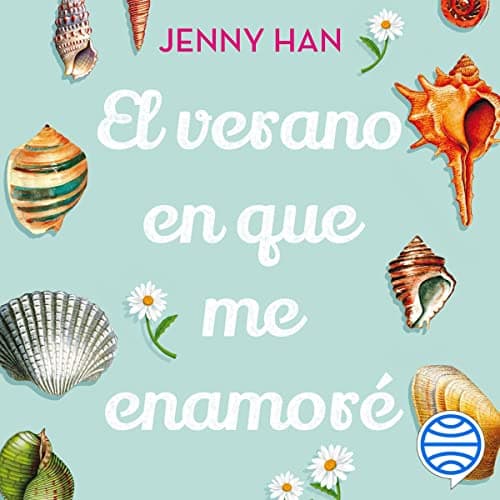
El verano en que me enamoré is Jenny Han's The Summer I Turned Pretty in Spanish, translated by Marta Becerril and narrated by Irene Miras Guillén. The setup is simple. Belly has spent every summer at Cousins Beach with her mom's best friend's family, including two brothers — broody Conrad and golden-retriever Jeremiah — who have never once looked at her as anything other than a kid. This is the summer she shows up different. This is the summer they notice. And this is the summer a lot of things that felt permanent start breaking apart.
Here's what surprised me about the audio experience: Irene Miras Guillén doesn't try to make Belly sound cool or self-aware. She has that same quality in 9 de noviembre, another audiobook where I kept thinking: this narrator actually trusts the silence. In the flashback sections — those little memory-drenched passages where Belly is recalling summers from years ago — Miras Guillén's voice goes softer, almost dreamy, like someone talking half to you and half to themselves. It's a subtle thing, but it works. Then when the story shifts into the charged, present-tense scenes with Conrad (all tension and silences) or the warmer, easier moments with Jeremiah, her energy picks up. She's not doing wildly different character voices, but there's a shift in temperature between the brothers that you can feel. Conrad scenes get quieter, more careful. Jeremiah scenes breathe. It's the kind of narration that respects the material without performing it to death.
Now, the thing you need to know before you spend a credit: Belly is passive. She is. Things happen around her and to her, and she spends a lot of this book reacting, hoping, waiting. She's fifteen, and Han writes her with painful accuracy — the way a teenager can build an entire fantasy on one look across a room, the way jealousy and desire get tangled up until you can't tell which is which. If that kind of messy, indecisive longing is your thing — if you want to feel that specific ache of wanting someone to choose you — this book will wreck you in the best way. But if love triangles with a protagonist who can't make up her mind drive you up the wall, you will be climbing that wall by hour three.
The pacing is languid. That's the right word. This isn't a book where things happen fast; it's a book where the mood is the point. Han lingers on afternoons at the pool, on the way the light looks at golden hour, on the feeling of a house full of people who are all pretending everything is fine when it isn't. At six hours and twenty-four minutes, it never drags exactly, but there are stretches where you're floating in Belly's feelings with no plot in sight. I found that kind of lovely on a do-nothing afternoon. I can see how it would be maddening on a Monday commute.
The Spanish translation sits comfortably in the YA romance lane — it reads naturally alongside books like A través de mi ventana or Un cuento perfecto, stories that care more about emotional honesty than tight plotting. Nothing feels forced or awkwardly translated. The beach house setting is universal enough that the cultural shift is invisible.
What Han does genuinely well — and what earns this book its loyal following — is capture how memory and longing reshape a specific time in your life. Belly isn't just telling you about this summer; she's telling you about every summer, and the way each one layered on the last until the whole thing became something she couldn't hold anymore. There's real sadness under the romance — a mother's illness that hangs over everything, friendships cracking under the weight of growing up, the gut-punch realization that the people you love are changing whether you want them to or not.
Fair warning: this is book one of a trilogy, and it ends with enough loose threads to leave you genuinely restless. Not a brutal cliffhanger, but close. If you're someone who needs closure, have No hay verano sin ti ready to go.
Miras Guillén narrates that one too, and I actually think her voice settles into even more comfortable territory there — worth reading my notes on No hay verano sin ti before you commit the next credit.
Who Should Listen (And Who Should Skip)
If you ache for slow-burn YA romance, if summer nostalgia hits you like a physical thing, if you want to ugly-cry over a fifteen-year-old's first real heartbreak — run, don't walk. Skip it if passive protagonists and love triangles without resolution make you want to throw your earbuds into the ocean.
This is a stare-out-the-window, curl-up-on-the-couch kind of listen. It won't challenge you. It's not trying to. It's trying to make you feel fifteen again — the real fifteen, not the curated version — and it does that with startling precision. The Spanish narration is warm and well-paced, the runtime is right for a lazy weekend, and if you let it, it'll leave a mark you weren't expecting from something this gentle.