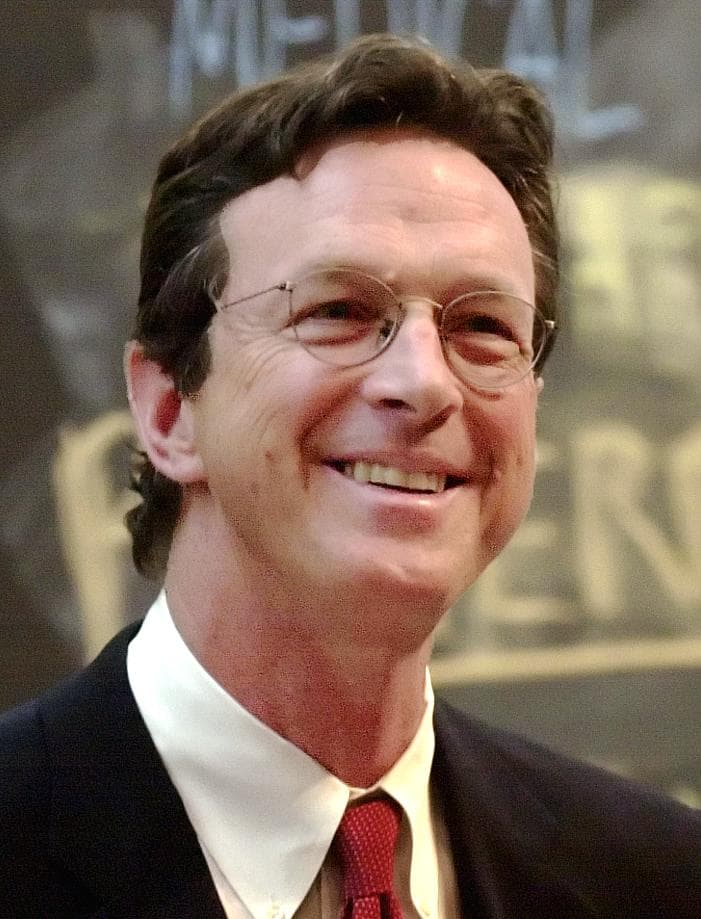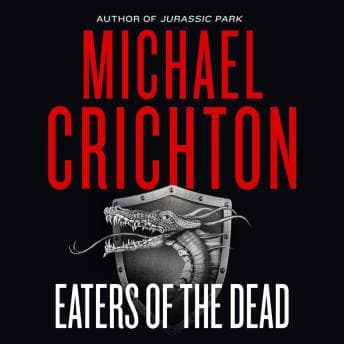

Look, I have a confession. I've been teaching Beowulf for twenty years and I'm pretty sure I've been doing it wrong. Not the text itself—I know that cold—but the feeling of it. The visceral, blood-soaked, mead-hall terror of it. Then I listened to this book during a particularly brutal Chicago February, walking the lakefront with wind cutting through my coat, and suddenly I got it. Michael Crichton, of all people, made me understand Beowulf better than my graduate seminars did.
And honestly? That's a little embarrassing.
The Scholarly Trick That Actually Works
Here's what Crichton does that's so clever it borders on sneaky: he frames the whole thing as a translation of an actual medieval manuscript. Ahmad ibn Fadlan was a real historical figure—a 10th-century Arab diplomat who really did travel among the Vikings and left behind one of the most detailed accounts we have of their culture. Crichton takes that authentic framework and just... keeps going. Blurs the line between where history ends and Beowulf begins.
My students would call this "fan fiction with footnotes." They're not entirely wrong.
But here's the thing—it works. The conceit of reading a translated manuscript gives the narrative this strange, detached quality that feels genuinely ancient. Ibn Fadlan is horrified by the Vikings. Their hygiene (or lack thereof), their casual violence, their women who seem to have more agency than he's comfortable with. He's a refined courtier from Baghdad dropped into the medieval equivalent of a biker gang. Through his outsider eyes, the familiar becomes alien again.
Simon Vance understands this completely. His reading of ibn Fadlan carries just enough cultural distance—not an exaggerated accent, but a certain formality of speech, a scholar's precision even when describing absolute carnage. It's the performance of a man taking notes while the world burns around him.
When the Monsters Come
At just over five hours, this is a quick listen. Almost too quick. The first half is anthropological tourism—Crichton (through ibn Fadlan) cataloging Viking customs with the detached fascination of a nature documentary. The wanton sexuality. The human sacrifices. The communal nose-blowing into a single water basin. (That detail has haunted me for days.)
Then the party travels north, and the tone shifts. The "eaters of the dead" emerge from the mist, and suddenly we're in monster-movie territory. Except Crichton never quite confirms what we're dealing with. Are these creatures? Neanderthal survivors? A rival tribe? The ambiguity is deliberate, and Vance's narration leans into it. His voice drops when describing the attacks—not melodramatic, just... quieter. More careful. Like he's not sure he believes what he's reading.
This is where the Beowulf parallels become unmistakable. The mead hall under siege. The monster that cannot be killed by conventional weapons. The warrior who must descend into darkness. But filtered through an Arab scholar's perspective, it feels fresh. My copy of Seamus Heaney's translation is sitting on my desk right now, and I'm seeing it differently.
Vance Earns Every One of Those Audies
Simon Vance has won more Audie Awards than I've had hot dinners. (Okay, that's hyperbole. But not by much.) His work here is exactly what this book needs: restrained when the text is clinical, urgent when the action demands it. He differentiates the Viking warriors without resorting to comedy accents—each voice distinct but grounded. The Vikings sound like men, not caricatures.
The production is clean. No audio artifacts, no weird volume shifts. At 1.0x speed—which is the only civilized way to listen, and I will die on this hill—the pacing feels deliberate. Crichton's prose is sparse, almost journalistic, and Vance honors that. He doesn't try to add drama where the text doesn't call for it.
I kept thinking about the 1999 film adaptation, The 13th Warrior, which I saw in theaters because I was young and Antonio Banderas was in everything. The movie is fine. Entertaining. But it loses the manuscript conceit entirely, and with it, the book's strange power. This isn't really an adventure story. It's a document. A record. Something that survived.
Who This Is For (And Who Should Skip It)
If you love historical fiction that takes its history seriously—even when it's lying to you—this is essential. That same blend of authenticity and invention drives Hotel on the Corner of Bitter and Sweet, though it trades Vikings for World War II Seattle. If you've ever wanted to understand why Beowulf matters but couldn't get past the Old English, start here. Crichton wrote this as an experiment, trying to prove that Beowulf could still work as a thriller. He was right.
But fair warning: this is not a fast-paced action novel. The first half is deliberately slow, building the world through observation rather than plot. Some listeners find it boring. I found it hypnotic, but I also voluntarily listen to Middlemarch during faculty meetings, so my tolerance for slow burns is higher than most. Skip this if you need constant momentum—you'll be checking your phone by chapter three.
Also, content note: there's violence here. Graphic violence. And frank discussions of sexuality and human sacrifice. Crichton doesn't flinch from the brutality of the period, and neither does Vance.
Class Dismissed
I finished this walking past the frozen lake, wind still cutting, and I immediately wanted to teach it. Put it alongside Beowulf in my curriculum. Show my students that the old stories aren't museum pieces—they're blueprints. Crichton understood that. Vance makes you hear it.