
"You're not crazy, Julia. Someone wants you dead."
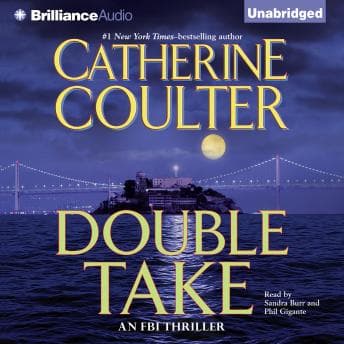
That line - somewhere around the two-hour mark - hit me while I was chopping onions for a dal that was getting way too much attention because my brain was split between recipe and murder mystery. The thing about Double Take is that Catherine Coulter gives you two parallel storylines that shouldn't work together but kind of do: a widow whose psychic husband was murdered, and a sheriff whose dead wife might not be dead. Both are stories about grief, identity, and the terrifying moment when the narrative you've built about your own life gets shattered. And as someone who studies exactly that - how people construct identity through narrative - I found myself asking: why does Coulter keep returning to this particular psychological wound?
Two Grief Stories Walk Into San Francisco
Let me break down what's happening psychologically here, because it's more interesting than the book probably intends. Julia Ransom exhibits classic complicated grief - six months out, she's just starting to feel normal again, standing on Pier 39 enjoying the sound of seals, when violence rips that fragile reconstruction apart. Meanwhile, Sheriff Dixon Noble is stuck in what we'd call ambiguous loss - his wife Christie vanished three years ago, no body, no closure. The research actually shows that ambiguous loss is often more psychologically devastating than confirmed death because the brain can't complete the grief cycle. So when Dix learns about Charlotte Pallack, a woman who looks exactly like Christie, his compulsion to fly across the country isn't just plot convenience. It's textbook. The mind will chase closure like a dog chasing a car. The same obsessive pursuit of answers drives Sherlock Holmes in Sign of The Four, where the detective's compulsion isn't really about logic at all - it's about the unbearable state of not knowing.
Coulter understands this on an intuitive level even if she doesn't articulate it in clinical terms. What makes these characters compelling is that their motivations are rooted in genuine psychological need rather than just "the plot requires them to go here now." Dix knows Charlotte can't be Christie. He says so himself. But he goes anyway. That's how grief works - rationality takes a back seat to the desperate hope that the story isn't over.
Now. Chapter 31. Xavier Makepeace. This is a fascinating case study in how thriller writers handle psychopathy, and Coulter does something I appreciate: she gives you his interior life without romanticizing it. Too many thriller writers either make their villains cartoonishly evil or seductively brilliant (looking at you, every Hannibal Lecter knockoff since 1991). Makepeace lands somewhere more realistic - organized, methodical, with that flat affect that actual forensic psychologists describe in their assessments.
Phil Gigante's Cool Intonation vs. Sandra Burr's Age Problem
Dual narration in audiobooks is always a gamble, and here it mostly pays off. Phil Gigante handles the male perspectives - Savich, Cheney Stone, Dix Noble - with this cool, measured intonation that works perfectly for FBI agents who are trained to compartmentalize. When he voices Cheney during that wild car chase through San Francisco, the pacing tightens without him resorting to shouting. That's restraint. That's good craft.
Sandra Burr is solid with Julia and the younger female characters. Light touch, natural cadence. But here's where it gets psychologically interesting in an unintended way: she makes some of the older female characters sound decades younger than they should be. And in a book that's literally about identity confusion - about a woman who looks like someone else, about questioning who people really are - having voices that don't match their supposed age creates this weird cognitive dissonance. My therapist would have thoughts about this character voice mismatch being accidentally thematic. I don't think it's intentional. But it did pull me out of scenes where it shouldn't have.
The dual narration does solve one real problem though: with this many characters (and the cast gets confusing, I'll admit, especially around the psychic community subplot), having a clear male/female narrator split gives your brain an instant sorting mechanism. You always know whose head you're in.
Where the Psychology Doesn't Quite Track
Here's my gripe, and it's the same gripe I have with most paranormal thriller hybrids: the psychic elements. Coulter tries to have it both ways - treating psychic visions as real plot devices while also populating the story with frauds and "poseurs" (her word). Psychologically, this doesn't track as cleanly as she wants it to. If August Ransom was genuinely psychic, then the skepticism other characters express isn't just personality - it's denial of observable reality. The book never fully commits to a framework, and at 11 hours, that ambiguity stops feeling mysterious and starts feeling like the author hedging her bets.
The San Francisco setting works. The pacing works - mostly. There's a stretch in the middle where the two plotlines haven't converged yet and you're bouncing between them thinking "okay, but how does the sheriff's missing wife connect to the psychic murder?" When it does connect, it's satisfying enough, but the journey there requires patience.
Who Gets the Most Out of This
If you've been following Coulter's FBI Thriller series, this is essentially required listening - it picks up threads from Point Blank and gives Dix Noble proper resolution. If you're new to the series, you'll manage, but you'll feel like you walked into a dinner party where everyone already knows each other. Fans of procedural thrillers with a paranormal twist will find plenty to chew on. If you need your mysteries strictly grounded in reality, this will frustrate you.
The Case File Stays Open
I finished the last hour while eating that dal alone at my kitchen table (it turned out pretty good, thanks for asking), and I kept thinking about the title. Double Take. It's about doubles, obviously - Charlotte/Christie, the dual investigations. But it's also about that moment when you see something that makes you question your own perception. Coulter builds a decent thriller around that concept. Not her absolute best, but the character psychology - particularly Dix Noble's arc from frozen grief to messy, complicated hope - kept me engaged when the plot got kaleidoscopic. The dual narration earns its keep despite Burr's age-matching issues. Worth your time if you're already invested in these characters. If not, maybe start earlier in the series.